Get Full Government Meeting Transcripts, Videos, & Alerts Forever!
Get email alerts on the Oyster Restoration School Program topic
No spam. Unsubscribe anytime.
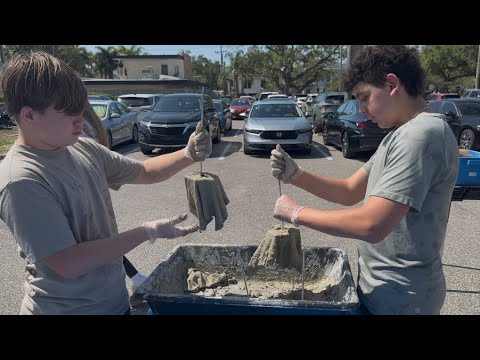
Wilson Middle School students build oyster “rag pots” for Manatee River restoration
Summary
A representative of the Wilson Middle School Agriscience program described students making concrete-and-cloth “oyster rag pots” that will be deployed on a 10-acre permitted restoration site in the Manatee River in May to help filter runoff in Tampa Bay.
An unnamed representative of the Wilson Middle School Agriscience program said students are constructing inexpensive structures to restore oyster habitat and help improve water quality in Tampa Bay.
The program is teaching students how to make so-called oyster "rag pots," the speaker said, describing a process of soaking small cloths in concrete attached to a metal stake and wooden base so the pieces can be pressed into a riverbed and act as hard substrate for oysters to colonize. "We have a 10 acre permitted oyster restoration site in the Manatee River, and that's where all these... will end up there on May," the speaker said.
The project combines classroom biology with hands-on work. "I've learned so much. Oysters can even filter 50 gallons per day just as a single oyster," the speaker said, adding that oysters can help address fertilizer runoff and other pollutants that affect Tampa Bay. The presenter said the project also covers oyster reproductive biology and filtration rates so students understand the ecological effects of their work.
Program leaders said the hands-on craft element helps students connect to civic action: when students later visit the river, they can see reef structures they helped create. The speaker described the activity as "project based learning and civic action where students are getting involved and making a difference in their community."
Details provided at the meeting: the school is producing oyster rag pots made from cloth, concrete, a metal stake and wooden base; deployment is scheduled for May on a 10-acre permitted oyster restoration site in the Manatee River; and individual oysters on restored substrate can filter substantial volumes of water, which the speaker quantified as about 50 gallons per oyster per day. The presentation linked the restoration work to local water-quality issues such as fertilizer runoff in Tampa Bay.
The program did not specify the exact May deployment date, the number of rag pots being produced, or funding sources for the restoration work. The speaker did not provide names or titles for program staff at the meeting.