Get Full Government Meeting Transcripts, Videos, & Alerts Forever!
Get email alerts on the Affordable Housing Trust topic
No spam. Unsubscribe anytime.
Yarmouth Affordable Housing Trust outlines mixed‑use corridor strategy and forgivable loan program
Summary
At an April 22 workshop the Affordable Housing Trust described matching funds for a village‑scale mixed‑use planning grant, a grayfield/blighted property forgivable loan program and recent project activity including work with Habitat for Humanity.
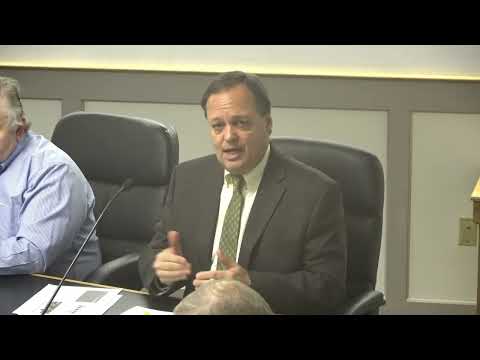
Bob Lawton, Yarmouth town administrator, and members of the Affordable Housing Trust described the trust’s current priorities at an April 22 affordable housing workshop: support for village‑scale mixed‑use development along Route 28, grayfield and blighted property predevelopment assistance, and project work with Habitat for Humanity.
Lawton summarized the trust’s statutory basis and mission, saying the trust was established in 2007 and that the Commonwealth’s enabling legislation (Acts of 2004, Chapter 491) created a municipal affordable housing trust mechanism for local governments. He said the town’s goal remains at least 10% of the year‑round housing stock classified as affordable; Yarmouth is currently “about halfway there,” roughly 5% by his account.
The trust reported matching funds for a state community planning grant and a planning allocation for the town’s local comprehensive plan to promote mixed‑use, village‑style development on underutilized corridor sites. Lawton and Mary Wagan, housing coordinator, said the trust contributed a $25,000 match to a roughly $100,000 local planning grant to produce market and site development analyses and to identify parcels suitable for coordinated economic and housing development. Interim economic development coordinator Jay Grama and planning staff are working with consultants to produce a market analysis and a mixed‑use site services plan.
The trust highlighted a forgivable loan program for grayfield and blighted properties that provides pre‑engineering assistance to owners and developers. Lawton and other speakers framed the program as an incentive to attract developers who otherwise might pursue Chapter 40B “shortcut” projects; the trust intends incentives and technical assistance to steer private investment toward village‑oriented, mixed‑use projects that preserve a pedestrian‑oriented character rather than “sea of parking” redevelopment.
Lawton listed recent accomplishments: the trust said it has created or preserved 91 affordable units since its 2007 formation and worked with Habitat for Humanity on a mixed‑use homeownership opportunity at 1121 Route 28. Trustees and staff described outreach to prospective developers, planning for infrastructure needs, and coordination with the Planning Board and Cape Cod regional initiatives.
Select Board and committee members asked about barriers to development; trustees cited infrastructure limits (wastewater), regulatory complexity on Cape Cod, and access to financing for projects that combine commercial and housing components as recurring obstacles.
Trust members said they will continue supporting the comprehensive planning process and using the trust’s financing and technical assistance to nudge developments toward the town’s village‑style vision.