Get Full Government Meeting Transcripts, Videos, & Alerts Forever!
Get email alerts on the Short Term Rentals topic
No spam. Unsubscribe anytime.
UMass Donahue Institute begins short‑term rental study for Yarmouth, will deliver report in September
Summary
University of Massachusetts Donahue Institute described its scope, data sources and initial findings at an April 22 Yarmouth Select Board affordable housing workshop and will deliver a final report in September 2025.
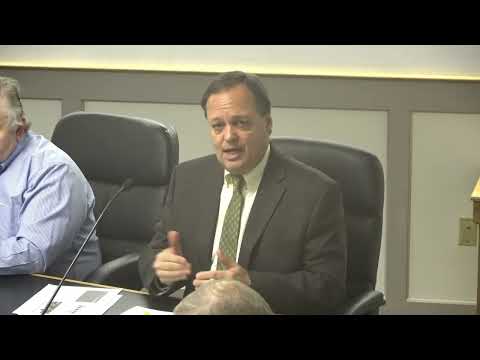
Carrie Spitzer, senior research manager at the University of Massachusetts Donahue Institute, told a joint Select Board and housing stakeholder workshop on April 22 that her team is conducting a short‑term rental and seasonal housing study for the Town of Yarmouth and will deliver a final report in September 2025.
The study aims to quantify how short‑term rentals and seasonal vacancy affect the town’s existing housing stock and to provide “reasonable, actionable recommendations,” Spitzer said. The research will combine quantitative data (U.S. Census American Community Survey, Department of Revenue short‑term rental registrations, AirDNA/VRBO/Airbnb scrapes, sales records and municipal registration data), key‑informant interviews and scenario analysis of potential regulatory options.
Spitzer said the team has completed much of the quantitative collection and is moving into interviews and coding of qualitative responses. Early findings include rising renter cost burden in Yarmouth, significant seasonal vacancy rates on Cape Cod, and a concentration of registered short‑term rental properties in West Yarmouth, South Yarmouth and Yarmouth Port. Spitzer cautioned that town‑level American Community Survey estimates include large error bars and that AirDNA and listing sites undercount properties rented privately or through real‑estate agents; her team will triangulate multiple sources including Department of Revenue registration lists to improve coverage.
The Donahue Institute plans stakeholder interviews with owners, rental platforms, real‑estate professionals, local government staff and housing advocates and will use NVivo for qualitative coding. Possible policy scenarios the study will model include unit caps (a fixed number or percentage of housing stock), zoning restrictions that limit rentals to specific districts, restrictions on nights rented per year, minimum stay rules, limits to owner‑occupied units, and prohibitions or restrictions on short‑term rentals in multifamily or accessory dwelling units. Spitzer said she would also analyze incentive‑based approaches, such as programs to encourage year‑round rentals, which have precedent in Provincetown.
Mary Wagan, Yarmouth housing coordinator, and board members asked whether the Donahue team has reviewed local bylaws; Spitzer said she has the town zoning and ADU bylaws but has not yet completed a comparative analysis. She confirmed the final report and a summary presentation are scheduled for September 2025 and invited stakeholders to participate in interviews.
The presentation and Q&A provided the Select Board, the Affordable Housing Trust and the Community Housing Committee with the study timeline, data sources, preliminary descriptive findings and a menu of regulatory and incentive options the town can ask the Donahue Institute to analyze.
The Donahue Institute will share contact information and next steps for interviews as the project moves into the qualitative phase.