Get Full Government Meeting Transcripts, Videos, & Alerts Forever!
Get email alerts on the Criminal Justice topic
No spam. Unsubscribe anytime.
Appeals court hears challenge to Charles Jenkins’ 1989 conviction over jury questioning and prosecutor’s closing arguments
Summary
At oral argument the defense said the trial judge rushed jury selection and failed to confirm jurors would follow presumption-of-innocence protections; the Commonwealth urged waiver and argued the record shows no prejudice.
The Massachusetts Appeals Court on an oral-argument calendar heard arguments in Commonwealth v. Charles Jenkins, a challenge to Jenkins’ 1989 murder conviction. Defense attorney Rachel Rose told the three-judge panel that the trial judge denied a request for individual voir dire and “rushed through picking a jury” without asking jurors questions that would show whether they would follow due-process principles, including the presumption of innocence.
The dispute centers on whether the voir dire used at Jenkins’ 1989 trial satisfied the statutory and case-law requirement to probe whether prospective jurors would actually apply core criminal-law protections. Rose argued that asking jurors only whether they were aware of legal principles does not reveal whether they “understand, accept, or agree to” them, and that the transcript shows a juror later told a court officer, “I thought he was guilty as soon as I saw him.” Rose said that remark prompted removal of that juror and supported her claim that other biased jurors “slipped by.”
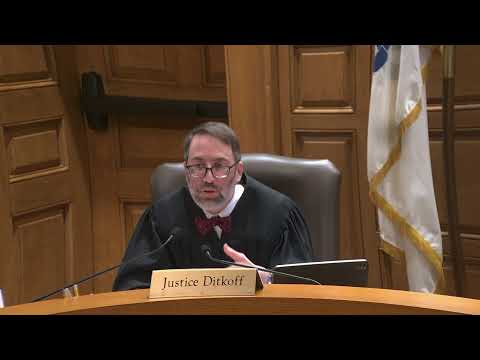
The court’s interest in the issue, Justice Ditkoff observed during questioning, focused on whether the relevant statute and precedent required voir dire to elicit not only awareness but willingness to follow the principles. Ditkoff asked for the best showing that (1) an objection was made “as soon as possible” and (2) the defendant was “specially injured or prejudiced.” Rose said the issue was preserved in the trial record and that Jenkins has raised multiple post-conviction motions; she described this filing as Jenkins’ “third motion for a new trial.”
The Commonwealth, represented by Aaron Knight, responded that the claims were waived because Jenkins had earlier appeals and post-conviction proceedings. Knight said the motion judge had considered the merits but found the claims waived, citing the court’s discretion and case law that a time lapse — here decades — can affect the analysis. Knight told the panel the Commonwealth’s position is that the motion judge’s ruling and prior appellate history supported affirmance.
Rose also challenged parts of the prosecutor’s closing argument, arguing the prosecutor “expanded the definition of evidence to cover his own theories” and invited jurors to speculate about events in the courtroom while a witness testified. The defense said the prosecutor suggested witness intimidation and pointed jurors to people in the gallery, arguing that the prosecutor’s comments could have led jurors to rely on the prosecutor’s suggestion rather than the trial evidence itself. Knight countered that the jury reasonably considers witness demeanor and that the record, including a prior appeals opinion, supports that there was witness intimidation of Deborah Howard.
Both sides debated statutory language and relevant precedent, including whether Chapter 234 (and 234A as discussed at argument) required particular voir dire language and whether the defendant must show a particularized injury to obtain relief. The judges pressed both counsel on what specific wording the statute required at the time of the trial, whether the defense preserved the objection, and whether any error produced a substantial risk of a miscarriage of justice.
The matter was submitted after argument. The court did not issue a ruling from the bench; a written decision will follow.