
Cobb County school mechanics press board on safety, staffing and pay during public comment
Get AI-powered insights, summaries, and transcripts
Subscribe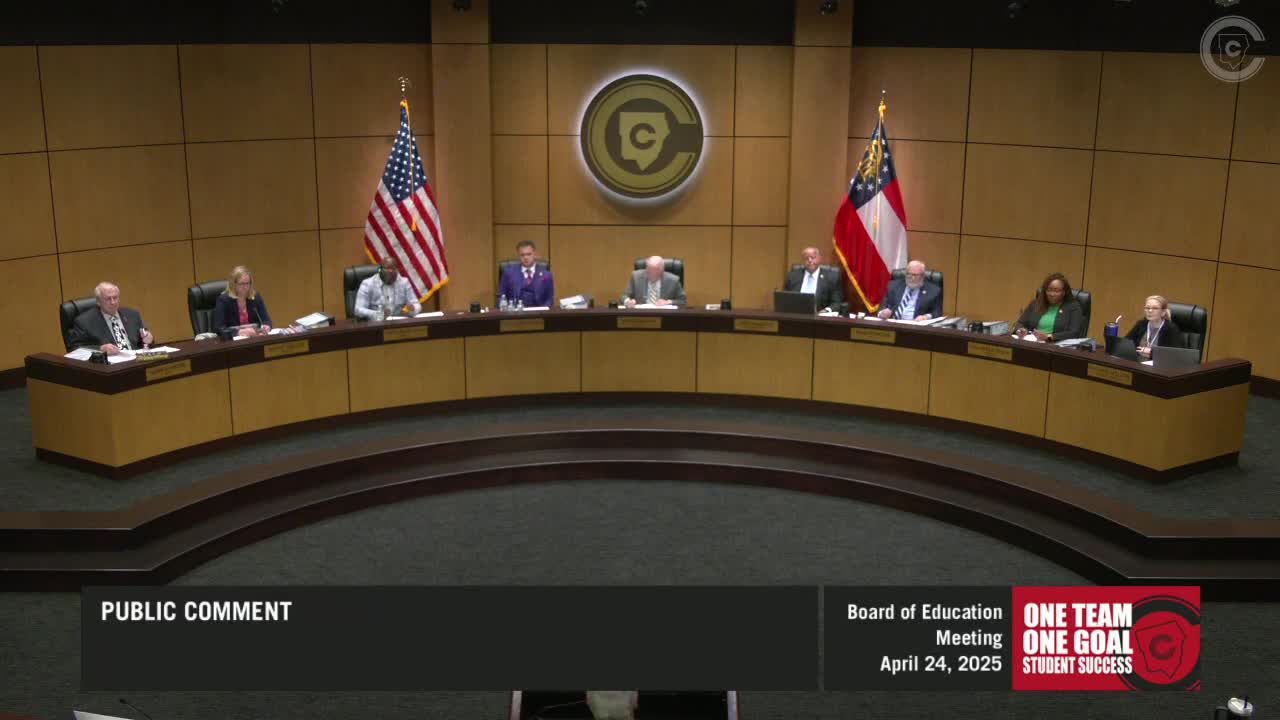
Summary
Fleet maintenance workers told the Cobb County School Board that aging buses, failing equipment, lack of diagnostic tools and low pay are creating safety risks and recruiting problems. Speakers asked the board to invest in equipment and staffing.
Several Cobb County School District fleet maintenance employees used the board's public comment period April 24 to warn that understaffing, worn equipment and low wages threaten bus safety and put pressure on mechanics.
Eric Carroll, a fleet maintenance employee of 14 years, told the board, "I'm just really surprised that it's came to this, that I've had to come here, over safety issues with our fleet." He said he followed the chain of command, raised concerns with supervisors and was disappointed by what he described as dismissive responses from transportation leadership.
B.J. Bailey, who identified himself as a mechanic at the Sanders Road Bus Shop and said he has worked for the county nine years, said shops lack diagnostic equipment and routinely use worn-out tools. "We don't have the proper equipment at every shop to diagnose these buses and fix them properly," Bailey said. He told the board shops across the county are short-staffed "every single one," which he said increases pressure on remaining mechanics.
Danny Hendricks, a 10-year Cobb County employee, said the maintenance workforce has repeatedly worked long stretches to meet inspection demands and that aging vehicles and service equipment make the work harder. "We have a thousand buses that we just went through state inspection. Every man here worked 12 hours a day, 9 days straight," Hendricks said. He added that many mechanics leave for higher pay in neighboring counties.
Speakers raised three recurring problems: insufficient or out-of-date diagnostic equipment, failing shop equipment and wages that officials said make recruiting experienced mechanics difficult. The witnesses urged the board to increase investment in fleet maintenance to reduce safety risk and preserve institutional knowledge.
Board members did not take immediate action during the meeting; several members later indicated the budget documents distributed that day could be reviewed for relevant line items and that staff would follow up. Board member Sailor asked whether the FY26 budget includes a specific transportation or fleet section she could review, and staff responded that the information is available and further conversations were expected.
The public-comment speakers framed their concerns around student safety, vehicle reliability and staffing retention rather than specific policy proposals. No formal motions or votes on fleet procurement or compensation were held at the meeting.