Get Full Government Meeting Transcripts, Videos, & Alerts Forever!
Get email alerts on the Public Health topic
No spam. Unsubscribe anytime.
Public health director briefs committee; members approve two letters of interest for local services funding
Summary
Bangor Public Health reported on regional homelessness governance changes, a state harm-reduction working group and local HIV and syringe programs; the Government Operations Committee approved two letters of interest seeking funding for a primary-care bridge program and HIV case management services.
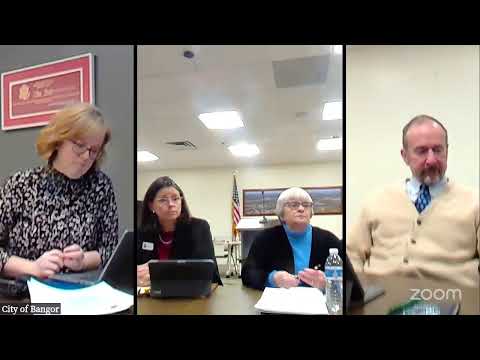
Jane Gunderman, Bangor public health director, updated the Government Operations Committee on Wednesday about recent statewide and local public-health work, and the committee approved two letters of interest seeking outside funding for programs addressing primary-care access and HIV case management.
Gunderman told the committee that the Maine Continuum of Care has recently restructured to a more traditional nonprofit governance model, and that a statewide working group convened under LD 1364 is drafting guidance on so-called harm reduction health centers. “The report at the end of this…is not to say Maine should have overdose, harm reduction health centers, but to say, here are the things that Maine should consider,” Gunderman said.
The work group has reviewed legal and operational models in other states and will deliver a report to the Legislature in about a month, Gunderman said. She also said local public-health partners have asked the Maine CDC and DHHS for guidance and additional on-the-ground CDC coordination around a local HIV cluster; the department has submitted a financial request to CDC to cover staff time spent responding to the cluster.
In committee discussion, Gunderman described negotiations over a syringe-waste memorandum of understanding. She said the city has been in talks with Wabanaki leaders about what a “high quality syringe cleanup program” would look like and noted that work under a new MOU would be funded from opioid settlement dollars rather than the city’s general fund.
Gunderman summarized other department programs including WIC’s 50th year in the city, recent flu and COVID clinics, a lactation support “milk-and-cookies” group and a new tobacco-cessation referral for Bangor and Brewer high schools. She said WIC vendors at the Bangor Farmers Market have been receiving vendor payments through a program administered by the health department.
Committee action: letters of interest approved
The committee voted to allow two letters of interest to be submitted: one to the Maine Health Access Foundation for a proposed “primary-care bridge” program and one to Lubec Medical Center (request for interest) to explore providing Ryan White HIV medical case management for Penobscot and Piscataquis counties.
On the MHAAF item, Gunderman described a proposed pilot to provide interim navigation and nursing support for people whose first primary-care appointments are months away. A committee member moved approval of a letter of intent and another committee member seconded; with no opposition, the chair said the committee had approved the request. The committee record during the meeting indicated no objections and the item will proceed as a formal request to MHAAF.
On the Ryan White item, Gunderman asked permission to submit a letter of interest to Lubec Medical Center to explore contracting for HIV medical case management in Penobscot and Piscataquis counties. A committee member moved and a member identified as Pat moved the motion; Moshe seconded. The committee again registered no opposition and the committee approved sending the letter of interest.
What was not decided or changed
No binding contract awards or program adoptions occurred at the meeting. Gunderman said the syringe-waste MOU was still under negotiation and that its budget is higher than the city’s prior agreement with HEAL (the local Health Equity Alliance) because the proposed vendor’s proposed deliverables and capacity are greater. She said the opioid settlement funds are intended to pay for that MOU rather than the city’s operating budget.
The public-health updates and the two approved letters of interest will be returned as appropriate to future council or grant-application processes for formal consideration and, if funded, implementation.