Get Full Government Meeting Transcripts, Videos, & Alerts Forever!
Get email alerts on the Election Integrity Audit topic
No spam. Unsubscribe anytime.
Assembly hears proposal for post-election manual verification audits of precincts and early-vote results
Summary
An ordinance (No. 2025-59) was presented to require the Canvas Board to perform a manual verification audit of two randomly selected precincts (or the early voting station) and one contested race in each, with a 1% discrepancy threshold aligned to state practice.
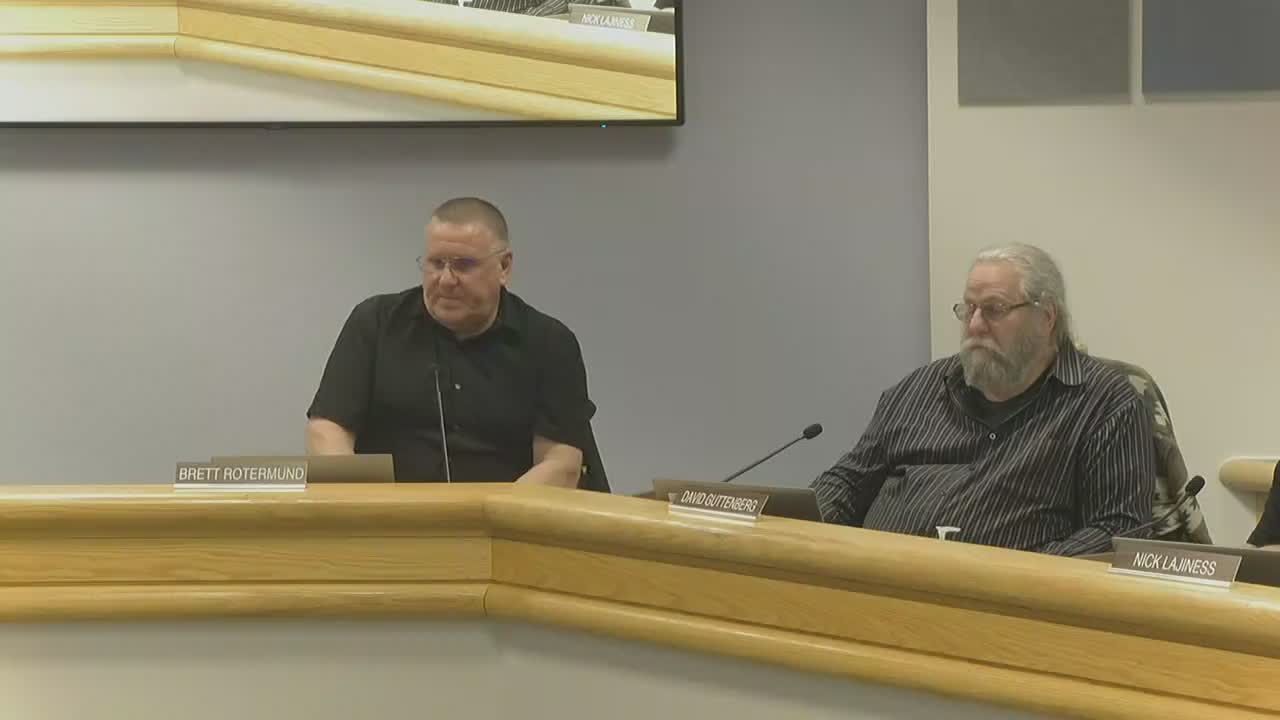
Assemblymember Guttenberg presented Ordinance No. 2025-59, which would add a post-election manual verification audit to borough election procedures so results from voting machines are confirmed by hand counts in a small, random sample of precincts and races.
Guttenberg said the proposal would require the borough’s Canvas Board to randomly select two precincts (or the early voting station) and then randomly select a contested race to hand-count across the chosen precinct(s). "At the end of the day... randomly 2 precincts are pulled out and... 2 contested races in those precincts are counted and tabulated against the results from the machine," he said. The stated purpose is to provide a modest, risk-limiting verification step that complements machine testing and chain-of-custody procedures.
Borough clerk Tricky (referred to in the meeting as Ms. Trickey) explained operational details: the Canvas Board would conduct the audit the Wednesday after the election, use the borough’s adopted ballot-evaluation rules (the same rules used for recounts) and prepare an audit report comparing machine totals to the hand-count. She said the change would likely add about $500 in staffing costs if the audit finds no discrepancies and can be completed in one day by three board members at an hourly rate she estimated; costs would rise if discrepancies required additional work.
The draft ordinance initially included a discrepancy trigger of "1% or 10 votes, whichever is greater." Tricky said staff planned to amend the measure to remove the fixed "10 votes" floor and use a 1% threshold — consistent with the state Title 15 approach — because a 10-vote floor would be too large a trigger at very small precincts.
Members questioned sampling design and coverage. Several asked what would happen if the two randomly drawn precincts were very small (for example, Fort Wainwright or Moose Creek). Tricky said code requires the random selection of two precincts (from the 32 precincts plus the early voting station), but the Canvas Board could choose to audit additional precincts if circumstances warranted. She also clarified that this audit differs from a recount: the verification counts ballots as the machine would (strictly following machine-interpretation rules) rather than invoking broader "voter intent" standards used in recounts.
Guttenberg said the intent is reassurance and routine verification rather than wholesale recounts; staff said similar municipal and state post‑election auditing practices typically sample two to three precincts.
Ending: The ordinance was presented for initial consideration and generated technical questions about sample design, cost and the specific discrepancy threshold; staff indicated an amendment to use a 1% threshold is forthcoming and no formal vote took place at the meeting.