Get Full Government Meeting Transcripts, Videos, & Alerts Forever!
Get email alerts on the Finance Forecast topic
No spam. Unsubscribe anytime.
Treasurer warns proposed state cap on carryover could erase $20M from district forecast
Summary
Treasurer Jenkins presented an updated five‑year forecast showing a smaller revenue projection and warned that language in the state budget (HB96) capping district carryover at 30% could require refunds or transfers that would materially change the district’s financial plan.
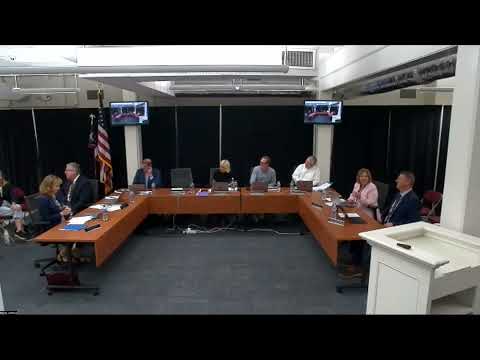
Treasurer Jenkins told the board April 28 that the district’s updated five‑year forecast shows revenue and expenditure changes since November and cautioned that proposed state budget language could significantly reduce the district’s allowable ending cash balance.
Key numbers and changes Jenkins said the forecasted revenues in the current cycle are roughly $1.5 million lower than the November projection, primarily because of about $800,000–$900,000 in reduced real‑estate collections and about $700,000 less in income‑tax sharing tied to an expired abatement. On expenditures, Jenkins said she expects actual spending to be somewhat lower than currently budgeted and still projects a positive ending cash balance this fiscal year of approximately $44.3 million; the forecasted balance for fiscal 2029 was described as about $2.8 million.
Why the state budget matters Jenkins and board members discussed language in the pending biennial budget (House Bill 96) that would cap districts’ carryover at 30% of the previous year’s expenditures and, in some drafts, require returned tax dollars to taxpayers. Jenkins warned that applying a 30% cap to the district’s current numbers could reduce the district’s available cash by approximately $20 million and push the forecast into deficit in later years.
She explained that the district files the five‑year forecast under the Ohio Revised Code and typically includes only revenue already in law; she described the budget process timeline and said the district would monitor the conference committee and possible gubernatorial line‑item vetoes. Jenkins also noted that the district is not including anticipated new economic development revenue in the forecast unless projects are firm; two large potential economic development projects discussed with the city could add material revenue in later years but are not yet counted.
Board operations and mitigations Board members discussed options if the legislation is adopted. Jenkins recommended creating a dedicated restricted fund (a so‑called 070 fund) for particular capital projects to protect project funding while complying with any new carryover rules; funds placed in certain restricted accounts are not considered general fund carryover. Board members asked about timing for presenting a final forecast, how to communicate with the public and next steps if the budget language becomes law.
Votes and later fiscal approvals Later in the meeting the board approved March financial statements and appropriation modifications for increased federal allocations; Treasurer Jenkins noted these adjustments are covered by the corresponding revenue sources.
Ending: Jenkins said she will continue to track HB96, provide updated forecasts as the budget process concludes and prepare communications the board can use to inform the community if the proposed carryover cap remains in the final budget.