Get Full Government Meeting Transcripts, Videos, & Alerts Forever!
Get email alerts on the Public Housing Programs topic
No spam. Unsubscribe anytime.
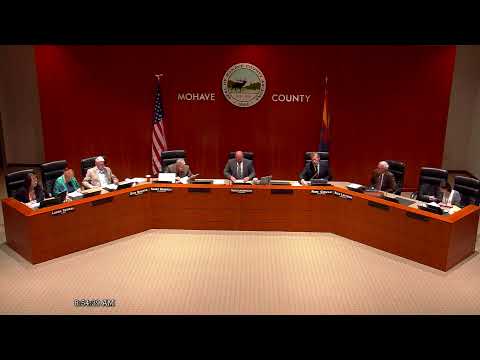
Mohave County Housing Authority reviews programs, approves annual and five-year PHA plans
Summary
At its March 17 meeting the Mohave County Housing Authority heard a director27s report on vouchers, rehabilitation programs, and affordable-housing projects, approved revisions to administrative and rehabilitation guidelines, and adopted Resolution 2025-009 to submit its annual and five-year PHA plans to HUD.
Mohave County Housing Authority board members met March 17 and received a briefing from Director Smith on the authority27s programs, recent housing projects and funding, then approved revisions to administrative documents and a resolution to submit the agency27s PHA plans to state and federal reviewers.
Director Smith opened the report by recounting the authority27s programs and scale: "The Mohave County Housing Authority was started in, was created in 1990," and the authority currently administers the Housing Choice Voucher and other rental-assistance programs, she said. Smith reported the authority has 562 vouchers and serves about 688 people and families across its programs. She said the authority does not own residential buildings but noted the Canyon Veteran Villas development, which she said currently serves about 47 veterans.
The director described participant demographics and other programs: "Almost 70 percent of the people that we serve on the Housing Authority are currently disabled," Smith said. She also detailed a family self-sufficiency program with about 40 participants and said roughly 18 participants have graduated from that program. Smith said community-development programs administered through HOME and CDBG include an owner-occupied rehabilitation effort that has rehabilitated, she said, nearly 80 homes over the past four years.
Jamie Brenier, the housing revitalization manager, described how the HOME and CDBG owner-occupied rehabilitation programs operate: "We submit, we have an open waiting list, and applicants that are interested can submit an application to our grants coordinator, Becky Kessler, and she prequalifies the application based on four preferences." Brenier said prequalification checks include age, income, homeownership status, and residency in Mohave County; she added the authority currently has about a two-year waiting list for rehab assistance.
Board members asked for funding detail and outcomes. Supervisor Borelli and others asked how much funding is federal versus county general fund. Director Smith said most funding for the housing programs is federal through HUD and noted the authority also receives some state funding; she said the authority27s general fund contribution to community services is about $440,000 annually, with an estimated leveraged return cited in an annual report of roughly $11 million and referenced an ASU study used to estimate cost savings of about $5,000,000 from housing and services (figures provided by Smith as part of her report). Smith said full funding breakdowns and program outcome numbers would be provided to the board after the meeting.
Smith and staff also discussed development tools and partnerships. She described Low-Income Housing Tax Credit projects (LIHTC), which she said have produced multiple developments in the county, and noted Bullhead City has recently had two such developments open or at waiting-list stage. Smith said the authority is pursuing YouthBuild funding (she stated grant awards can range from $700,000 to $1.5 million) to train youth in construction skills and to support housing production.
On the agenda27s regulatory and plan items, the board reviewed revisions to Chapter 4 of the Mohave County Housing Authority administrative plan, the annual PHA plan, the five-year PHA plan, and the owner-occupied housing rehabilitation guidelines. Director Smith told the board that one formal change was to add a higher preference in the administrative plan for mainstream assistance to people with disabilities.
After discussion, the board voted to approve the administrative-plan revisions and to adopt Resolution 2025-009, authorizing submission of the authority27s annual PHA plan, five-year PHA plan, certifications and related documents for fiscal year 2025. The meeting record shows the motions carried by voice vote with all members saying "aye." The board also approved appointment of three directors and the meeting minutes from prior 2024 meetings during the session.
During a public hearing the board opened the floor for comment and recorded no speakers. The board adjourned after a routine financial report covering April 2024 through March 2025.
Votes at a glance
- Appointment of board members: Motion by Chairman Lingenfelter to appoint Borelli, Lettman and Martin to the board of directors; second not specified in the record; voice vote recorded as "aye"; outcome: approved.
- Approval of meeting minutes (04/01/2024, 06/03/2024, 09/03/2024): motion and second recorded; voice vote recorded as "aye"; outcome: approved.
- Approval of revisions to Chapter 4 of the administrative plan, the annual PHA plan, the five-year PHA plan, and owner-occupied rehab guidelines: motion and second recorded; voice vote recorded as "aye"; outcome: approved.
- Adoption of Resolution 2025-009 authorizing submission of PHA plans and certifications: motion and second recorded; voice vote recorded as "aye"; outcome: approved.
What the board directed or will follow up on
Board members asked staff to provide a detailed funding breakdown (federal HUD funds vs. state and county general fund amounts) and program outcome counts (for example, exact numbers of families moved to permanent housing and exact graduation counts from family self-sufficiency). Director Smith said she would provide those figures to the board by email.
Context and significance
The meeting consolidated routine oversight (financial report, minutes) with program updates and formal approvals needed to satisfy HUD planning and certification requirements. Staff emphasized that many local housing activities depend on federal HUD pass-through funds, state programs and competitive grants, and that development tools such as LIHTC and potential YouthBuild awards are a key part of local affordable housing production.