Maricopa supervisors vote to send revised shared‑services agreement and cover letter to county recorder
Loading...
Summary
After weeks of exchanges and an April 11 negotiation, the Maricopa County Board of Supervisors voted unanimously April 24 to send Recorder Justin Heap a cover letter and redlined and clean drafts of a revised shared services agreement governing joint election duties.
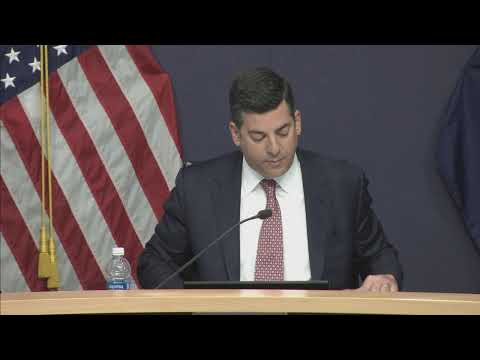
The Maricopa County Board of Supervisors voted 5‑0 Thursday to send Recorder Justin Heap a cover letter and both redlined and clean drafts of a revised shared services agreement (SSA) that lay out how the recorder’s office and the board’s elections department will divide election duties.
The board moved and seconded a cover letter labeled “Lesko draft number 1,” with a minor wording change requested by the board’s appointed counsel (changing “County Attorney” to “Appointed Attorney”) and the addition of board member signatures. Vice Chair Brophy McGee made the motion and Supervisor Gallardo seconded it; Supervisors Stewart, Brophy McGee, Lesko, Gallardo and Chairman Galvin voted aye.
The vote follows months of written exchanges and meetings after Recorder Justin Heap in January 2025 notified the board that he was terminating the 2024 SSA and later threatened litigation. Outside counsel Emily Kreger, retained by the board in February because the county attorney’s office faced a conflict, walked the supervisors through the timeline at Thursday’s special meeting and said the April 11 meeting between board leaders, county staff and recorder staff produced “meaningful and significant compromises.”
Kreger, outside counsel with the Burgess Law Group, said the recorder’s communications included several changing drafts and requests that the board concluded contained inaccuracies about what the 2024 SSA had done. Kreger said the primary technical disputes involved assignment of pre‑tabulation (early ballot) tasks and how to separate a long‑developed, “homegrown” elections IT architecture that has served both offices.
Assistant County Manager for Elections Zack Shurer and Elections Director Scott Jarrett described the technical problem as an interconnected elections database and IT system that evolved over years and now requires a planned, professional separation so each elected office can have appropriately staffed IT support. Shurer said the board has proposed an RFP for a third‑party analysis and a director‑level IT liaison on both sides to oversee the work.
Recorder Heap’s April 2 draft, Kreger said, would have moved or centralized multiple functions — including aspects of IT, GIS and public‑records processing — into the recorder’s office in ways the board considered inconsistent with statute and prior agreements. Following the April 11 meeting, Kreger said she sent a revised draft back to the recorder’s counsel the next day reflecting the meeting’s agreed changes; she said she received notice on April 17 that Recorder Heap had engaged new counsel, which delayed further negotiations.
Supervisor Debbie Lesko read a text from Recorder Justin Heap describing the April 11 meeting as “very well” and saying “We seem to be in agreement on 95%,” language she said convinced her the parties were close to agreement. Lesko and other supervisors repeatedly said the goal is to reach an agreement as soon as possible so staff can focus on running upcoming elections.
The board’s action Thursday does not finalize an SSA. The document the board voted to send is a proposed SSA (redlined and clean versions) together with a cover letter asking the recorder to consider the board’s revisions and return a response so a final, agendized vote can be scheduled. The motion’s implementing step is procedural: deliver the board’s redlined/clean drafts and cover letter to the recorder and request his reply.
During the meeting, staff emphasized ongoing, day‑to‑day coordination with the recorder’s office on current elections and special elections, and Kreger said she had not been provided any concrete examples showing the recorder was unable to perform statutory duties since taking office. The board also approved recruitment of six IT positions the recorder had requested and described plans to pursue a third‑party IT study and an RFP to guide any split of the shared IT infrastructure.
The board and county staff said the SSA is intended to codify collaboration steps — meeting dates for draft election plans, a process for resolving IT architecture questions, and clarified splits for pre‑tabulation and in‑person early‑voting responsibilities — while preserving the statutory division of duties set by Arizona law.
Chairman Galvin closed the meeting by saying the draft the board is sending “is as much his [the recorder’s] document as it is our document,” and that the parties appeared to be “almost there.” The board will await Recorder Heap’s response and any further edits from his counsel before scheduling a substantive public vote on a final SSA.
Votes at a glance
- Motion: Send the cover letter (Lesko draft number 1, amended to change “County Attorney” to “Appointed Attorney” and to include board signatures) and redlined and clean drafts of the SSA to Recorder Justin Heap. - Mover: Vice Chair Brophy McGee. - Second: Supervisor Gallardo. - Vote: Yes — Supervisor Mark Stewart; Yes — Vice Chair Brophy McGee; Yes — Supervisor Debbie Lesko; Yes — Supervisor Gallardo; Yes — Chairman Galvin. Tally: 5 yes, 0 no, 0 abstain. Outcome: approved.
What happens next
The board’s action transmits the board’s working draft and asks the recorder to review and respond. Parties have previously agreed to recruit a director‑level IT liaison and to finalize an RFP for a third‑party technical analysis. If Recorder Heap returns edits, the board may place a final SSA on a future agenda for formal approval.