Get Full Government Meeting Transcripts, Videos, & Alerts Forever!
Get email alerts on the Early Childhood Preschool topic
No spam. Unsubscribe anytime.
Maple Heights presents plan to expand preschool, proposes monthly tuition increase to $650
Summary
District staff proposed a shift to a more inclusive, mostly full-day preschool model, backed by a proposed new supervisor, added staff and a tuition rise from $400 to $650 to cover salaries and supplies; state ECE funding and Step Up to Quality rules will shape enrollment and budget choices.
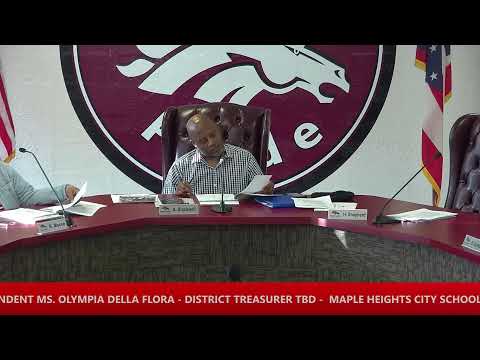
Maple Heights Board of Education staff presented a proposal April 28 to reconfigure the district’s preschool program toward a more inclusive, predominantly full-day model and to raise the district’s private-pay monthly preschool tuition from $400 to $650.
The presentation, led by Dr. Shay Price, director of curriculum, and a district administrator who introduced the plan, said the current preschool is housed at Abraham Lincoln Elementary and includes half‑day and one full‑day class, with separate special‑education (SPED) and general‑education sessions.
Dr. Price said current enrollment is 100 students, down slightly from 103 last year, with 46 special‑education preschool students. She outlined current capacities: two half‑day general education sessions with a 20‑student maximum each, one full‑day general education class with a capacity of 24, and three special‑education classrooms that have been staffed as needed.
The staff proposal would keep a preschool supervisor position and move classroom configurations toward an inclusive peer model (general education peers alongside students with special needs), with projected capacity for about 70 students in the proposed configuration: one inclusive classroom for 3‑ and 4‑year‑olds plus two special‑education classrooms. Staff said new hires under the plan could include one additional early‑childhood teacher and two additional paraprofessionals, but that hiring would be enrollment‑driven.
The district identified multiple funding streams for preschool: the state Early Childhood Education (ECE) grant, county-administered child care funding (for families participating in work/training), preschool special‑education funding (state/federal), federal UPK (Universal Pre‑Kindergarten) grants where applicable, and private pay. Presenters stressed a recent change in ECE administration: the state shifted eligibility verification to the county Jobs and Family Services system, requiring families to apply online; the district may enroll a child before the state decision but reimbursement can come later or parents may be billed for nonapproved months.
Staff proposed increasing base monthly tuition for private‑pay families from $400 to $650, with a prorated scale for families between 101 and 200 percent of the federal poverty level and continued ECE coverage for qualifying families (ECE currently funds half‑day slots only). Dr. Price said the proposed tuition increase is intended to cover higher teacher salaries, benefits and classroom resources required to operate more full‑day, inclusive classrooms.
Staff also told the board that to maintain the district’s Step Up to Quality standing (described in the presentation as the state accountability framework for preschool), classrooms must meet specific curriculum, ratio and furniture/space requirements; kindergarten furniture currently in many preschool rooms does not meet licensing expectations, so furniture purchases are likely.
Board members asked about enrollment numbers and whether the district has applied for UPK. Staff said the district conducted an interest survey and currently has roughly 40–50 expressed interests (below the 70‑student model target), and that the district will apply for UPK in 2027. Staff said they will base any additional classrooms and hires on actual enrollment. The presenters also said parents who qualify for ECE must apply early through the county portal and that ECE, as run now, typically pays the district after attendance is submitted (districts submit attendance and receive reimbursement rather than getting funds in advance).
No formal board action or vote on the preschool proposal or the tuition increase was recorded at the April 28 meeting; the item was presented for board discussion and to give staff permission to continue planning based on enrollment and funding.