Get Full Government Meeting Transcripts, Videos, & Alerts Forever!
Get email alerts on the Public Works topic
No spam. Unsubscribe anytime.
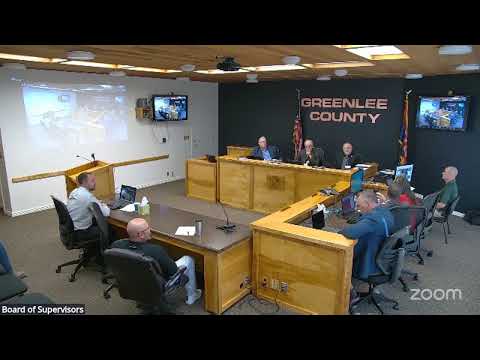
Greenlee County OKs fairgrounds electrical work and a new irrigation well, declines federal park grant due to long covenants
Summary
Supervisors approved rerouting main electrical lines at the fairgrounds and awarded a well‑drilling contract to increase irrigation capacity. Staff recommended, and the board directed, that the county not pursue a Land and Water Conservation Fund grant because of design requirements and perpetual recreation covenants.
The Greenlee County Board of Supervisors approved multiple measures to expand utility and water capacity at the county fairgrounds and directed staff to forgo pursuing a federal/state park grant that would place long‑term restrictions on the property.
Public Works Fleet and Facilities Manager Tony Hines asked the board to approve an electrical reroute at the fairgrounds. Hines described the work as phase 2 of the fairgrounds electrical improvements and said the county received a quote from DVEC to reroute overhead lines and install a pad‑mounted transformer to support a second arena. "We have a quote from DVEC on for 35,047.65," Hines said. The board approved the sole‑source award to DVEC by voice vote.
On water, County Engineer Reed Larson described the county’s need for more irrigation supply to support new recreational fields. Staff recommended awarding the drilling contract to the local firm listed as DS Well Drilling to drill a deeper irrigation well (up to 600 feet) because the new water will be used solely for irrigation and field wetting, not potable supply. The board approved the award at $53,900 by voice vote.
Separately, staff briefed supervisors on a potential Arizona State Parks application funded through the Land and Water Conservation Fund that could provide up to $1.5 million with a 50/50 match. Staff outlined grant rules that require full project design and engineering before application, cultural/archaeological surveys, and a perpetual covenant that would restrict the entire fairgrounds to outdoor recreation uses in perpetuity. Staff recommended declining pursuit of that grant because the upfront engineering, survey requirements and long‑term covenants would limit the county’s flexibility and could take 12–24 months to complete.
Why it matters: the electrical and water upgrades are intended to support expanded fairgrounds uses, including a second arena and junior rodeos, while the board chose not to accept federal funds that would place long‑term restrictions on county property.
Details and next steps: staff said the DVEC electrical reroute prepares the site for future lighting and announcing/crow’s‑nest infrastructure but that lights for the second arena have no firm ETA and are lower priority. The well award covers drilling to a maximum of about 600 feet; current on‑site wells produce between about 8 and 31 gallons per minute and staff said deeper drilling may reach additional aquifers. The board asked staff to continue seeking other grant opportunities and to use in‑house resources and carefully staged contracting to control costs as the fairgrounds build‑out continues.
The board approved the DVEC electrical award and the well‑drilling contract by voice votes; both motions carried.