Get Full Government Meeting Transcripts, Videos, & Alerts Forever!
Get email alerts on the Rezoning Alder Lane topic
No spam. Unsubscribe anytime.
Neighbors oppose denser subdivision on Alder Lane; supervisors approve limited rezone with lot-size stipulation
Summary
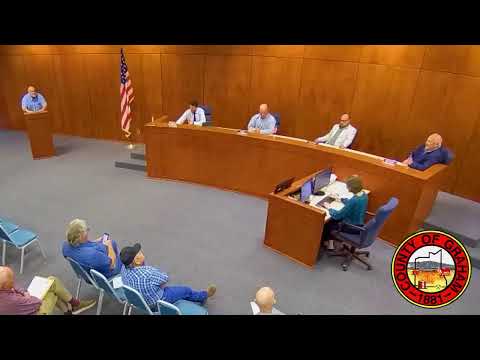
After public comment raising flooding and traffic concerns, the Graham County Board of Supervisors approved Tom Palmer’s request to rezone a 2.5-acre parcel to allow residential lots, conditioned on a 20,000-square-foot minimum lot size and drainage requirements.
Tom Palmer asked the Graham County Board of Supervisors to rezone a 2.5-acre tract on South Alder Lane so he could split the parcel to allow a small lot for his daughter to build a home. The board voted to approve the rezoning from General Land Use to RSB (single-family residential) but imposed a stipulation that lots must be at least 20,000 square feet (a buildable half-acre), and required drainage and elevation documentation at building permit stage.
Palmer told the board he had been searching “for a little lot for my daughter to build a house for quite a while” and that small, affordable parcels close to utilities were scarce. He said his intent was to create about five lots around a half-acre in size and that he would accept a board limit on lot count and size.
Residents who live along South Alder Lane opposed the rezoning at the public hearing. Peter Hanson, who lives at 650 South Alder Lane, told the board that the area is in an AO floodplain and warned that raising building pads ‘‘could change the direction of the water flow back west across Alder Lane and place our property and other properties on Alder in greater jeopardy from flooding than they already are.’’ Jody Clayman and Scott Alder cited traffic safety on Alder Lane and said the local road and easement widths could not safely support a denser subdivision. Clayman noted the lane is a 16-foot easement.
County staff and engineering explained regulatory constraints: homes in the floodplain must meet elevation requirements and cannot increase downstream drainage during normal flows. Michael Bryce, county engineering staff, said permit-level drainage analysis would be required to ensure the development “does not add an inch of flood water to the downstream” and that construction must include measures so neighbors are not adversely impacted.
Board members weighed competing priorities: property rights and the need for modest housing near utilities versus neighbor concerns about flooding, roads and infrastructure. Commissioners noted the site had been farmed and other nearby parcels already include smaller lots, but they also acknowledged the call for safeguards. The applicant agreed on the record to accept a condition limiting lot size to 20,000 square feet; the board included that stipulation in its approval and directed planning staff to record the restriction in the zoning documentation.
The motion passed with the stipulation, and planners will require elevation and drainage information before issuing building permits for any new lots.
Ending: The board’s decision allows limited residential subdivision while adding a procedural safeguard: no building permits will be issued without engineering documentation showing the project will not increase drainage impacts on downstream properties.