Get Full Government Meeting Transcripts, Videos, & Alerts Forever!
Get email alerts on the Comprehensive Plan Update topic
No spam. Unsubscribe anytime.
Coconino County advisory group reviews draft comprehensive plan, schedules April 14 final review
Summary
Advisory members and county staff discussed the draft comprehensive plan’s structure, a 52-item implementation list, a separate sustainability framework and next steps including a 60-day public review and a final advisory meeting set for April 14.
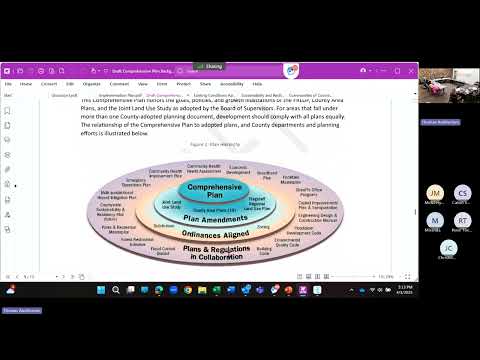
Coconino County planning staff and an advisory group met April 3 to review a near-final draft of the county’s comprehensive plan and to set timelines for public review and implementation priorities.
County staff framed the meeting as a review of the plan’s introduction, appendices, glossary and background materials, and asked advisory members to rank priority actions. Staff said the implementation list consolidates earlier chapter-level recommendations into 52 actions, with 17 labeled as ongoing programs or projects.
The discussion mattered because the comprehensive plan will guide future planning commission and board of supervisors decisions on land use, amendments and county priorities for the next decade. Staff emphasized that the implementation list is a starting point: priorities will be dynamic and should reflect available funding, department capacity and statutory processes for amendments.
County staff described the implementation table as organized by ongoing items and high-, medium- and low-priority actions. Staff said high-priority items are suggestions for work within one to two years of plan adoption; several participants urged clearer guidance linking priority to timeline, staff capacity and funding. Staff responded that some items — such as a housing needs assessment — could be carried in the county budget and would likely cost in the “tens of thousands” of dollars, while larger transportation or infrastructure items would require state or federal grant funding.
Advisory members and staff also discussed a proposed separate sustainability and resilience framework. Staff described the sustainability appendix as a proposed outreach-driven project rather than an adopted policy, and said the county would develop a standalone sustainability plan only after additional public engagement and inventorying existing county sustainability work.
On technical background, staff said the plan’s population and demand projections use data from the Arizona Department of Economic Security and U.S. Census Bureau sources. Several advisory members raised concerns that census counts and projections may undercount remote communities (“Valley” was discussed as an example) and noted there is a Bureau process communities can use to request post-census corrections through 2027.
Staff confirmed practical next steps: the draft plan and appendices will be posted with links to community assessment reports on the county website, the document will enter a 60-day public review period, and the advisory group will reconvene for an initial final-draft review on Monday, April 14. Staff also said they will circulate segmented documents for easier review ahead of that meeting and will collect the ranked priorities from members to assemble a consolidated implementation order.
The meeting closed with minor administrative notes: staff will add clarifying text that links priority rankings to timeline and values, will verify references to the county zoning code and regional plan amendments process, and will update maps and glossary entries before the public review. A county reporter identified himself on the call as Calvin Schumacher of the Williams Grand Canyon News and said he was listening in.
Looking ahead, staff said they expect to return a revised packet to the advisory group after public comments and to bring implementation and budget requests to the board of supervisors during budget season.