Get Full Government Meeting Transcripts, Videos, & Alerts Forever!
Get email alerts on the County Facilities And Jail Infrastructure topic
No spam. Unsubscribe anytime.
Cochise County facilities director outlines aging jail systems, energy-audit plan and funding shortfalls
Summary
Daryl Crowley, Cochise County director of facilities, told the Board of Supervisors during a work session that the county is managing a large and growing backlog of facility repairs and that the condition of existing jail infrastructure is driving near-term capital needs.
Daryl Crowley, Cochise County director of facilities, told the Board of Supervisors during a work session that the county is managing a large and growing backlog of facility repairs and that the condition of existing jail infrastructure is driving near-term capital needs. Crowley said the facilities division recorded more than 1,200 work orders in the first nine months of the year and that “only about 30 of them are still open.”
The discussion centered on maintenance at multiple county properties and how possible funding scenarios — including a proposed jail tax — would shape whether the county pursues a large new jail or a smaller, lower-cost alternative. Crowley listed repeated water-line failures at the Bisbee jail and the Lisonbee site, kitchen electrical problems that have caused power outages, and a mix of HVAC units throughout the county that are past typical useful life.
Why it matters: Crowley and supervisors said replacing or bringing the county’s oldest systems up to current building and safety codes could be costly, and that building a new jail to today’s standards is substantially more expensive than maintaining older facilities. The board’s choice about a jail tax will affect the scope of any new construction and the county’s ability to fund energy-efficiency upgrades recommended in a proposed investment-grade audit.
Crowley provided specific condition and cost context. He said the county’s HVAC inventory is heavily aged: “When we looked at this a couple of years ago, we knew within the next five years, 80 to 85% of all of our HVAC units were past due, being replaced.” He said replacing 13 units in a recent pod project cost about $500,000 and that an additional alarm/fire system overhaul could cost roughly $400,000. Crowley also said the county received two viable quotes for a fire-alarm upgrade and discarded a third because it appeared to miss critical scope.
On energy-efficiency work, Crowley described outreach to McKinstry, a national firm that offers energy audits and grant-writing help. He said one vendor quoted an upfront fee of $100,000 for an investment-grade energy audit that would be credited to the project if the county proceeded; other vendors backed out. Crowley said McKinstry has represented it can pursue grant or federal funding streams and manage projects without the county paying that entire audit fee upfront.
Supervisors pressed on what would happen if the jail tax fails. Supervisor Crosby asked what repairs would be mandatory if the county must proceed with a smaller project; Crowley pointed to recurring kitchen power trips caused by aging appliances, failed HVAC units that had been “worked to death,” and corroded water lines on rocky slopes that are repeatedly breached when vehicles disturb the hillside. Crowley estimated further near-term investments and said the county will face continuing unexpected repairs: “every day is a new day because there’s something different coming up.”
Board members also discussed maintenance responsibility for jail facilities. Crowley said he believes maintenance should rest with facilities rather than the sheriff’s office, but noted legal and access issues tied to statutes and operational control. A supervisor referenced Title 11 in the context of changing responsibilities; Crowley said statutory and operational constraints complicate who holds maintenance authority and that those questions remain for future action.
Crowley summarized planned near-term work: several HVAC replacements scheduled over the next two years (he estimated three or four next year and a similar number the following year), continued roof and water-leak repairs at older buildings, and upgrades to remote HVAC controls so county technicians can monitor and place units into unoccupied mode overnight. He said the new county building under construction should be finished “probably sometime June,” but noted delivery delays for a custom electrical service panel were a current schedule risk.
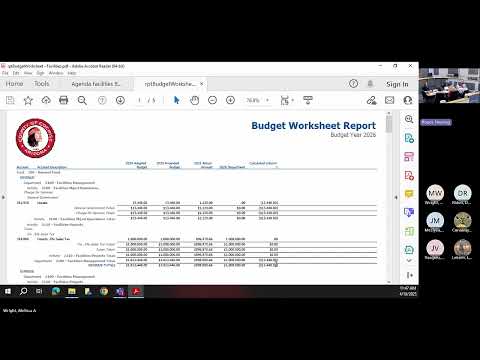
No formal vote or binding direction was recorded during the work session. Crowley said the facilities budget request for the year is “virtually the exact same as what we ran last year” and that the division is not asking for additional ongoing funding in the current request; he offered to provide itemized numbers to supervisors on request. The board did not adopt any formal action in the transcripted portion of this meeting.
Ending: Supervisors said the county must weigh the cost of new construction built to current codes versus continued expenditure on aging infrastructure. Crowley reiterated that integrating maintenance input into design and seeking grants for energy-efficiency measures could reduce lifetime costs. The board adjourned the work session and planned a 1 p.m. meeting with emergency services later the same day.