Get Full Government Meeting Transcripts, Videos, & Alerts Forever!
Get email alerts on the Civil Rights Lgbtq Protections topic
No spam. Unsubscribe anytime.
Lengthy public testimony as Spokane council considers ordinance expanding nondiscrimination protections and shielding access to gender‑affirming and HIV care
Summary
Dozens of residents, advocates and health‑care professionals addressed the Spokane City Council during a packed public hearing on Ordinance C36667, a proposed update to the city human rights code to add LGBTQIA2S+ and Two‑Spirit protections, strengthen privacy for medical records and shield use of city resources from investigations related to reproductive or gender‑affirming care.
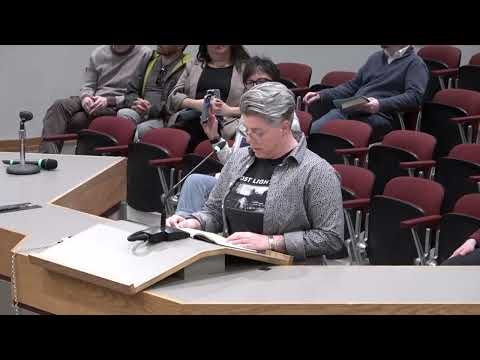
The Spokane City Council heard more than an hour of public testimony and extensive commentary from community leaders and residents on Ordinance C36667, a proposed update to the city’s human rights code that would add protections for LGBTQIA2S+ and Two‑Spirit people, strengthen privacy protections for medical records and direct the city not to use municipal resources to assist investigations into reproductive or gender‑affirming care.
Council members opened the item, announced time limits and took extended public comment from dozens of speakers representing advocacy groups, health professionals, parents and opponents. Supporters urged the council to adopt the ordinance to protect vulnerable residents, preserve access to gender‑affirming and HIV care, and prevent local city resources from being used to enforce restrictive state or federal policies. Multiple speakers described personal experiences; several healthcare providers and community organizations testified that access to gender‑affirming care and privacy protections “save lives.”
“The only way to do that is to write their protections into law,” Stephanie McGee, a member of the public, said during testimony. “Vote yes to save lives.” Several speakers described fear and heightened community stress in the wake of state and federal actions.
Opponents questioned the ordinance’s scope and raised concerns about protections that would touch schools, shelters and city programs. A number of speakers argued existing federal and state anti‑discrimination laws already cover these areas. One public speaker warned of potential unintended consequences and questioned whether new categories would create special classes under law.
Before testimony began, Council member Dillon moved to limit public spoken testimony to two minutes per speaker; the motion was seconded and the council voted 5–2 to impose the 2‑minute limit. Council members said the limit was intended to allow more speakers to be heard while keeping the meeting on schedule.
Council members engaged in extended discussion after public comment. Several said they supported changes to the city code that would add Two‑Spirit recognition, strengthen the Office of Civil Rights, Equity and Inclusion’s role and create a liaison position in the Spokane Police Department. Some members expressed fiscal concerns about extending city employee health coverage and the ordinance’s projected cost to the city; others emphasized the ordinance is a local shield intended to protect residents when broader state or federal actions remove protections.
Councilmember Navarrete described the ordinance as an affirmation of council values and said it would align local code to protect privacy and access to care. Council member Bingle proposed amendments during the drafting process that some speakers described as a “poison pill”; several council members and testifiers said those amendments were defeated during committee review.
The transcript does not record a final, definitive council vote on adopting the ordinance during the meeting. Councilmembers prepared to vote and discussed fiscal impacts and policy details; public testimony and council remarks were entered into the record. The item remains before the council for final action pending any formal vote recorded in subsequent minutes.