Get Full Government Meeting Transcripts, Videos, & Alerts Forever!
Get email alerts on the Energy Performance Contracting topic
No spam. Unsubscribe anytime.
Committee hears testimony on bill to modernize state energy performance contracting
Summary
Witnesses from industry, nonprofits and the Oregon Department of Energy’s process urged lawmakers to pass House Bill 3653 to streamline energy performance contracting and broaden how cost effectiveness is measured for public facilities.
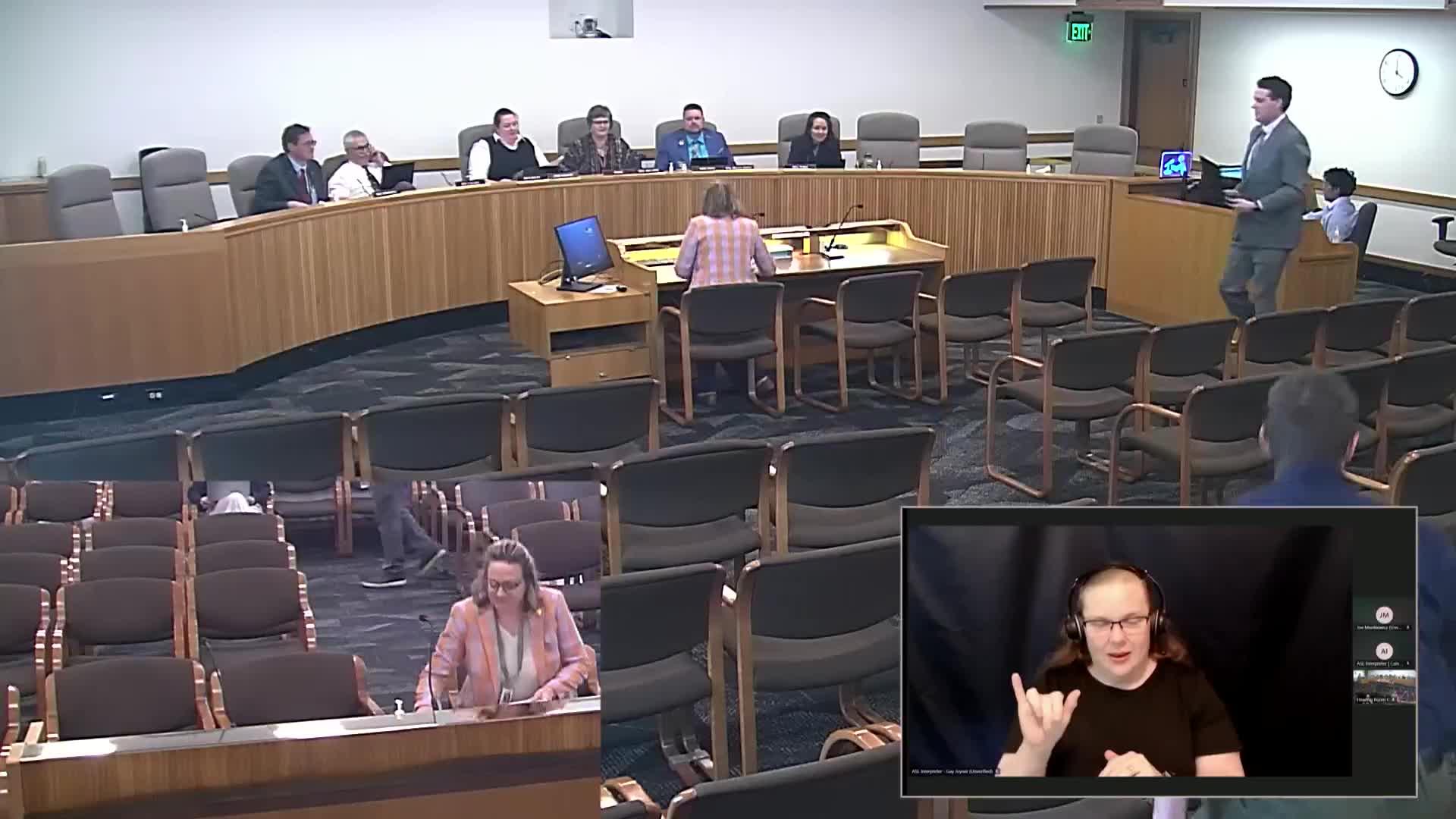
The Senate Energy and Environment Committee held a public hearing April 28 on House Bill 3653, which would modernize Oregon’s energy savings performance contracting (ESPC) program so public agencies can more easily use guaranteed‑savings contracts to finance building upgrades.
House Representative Emerson Levy testified in support and said the bill would update an existing program, streamline vendor selection and expand the definition of cost effectiveness so agencies can count avoided maintenance and total cost of ownership, not just short‑term energy savings.
“House Bill 36 53 makes this existing program more flexible, strategic, and impactful,” said Isaac Insco, chief of staff to Representative Bobby Levy, who testified in support. He said the bill is voluntary and preserves local control while removing unnecessary procurement steps.
Witnesses from industry and the nonprofit sector described how ESPCs function and why changes are needed. Carrie Mead, executive director of Building Potential, said the bill would allow agencies to select prequalified energy service companies without issuing a second, duplicative procurement and would permit inclusion of on‑site renewable generation and other modern upgrades in the contract scope.
"Energy performance contracting is a well‑tested effective and voluntary tool for public agencies to upgrade and maintain the building systems within their facilities, oftentimes without any needed upfront capital investment," Mead told the committee.
Joe Mankiewicz of McKinstry, speaking remotely, urged modernization and pointed to other states’ programs: Washington has used ESPCs to invest nearly $2 billion and save an estimated $50 million annually, and Colorado’s program has invested about $846 million. He said fewer than 40 Oregon public agencies have invested less than $200 million through ESPCs since 2008.
Testimony and questions from senators focused on how the Oregon Department of Energy would qualify vendors, whether the prequalified list preserves competition, and how the bill alters procurement and auditing steps in the ESPC process. Building Potential explained the current process: firms submit qualifications to ODE, which vets and places them on a list agencies can use; HB 3653 would permit an agency to select a prequalified firm directly for the audit and contracting phase, reducing duplication while preserving options to use an RFP process if an agency prefers.
Witnesses said the fiscal note for HB 3653 is minimal and the bill has unanimous House support (per witnesses) and reflects best practices used in other states and federal guidance.
The committee closed the public hearing after testimony from the bill sponsors, industry and nonprofit representatives and no immediate committee vote was recorded.