Get Full Government Meeting Transcripts, Videos, & Alerts Forever!
Get email alerts on the Gei Causation topic
No spam. Unsubscribe anytime.
Committee hears negotiated fix to guilty-except-for-insanity standard after Oregon Supreme Court rulings
Summary
House Bill 2,471 A would set a 'but for' causation standard and bar a non-qualifying mental disorder from being the primary cause of lack of capacity for a GEI defense; the measure was presented as a negotiated product of prosecutors, defense counsel and forensic evaluators.
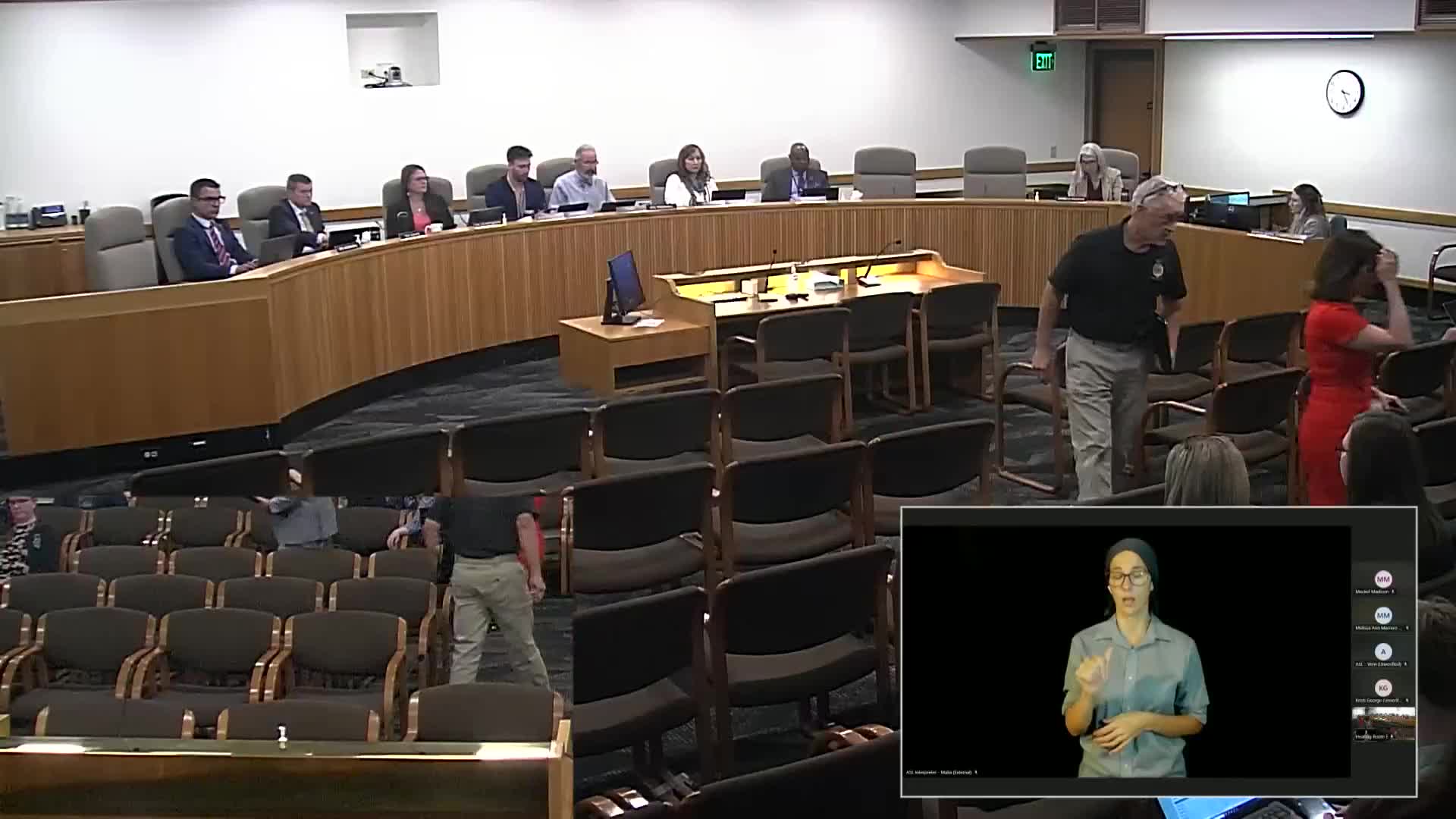
The Senate Committee on Judiciary held a public hearing on House Bill 2,471 A on April 28. The measure seeks to clarify the statutory standard for a guilty-except-for-insanity (GEI) defense after recent Oregon Supreme Court decisions.
Melissa Marrero, Senior Deputy District Attorney from Multnomah County, told the committee the bill represents a negotiated agreement between the Oregon District Attorneys Association (ODAA) and the Oregon Criminal Defense Lawyers Association (OCDLA), and reflects input from certified forensic evaluators. "House Bill 2471A does not use the term 'as a result of' in its drafting, but rather lists the causal requirements for the defense," Marrero said, explaining the sponsors' intent to establish a workable but-for causation standard while preserving the nexus requirement between qualifying mental disorders and lack of capacity.
Marrero said the draft was developed in response to State v. Mizer (372 Or. 438), which raised questions about the causal showing required when a defendant has multiple co-occurring disorders. Under the draft, a qualifying mental disorder must be independently sufficient to produce the lack of substantial capacity, and a non-qualifying mental disorder cannot be the primary cause. The bill also codifies the long-standing principle that voluntary intoxication cannot be the cause of the incapacity that supports a GEI defense.
The bill’s proponents emphasized the measure does not change which conditions qualify as qualifying or non-qualifying mental disorders, noting that longstanding case law will continue to guide evaluators about disorders such as personality disorders, paraphilias, substance dependence, and borderline personality disorder.
Maylee Browning, legislative director for the Oregon Criminal Defense Lawyers Association, told the committee OCDLA had moved to a neutral position on the amended bill after stakeholder negotiation. Senator McLean and other committee members asked questions about the bill’s work-group process and whether the draft was workable for evaluators; Marrero said certified forensic evaluators were part of the negotiating table and that the language was vetted to produce an operational standard.
Jules’ overview to the committee noted the bill came from the House with 53 ayes, 4 excused and 3 excused for business. No committee action was taken at the April 28 hearing; sponsors asked the committee to consider the negotiated language in a future work session.