Get Full Government Meeting Transcripts, Videos, & Alerts Forever!
Oregon DHS warns youth homelessness program will lose most services unless $19.7 million is funded
Summary
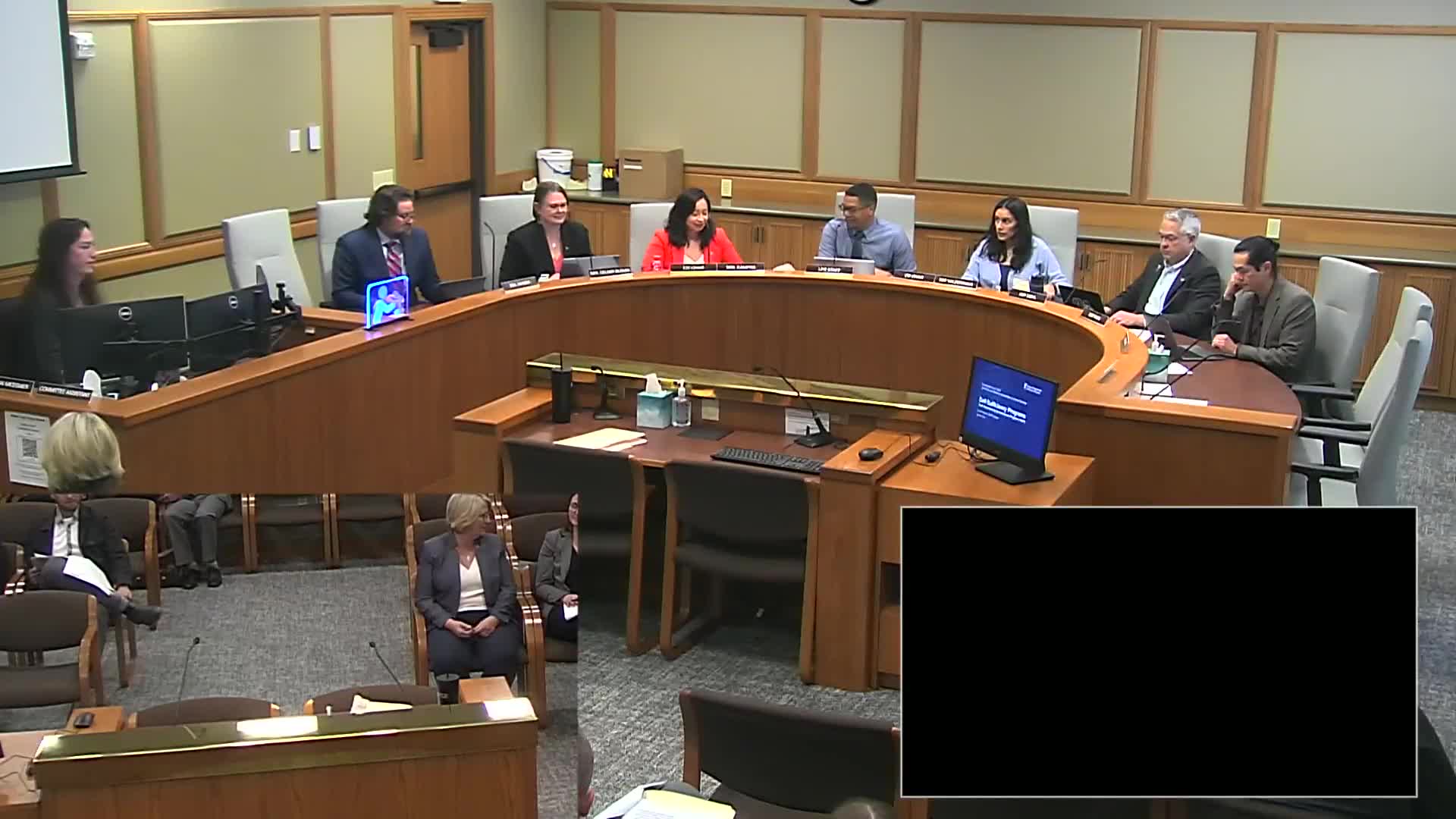
The Oregon Department of Human Services told the Joint Ways and Means Subcommittee on Human Services on April 28 that the Youth Experiencing Homelessness Program, known as YEP, risks losing roughly 75% of its services and 70% of its staff when one-time funding expires June 30 unless the Legislature approves the department’s $19,707,205 policy option package to make key funding and positions permanent.
The Oregon Department of Human Services told the Joint Ways and Means Subcommittee on Human Services on April 28 that the Youth Experiencing Homelessness Program, known as YEP, risks losing roughly 75% of its services and 70% of its staff when one-time funding expires June 30 unless the Legislature approves the department’s $19,707,205 policy option package (POP) to make key funding and five limited-duration positions permanent and add one position.
Claire Sequin, director of Self Sufficiency Programs at the Oregon Department of Human Services, opened the informational hearing and said the program has expanded rapidly since 2020 with one-time and limited-duration investments and now funds 42 nonprofit providers through 61 grants. Sequin said the 2023 housing package included an $18,750,000 one-time general-fund investment for YEP core services and a separate $4,000,000 one-time allocation for low-income college housing that both expire this biennium.
The nut of the agency’s pitch to the subcommittee: YEP fills a middle role in the youth homelessness continuum — providing emergency shelter, host homes, outreach and drop-in services, case management and transitional living — but those gains could be reversed without ongoing state funding. “Without additional investment, this program is at risk of losing significant gains, including 75% of its services funding and 70% of its staff,” Sequin said.
YEP’s funding mix and recent growth
Agency presenters described the program’s funding mix as roughly 98% state general fund and 2% federal funds in the SSP (Social Services) account, with grantee budgets supplemented by federal Continuum of Care and other federal programs, local government dollars,…
Already have an account? Log in
Subscribe to keep reading
Unlock the rest of this article — and every article on Citizen Portal.
- Unlimited articles
- AI-powered breakdowns of topics, speakers, decisions, and budgets
- Instant alerts when your location has a new meeting
- Follow topics and more locations
- 1,000 AI Insights / month, plus AI Chat