Get Full Government Meeting Transcripts, Videos, & Alerts Forever!
Get email alerts on the Early Education topic
No spam. Unsubscribe anytime.
Bull Early Education Center reports sustained early-literacy gains and rising attendance
Summary
Bull Early Education Center told the Racine Unified board that it continued to meet early-literacy benchmarks after adding classrooms, reporting high letter-recognition scores and small increases in attendance.
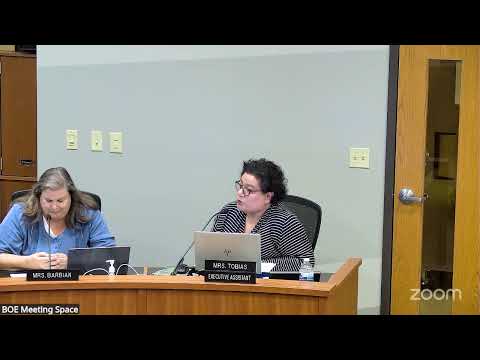
Yolanda Allen, principal of Bull Early Education Center, told the Racine Unified School District Board on April 28 that the school is sustaining strong early-literacy performance despite recent enrollment growth.
Allen said 96.7% of the school's graduating 4K students reached the benchmark last school year for uppercase-letter recognition, a strong predictor of later reading success, and that the site was performing at 95.1% this school year while adding two classrooms. She said the school's 3K program (called Peacock) met a level-3 benchmark last year at roughly 92% and is on track to maintain similar performance with an additional classroom.
Allen described instructional strategies that staff use to support literacy: explicit early literacy instruction drawing on adopted curricula (Learning Without Tears, Creative Curriculum and Heggerty for phonological awareness), monthly professional learning sessions for teachers, visual cues for phoneme mouth positions, and tiered interventions delivered by classroom and Title I staff. She also said staff are emphasizing fine-motor work (for writing) to counteract students' increased use of touch-screen technology.
Board members asked for follow-up data. Miss Fuller asked why the 3K goal baseline was lower than 4K and whether most 4K students come from the school's own 3K; Allen estimated about 80% of 4K students had attended the school's 3K program. Other board members asked about specific instructional approaches for vowels and fine-motor practice; Allen described use of sand, sensory materials and graded writing tools to build pencil grasp and letter formation.
Why it matters: Strong early-literacy outcomes are tied to later academic performance. Bull's ability to maintain high letter-recognition rates while expanding classrooms is a key metric for district early-learning goals.
Ending: Allen told the board the school will continue to target word recognition, phonemic awareness, decoding and fine-motor skill development, and that improved attendance across subgroups (2.3 percentage points above last year) is supporting those efforts.