Get Full Government Meeting Transcripts, Videos, & Alerts Forever!
Get email alerts on the Environment Carbon Capture topic
No spam. Unsubscribe anytime.
City staff seeks $650,000 from Climate Commitment Act to fund carbon-capture feasibility study at Waste-to-Energy plant
Summary
City staff told the Spokane City Council at an agenda-setting briefing that a supplemental budget ordinance would add $650,000 in Climate Commitment Act funds to pay Carbon Quest to study carbon-capture options and costs for the Waste-to-Energy facility; the study is expected to finish in June and be presented in July.
Chris Everett, city staff, told the Spokane City Council during its agenda-setting meeting that a supplemental budget ordinance (C36677) will add $650,000 in Climate Commitment Act revenue and a matching expense to pay Carbon Quest to conduct a carbon-capture feasibility study at the city’s Waste-to-Energy facility.
The study will examine how much carbon could be captured, what can be done with the captured CO2 and the economics for each option, Everett said. "Whether we sequester it and basically inject it into basalt, there's some federal taxes that you can receive by doing that, or if you, you know, recover it and clean it to be used in food and beverage," he said. The scope also will include conceptual layouts, electrical demand, anticipated emissions and capital and operations-and-maintenance costs.
The project follows earlier administrative steps: council previously approved an interagency agreement with the Washington State Department of Ecology and a contract with Carbon Quest to perform the work, Everett said. The supplemental budget ordinance simply adjusts the city’s adopted budget to reflect funding that arrived after the budget was approved. "Has a net neutral effect on the adopted budget overall," Everett said.
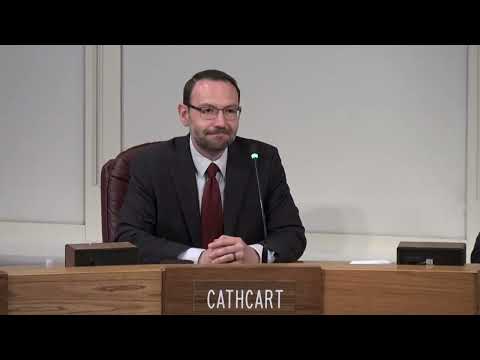
Council President Wilkerson asked when the study would be presented; Everett said the study probably will be finished in June and likely presented to the council or committee in July, "assuming ... the committee chair adds it to the agenda." Council member Cathcart asked whether the study will specify follow-up steps; Everett replied the study will provide options and costs so the council can make decisions about pursuing future funding or projects.
Councilor Bingo said part of his support stems from protecting the Waste-to-Energy facility: "Anything that we can do to help protect the waste to energy facility. And I think this is one of those ways that we can do it." Dr. Randall asked whether the contractor’s typical installations (for other facilities) are comparable to Spokane’s plant, since those other sites do not burn municipal waste; Everett said the study includes a feasibility component to test whether the proposed technology is suitable for this facility.
No formal council vote was recorded at the agenda-setting briefing; staff described the budget adjustment as an administrative correction to include the awarded funding in the city’s budget. Next steps described by staff are finalizing the study in June and scheduling a presentation to the council in July if placed on a future agenda.
The interagency agreement with Ecology and the contract with Carbon Quest were referenced in the briefing but were not re-presented for a new vote at this meeting.