
Senate passes ‘Pam Rock Act,’ raises penalties for dangerous dogs
Get AI-powered insights, summaries, and transcripts
Subscribe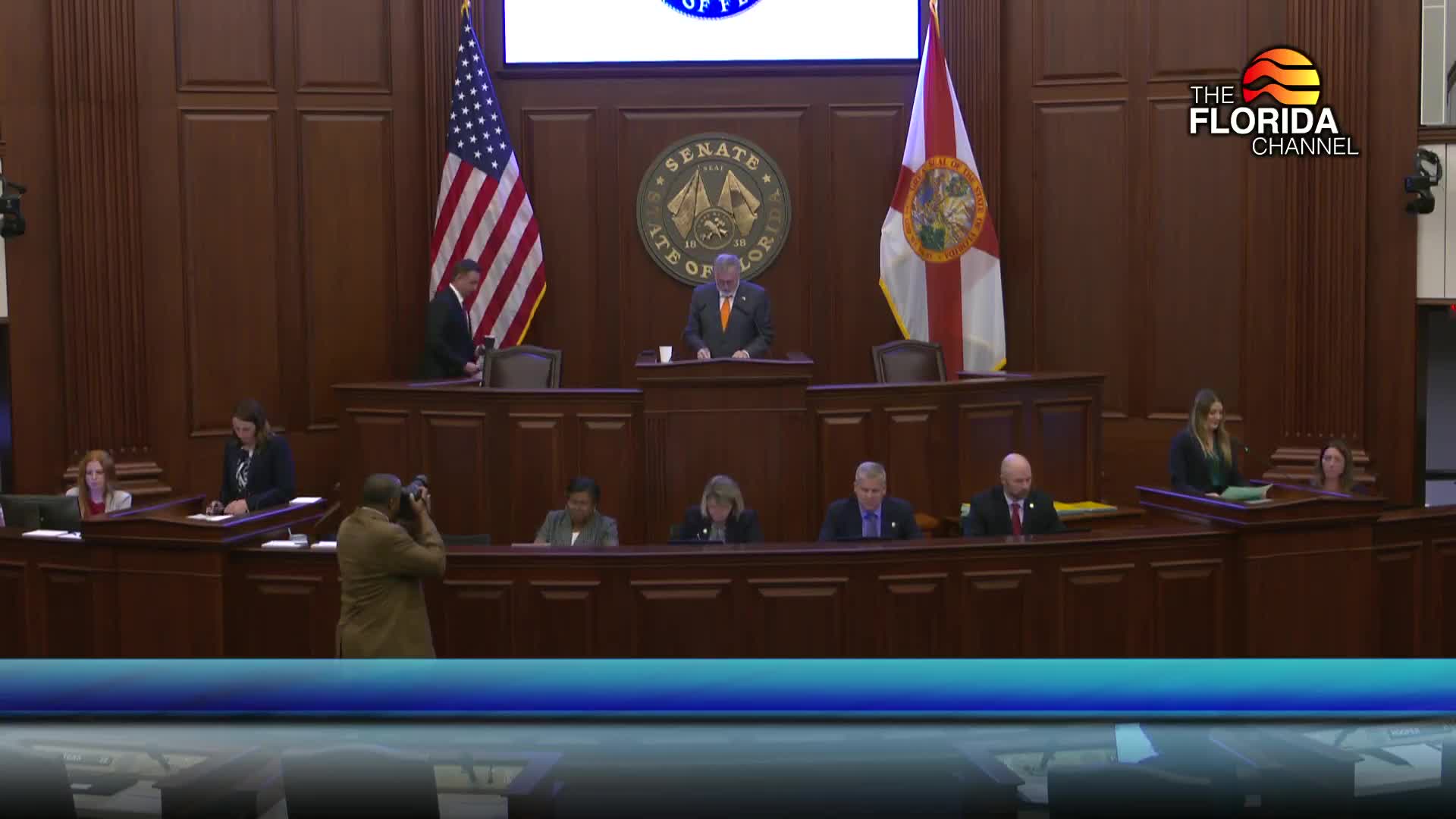
Summary
The Florida Senate on Monday approved legislation known as the Pam Rock Act that tightens penalties for owners of dogs that seriously injure or kill people, substitutes the House companion, and changes definitions including owner and proper enclosure; vote recorded 36–0.
TALLAHASSEE — The Florida Senate voted unanimously Monday to pass legislation known in the chamber as the Pam Rock Act, a measure that raises penalties and tightens definitions for owners of dogs that attack people.
The bill, carried in the Senate by Senator Collins, was substituted for the House companion (CS for HB 593) and adopted after sponsor explanation and brief debate. The motion to adopt the amendment and the final passage were approved without roll-call opposition; the secretary recorded “36 yays, 0 nays.”
Sponsor explanation and victims’ families
Senator Collins, the bill sponsor, told the Senate the measure is intended to “raise the bar in terms of punishment” for owners whose animals cause severe injury and to provide a clearer framework for enforcement. She noted the bill adjusts the statutory definitions of “owner” — aligning language so it includes a parent or guardian in some cases — and imports the state’s existing definition of “proper enclosure.”
“Sometimes we pass things and we ask ourselves, will it make a difference, and will it change the lives of people? This bill will save lives,” Senator Collins said on the floor.
Senator Wright, who spoke before the roll call, framed the bill as a response to fatal and severe attacks on people going about everyday activities. “What it does simply is raise the bar in terms of punishment,” Wright said, adding the bill uses “a specific bite index to grade these bites in a realistic and methodical manner.”
Families affected by attacks attended the Senate session. Senator Collins asked that members recognize the Rock family, identified in the gallery, and the family of an 8‑year‑old boy from DeLand who was repeatedly referenced during floor remarks.
What the bill does
Committee-substitute language adopted on the floor changes the statutory definition of “owner,” aligns the definition of proper enclosure to existing state language and makes technical conforming edits intended to ease enforcement and investigation. The provision authorizing euthanasia of an animal remains tethered to an investigation that finds a sufficiently severe injury under the statute’s bite‑index approach.
Procedure and vote
Senator Collins moved substitution for the House companion and the amendment barcode described on the floor was adopted. After a short close by the sponsor, the Senate proceeded to a recorded vote. The secretary reported the vote as “36 yays, 0 nays.” The Senate clerk then marked the bill as passed and returned to the calendar for third‑reading business.
Why it matters
The measure changes criminal and administrative language that local animal control and law enforcement will use when investigating dog attacks; it also affects owners’ potential civil and administrative exposure. The presence of victims’ family members during the debate highlighted the bill’s intent to respond to high‑profile attacks and provide clearer statutory language for prosecutors and animal control officers.
Ending
The passed substitute will return to the House for any further action required to reconcile differences before final enrollment and the governor’s consideration.