Get Full Government Meeting Transcripts, Videos, & Alerts Forever!
Get email alerts on the Wastewater Infrastructure Biosolids topic
No spam. Unsubscribe anytime.
Commission adopts $196.8 million FY2026 Clean Water SRF project plan for biosolids dryer, energy recovery and sewer repairs
Summary
Kalamazoo City Commission approved a $196,829,913 FY2026 Clean Water State Revolving Fund project plan on April 21 to address biosolids processing (dryer plus energy‑recovery system), Kleinstuck Preserve pipe repairs and Farmers Alley sewer work; staff said long‑term operations would cut current landfill disposal costs significantly.
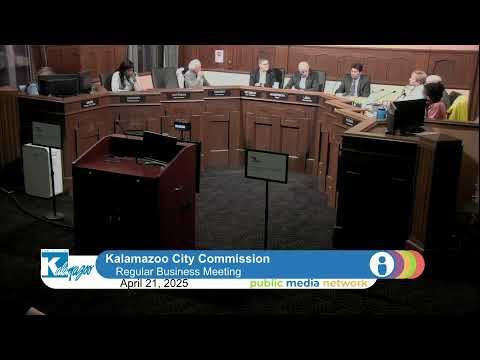
The Kalamazoo City Commission on April 21 adopted a resolution authorizing submission of a $196,829,913 FY2026 Clean Water State Revolving Fund (SRF) project plan for wastewater system improvements, including a new biosolids drying and energy‑recovery system, repairs in the Kleinstuck Preserve and a Farmers Alley sewer replacement project. The commission also designated James J. Baker, P.E., as the city’s authorized project representative.
City staff and Director James J. Baker outlined the rationale: the city currently processes roughly 27 million gallons per day at the Kalamazoo Water Reclamation Plant and produces about 200 tons per day of biosolids. Disposal costs have escalated — staff said the city paid roughly $4.5 million annually for landfill disposal in 2019 and now pays more than $13.5 million annually. The proposed project aims to convert biosolids to a dried, stabilized mineral ash while recovering energy on site, which staff said would reduce annual disposal costs to under $2 million when operational.
Baker described a multi‑year vetting process. The city issued a request for information and evaluated more than 31 technology proposals, then narrowed options with a stakeholder panel that included industrial partners, community representatives and engineering consultants. The recommendation selected the dryer plus an energy‑recovery system (ERS) over dryer‑only and other alternatives after evaluating lifecycle costs, greenhouse‑gas emissions, odor potential and PFAS destruction. Baker said the dryer+ERS option provides the best long‑term operational cost trajectory, superior carbon footprint and an advanced air‑pollution control train that staff judged necessary to protect neighbors from odors and airborne contaminants.
Staff presented lifecycle cost comparisons showing higher upfront capital costs for dryer+ERS (reflected in the overall $196.8 million program plan) but substantially lower long‑term operating cost than dryer‑only alternatives. Commissioners asked detailed technical and financial questions about PFAS treatment, odor control, and how the city would finance the project if state SRF funding was only partially awarded; Director Baker said the city would pursue multiple funding sources including SRF, WIFIA and potentially municipal financing options and expected SRF award decisions in September.
The plan’s schedule shows procurement, permitting and construction steps that would run through 2030 if fully funded; staff also stressed required air‑permitting and natural‑features protections for the Kleinstuck Preserve work. Director Baker said the immediate next step is SRF submission and that the staff team will continue to refine project scope and funding strategies.
The commission voted to adopt the project plan. Motion was made by Commissioner Cooney and supported by Commissioner Decker. Roll call recorded unanimous approval among commissioners present.
Ending: Staff said the SRF submission will compete for funding statewide; if awarded, the project would move into design, permitting and construction phases through the late 2020s with the intent of reducing long‑term biosolids disposal costs and improving environmental and odor outcomes at the plant.