Get Full Government Meeting Transcripts, Videos, & Alerts Forever!
Get email alerts on the Streets Maintenance topic
No spam. Unsubscribe anytime.
Bay City engineers outline asset-management plan and a $24 million 6-year outlook for streets and signals
Summary
Rachel Phillips, Bay City engineering manager, told the commission April 21 that 77% of the city's pavement mileage was rated in poor condition, and that the city would need roughly $6 million a year to hold conditions or about $12 million a year to raise the system to a fair rating.
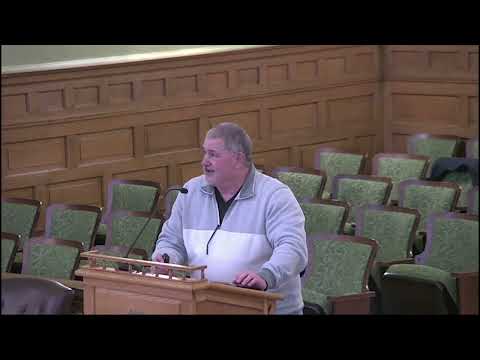
Rachel Phillips, Bay City engineering manager, presented the city’s transportation asset management approach and the Capital Improvement Program (CIP) outlook at the April 21 commission meeting.
Phillips said the state now requires jurisdictions with more than 100 lane miles to submit a transportation asset management plan and update it every three years. Her presentation summarized inventory, condition and the treatment mix — preventive maintenance, rehabilitation and full reconstruction — and explained why preventive maintenance is less costly over a 20–25 year horizon.
The current condition: Phillips said 77% of Bay City’s roadway mileage scored PASER 3 or lower (poor condition) in the city’s last evaluation, leaving the overall system PASER at about 3.05. She said the city has 58 miles of major streets and 25 miles of local streets, three bridges (Liberty, Independence and the Water Street bridge) and 35 traffic signals, about half of which are in fair condition.
Funding and the 20-year view: Phillips said Bay City’s recurring construction funding is roughly $2 million annually for transportation projects; to hold the current system condition would require about $6 million per year and raising the system to a PASER of 4 would require nearer $12 million per year. She said much of the city’s recent capacity comes from securing state and federal grants — the 2025 CIP lists 12 project locations with a combined investment of $7.1 million from the city and $4.5 million in state and federal grants.
She explained the ‘‘mix of fixes’’ approach: crack sealing and surface seals for pavements in good condition, rehabilitation for fair pavements and full reconstruction for failed pavements. "If we don't do preventive maintenance, within 22 years that is completely failed and you have to reconstruct it," Phillips said. She showed a 25-year cost comparison showing that preventive maintenance lowers lifecycle cost per mile.
Project selection: Phillips said project selection considers crashes, utility needs, mobility impacts and grant eligibility. She noted MDOT trunklines and MDOT-controlled signals constrain some grant eligibility and that timing must be coordinated with MDOT projects (for example, Lafayette, Thomas and Jenny projects through 2027–2028). She said the city collaborates with the Marquette TIFA on several projects.
Commissioners asked about bridge ownership, frequency of PASER reporting, signal maintenance and whether funds could be reallocated to increase the PASER score faster. Phillips said Liberty and Independence bridges remain city assets but Bay City Bridge Partners pays for maintenance under the existing arrangement; the city must still include those bridges in asset reporting. She said signal audits occur annually by a contractor and that PASER ratings are collected every two years.
Ending: Phillips said the city will continue pursuing grants to multiply local dollars and emphasized that preventive maintenance preserves pavement life and reduces long-term replacement costs. The 6‑year outlook in her presentation totaled about $24 million in projected projects; she said the CIP and supporting maps are posted on the city website.
(Reporting note: figures and program descriptions come from Rachel Phillips’ April 21 presentation to the Bay City City Commission and the Q&A that followed.)