
City budget presentation shows $318 million in proposed all‑funds spending; water rate increase proposed to cover bigger GLWA and county charges
Get AI-powered insights, summaries, and transcripts
Sign Up Free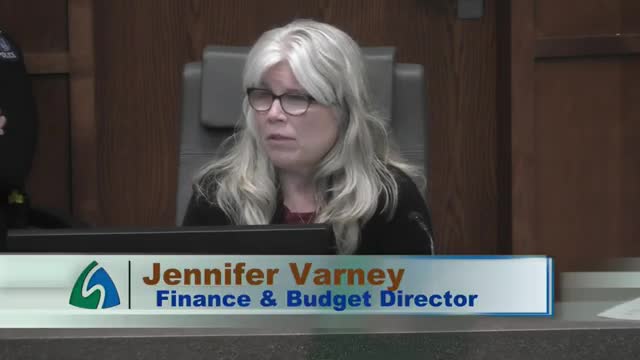
Summary
Budget and Finance Director Jennifer Varney told council the proposed FY25–26 all‑funds budget is $318 million; the city proposes a 7.3% water and sewer rate increase after Great Lakes Water Authority and Macomb County cost increases.
Jennifer Varney, the city’s budget and finance director, opened the second budget workshop by summarizing the FY25–26 proposed all‑funds budget and highlighting water and sewer cost pressures.
All-funds budget and millage effects
Varney said the proposed all‑funds total for FY25–26 is $318,000,000 and noted that about $56,000,000 of that total is related directly to the voter-approved Pathways to Play and Preservation (PPP) millage. “If we removed those expenditures from the total fund budget, the total fund budget would actually be $37,000,000 less than last year’s adopted, amended budget,” Varney said.
Water and sewer fund and rate change
Varney and staff presented that the city’s water and sewer fund proposal totals $64,900,000. She said more than 75% — roughly $49,000,000 — of those costs are pass-throughs controlled by the Great Lakes Water Authority (GLWA) and Macomb County Public Works, and that about $41,000,000 of those costs are fixed. Varney said GLWA proposed a wholesale water increase that settled at 5.9% and Macomb County raised sewage disposal costs about 4%; the budget includes an overall proposed retail rate increase of 7.3 to cover the combined increases and other costs, which the presentation said would raise the average household bill by about $5 to $76 per month (assuming a $5 monthly discount for autopay and e-billing).
Why it matters: Most water and sewer costs are fixed and determined by regional authorities; declining per-household usage increases upward pressure on retail rates because fixed costs are spread across fewer gallons.
Council response
Council members asked about alternatives (water storage, dynamic pricing) and staff said a prior consultant study of water storage did not find it cost-effective; staff also described steps the city can take — meter-based demand programs and customer leak alerts — to reduce peak usage that drives some wholesale charges.
Ending
Varney said the council will consider two proposed budget amendments and that final budget adoption is scheduled for May 6, 2025.