Get Full Government Meeting Transcripts, Videos, & Alerts Forever!
Get email alerts on the Land Acquisition Solar topic
No spam. Unsubscribe anytime.
Residents say Detroit solar project led to property takings and trauma; council asks counsel for written response
Summary
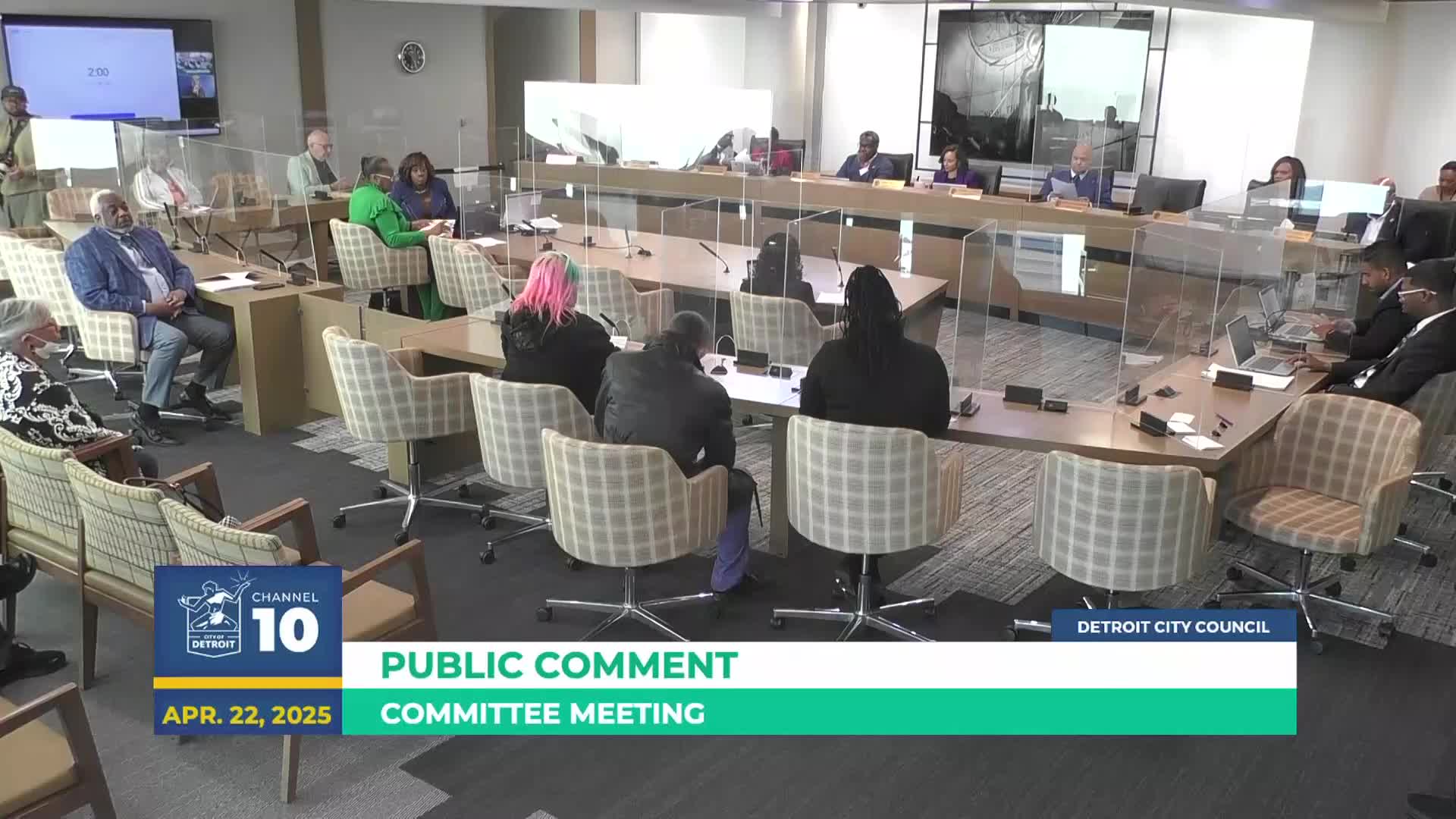
Multiple Detroit residents used the council’s public-comment period to describe personal losses and community harm they said followed the city’s solar land acquisitions and enforcement actions.
Multiple Detroit residents used the council’s public-comment period to describe personal losses and community harm they said followed the city’s solar land acquisitions and enforcement actions.
“My home, 19212 Danbury, was my address for 15 years until the city of Detroit stole it from me,” Danielle Mertes told the council. Mertes said she and two roommates were forced from the house Jan. 10, that they received “no funding or housing” from the city after an inspector recorded information, and that she had spent about $1,500 correcting blight violations before being told to vacate. She said her house had since been vandalized and set on fire.
The concerns echoed other public commenters who said longstanding Detroit homeowners and seniors have been displaced by the solar program, which some speakers described as relying on tax or blight findings to acquire land. Darren McCleskey said the program risked “taking someone’s property by force” and urged councilmembers to consider how takings affect people living “beyond the margins.” David Roland described longtime ties to a neighborhood and said losing a house had cost him contact with his child.
Several commenters framed the issue as part of a broader pattern. A caller identified as “You Matter” criticized use of eminent domain and said the city might have pursued rooftop or distributed solar options instead of land acquisitions. Another participant called on the council to “do your due diligence” and to consider the human harm the current approach causes.
Council members and staff said the matter is under active review. Graham Anderson of the law department told the council he was awaiting a written response from the solar team; administration staff confirmed city staff were working with corporation counsel to prepare a written update. After public comment, President Pro Tem James Tate and others asked the law department and administration to provide an on-record briefing in a future formal session; the council agreed to schedule a solar project update at a later meeting and to coordinate with the affected councilmember.
The public remarks placed repeated emphasis on individuals who said they were evicted, lost property, or received no post-eviction housing assistance. Council staff and the law department offered to follow up with residents who supplied contact information; corporation counsel also told the body it was drafting a written response addressing the issues raised.
Community advocates and some callers asked the council to halt any further land takings until the city reviews procedures and assistance for affected households. The council did not take final action on policy or funding at the meeting; instead, members directed staff and counsel to produce written materials and to return to the council with an update. The city has not, in the meeting record, provided a timetable for that response or specified policy changes.