Get Full Government Meeting Transcripts, Videos, & Alerts Forever!
Get email alerts on the Budget Finance topic
No spam. Unsubscribe anytime.
Milton projects $1.26 million FY25 deficit; possible state circuit-breaker funds could cut shortfall
Summary
Milton Public Schools reported a projected $1,259,298 deficit for fiscal year 2025 as of March 31; an estimated $488,000 in potential circuit-breaker supplemental funds could reduce the gap to about $770,000. The committee discussed substitute coverage changes and concluded the remaining six weeks of the school year would yield limited savings.
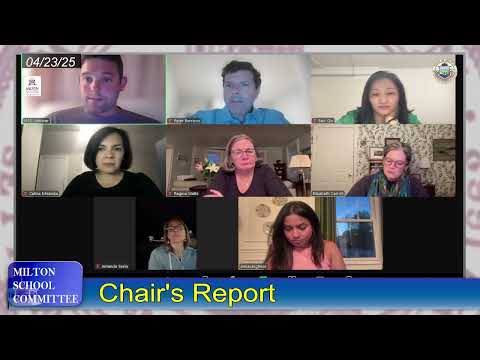
Milton Public Schools presented its third-quarter financial update at the April 23 school committee meeting, reporting a projected deficit of $1,259,298 as of March 31, 2025. Finance staff said the projection does not include a possible distribution from the state fiscal 2025 supplemental budget for special education “circuit breaker” reimbursements; if that money is distributed for FY25 the district estimates roughly $488,000 could be applied to reduce the deficit to about $770,000.
Why it matters: the projection helps the committee assess near-term choices for cost savings and informs any FY26 override discussions. The district said it will continue monitoring revenue in revolving accounts (building use, Medicaid reimbursement, preschool tuition) and refine projections through April and May.
The committee also revisited a recent change in the district’s substitute coverage model (often described in discussion as “large group sub coverage” or grouping students during absences). Staff said the revised model was only implemented in the past few weeks and would be in effect for roughly six weeks before the school year ends; given that short remaining window, administrators told the committee any fiscal savings would be small. Katie (finance staff) said the previous projections in the March report reflected the model used for the first three quarters and that implementing the new substitute model earlier would have generated more savings, but operational and bargaining logistics delayed rollout.
Committee members expressed concern about potential impacts on classroom learning, internet capacity for group settings and comparisons to COVID-era practices. Staff said technology capacity (Wi‑Fi drops and auditorium capacity limits) constrains options where large numbers of students would work simultaneously and that wherever grouping is used it should preserve meaningful instruction. After discussion, committee members indicated they do not plan a broad rollback to the large-group coverage model for the final six weeks unless specific scenarios made it educationally appropriate.
Next steps: finance staff will continue monthly updates as end-of-year numbers finalize and will track any state supplemental funds that can be applied to FY25.