Get Full Government Meeting Transcripts, Videos, & Alerts Forever!
Get email alerts on the School Accessibility topic
No spam. Unsubscribe anytime.
Parents press Sycamore schools to fix playgrounds after wheelchair accident
Summary
Parents of students with disabilities urged the Sycamore Community Schools board to act after a preschool wheelchair rollover and repeated accessibility problems, asking the district to resurface Sims preschool playground and plan longer-term playground overhauls across elementary sites.
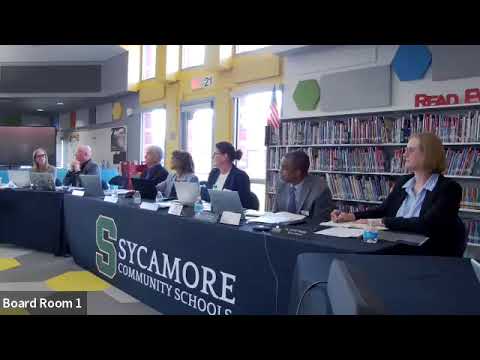
Parents of students with disabilities urged the Sycamore Community Schools Board of Education on April 1 to prioritize inclusive playgrounds after recounting repeated accessibility failures, including one accident in which a preschooler’s wheelchair flipped into mulch.
The comments came during the board’s public-participation period, where several parents described barriers that leave children with mobility and sensory needs on the sidelines during recess. “Teddy is one of many students in this district with significant disability. He uses a wheelchair, is nonverbal, and relies on adult support and compliant infrastructure to allow equal access to his education,” said Dr. Allie Adams, a parent of a Sims Preschool student.
The parents’ core request was twofold: find building funds to resurface the Sims preschool playground to remove wood mulch that impedes wheelchairs, and identify infrastructure funds to plan phased overhauls of elementary playgrounds so they meet universal-design standards.
Why it matters: Parents said Sycamore’s reputation as a destination district for students with disabilities requires more than ad hoc fixes. “The bare minimum of ADA compliance is not acceptable,” Adams said, describing security-camera footage she said shows her son face down and buried in mulch after his chair flipped when crossing a transition between sidewalk and play surface.
Other parents gave concrete examples. Rachel Pettibone, whose son uses a walker and wheelchair, said she repeatedly has asked for a direct, unobstructed route into buildings, working handicapped parking at dismissal, and accessible cafeteria tables. Pettibone asked the district to pursue playground surfacing designed for universal access, noting that a 5-point harness swing at Mapletale is placed on a separate kindergarten area and was out of service from May 2024 until at least January 2025.
Margo Ritchie, whose child has an ultra-rare medical diagnosis and attends Sims Preschool, described moving into the district specifically for its services and urged the board to maintain the supports that attracted families like hers.
Board and administration response: District leaders acknowledged the concerns and committed to follow-up. Mr. Lewis, a district administrator, told commenters he would reach out for deeper conversations and thanked parents for their candor. Board members said they value accessibility and will keep the issue on their agenda as staff examine capital and facility priorities.
What was not decided: No new capital appropriation or formal vote occurred during the meeting. Parents requested that the board discuss the playground-audit findings with families of students with disabilities and include parents in planning; the board did not set a date or allocate funds during the session.
Next steps noted on the record: Parents asked for (1) a resurfacing of the Sims preschool playground (preschool serves districtwide students with individualized education programs) and (2) a multi-year plan and funding source identification to redesign elementary playgrounds for universal access. District staff said they would follow up with parents and bring additional information back to the board.