
Buncombe County Schools presents 2025-26 "maintenance" budget as state funding shifts and costs rise
Get AI-powered insights, summaries, and transcripts
Subscribe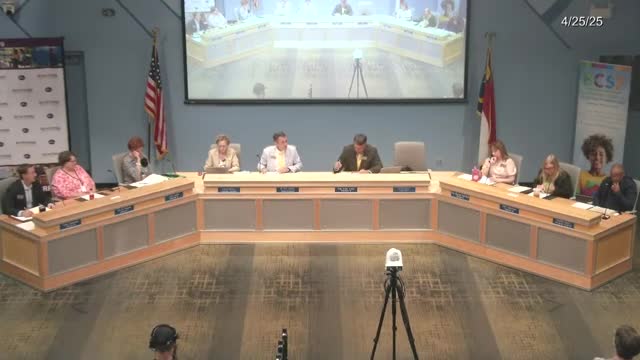
Summary
Buncombe County Schools presented its 2025-26 operating budget proposal Friday, with Chief Financial Officer Tina Thorpe telling the Board that the plan is intended to maintain current services amid rising costs and uncertain state revenue.
Buncombe County Schools presented its 2025-26 operating budget proposal Friday, with Chief Financial Officer Tina Thorpe telling the Board that the plan is intended to maintain current services amid rising costs and uncertain state revenue.
"This is our sixth budget work session that we've been working through different scenarios," Thorpe said, outlining assumptions on pay, insurance and utilities and warning that a midyear $3.9 million reduction in 2024-25 and a lower county starting appropriation have tightened planning.
The proposal includes targeted pay increases the district modeled for local budgeting: a 3% certified staff increase (which Thorpe said, with step movement, equates to roughly 4.13%) and a 2% increase for classified staff plus step (presented as roughly a 3% impact after steps). Thorpe also told the board she is building in an employer retirement projection of 25.02 percent (the system is currently at 24.04) and a hospitalization assumption of $8,340 per employee for planning.
Nut graf: The budget matters because state and federal funding account for a majority of the district's revenue flows but are tied to average daily membership (ADM), which has been pressured by charter enrollment, virtual programs and other trends. Thorpe told the board the state provides about 56% of district expenditures while local funds cover roughly a third and federal grants about 8 percent—figures she presented from the district revenue snapshot as of March 31, 2025.
Key details and context
- Enrollment and state allotments: Thorpe said the district's best-1-of-2 ADM declined by 14 students year over year (from 22,066 to 22,052), a small change that nonetheless has fiscal effects because state planning allotments were adjusted upward in reserve to cover charter school growth statewide rather than through the usual December true-up. Thorpe said the state's initial planning allotments were lowered for local public school units so the state could reserve more funds for charter payments.
- Locally funded personnel: Thorpe reviewed a multi-year effort to reduce the number of positions supported entirely by local dollars. She said the highest point of locally funded positions had been 745 and that through attrition and alignment the district had reduced that number (a March 31 payroll snapshot was shown). She cautioned that state allotments and changes in enrollment mix (for example, special education and multilingual learner counts) change personnel needs and local cost pressures.
- Cost drivers and assumptions: Thorpe gave several concrete cost assumptions used in the proposal: property insurance increases (she cited a 78% increase in recent years as an example of market pressure), utility estimates of +8.5% for electricity, +3% for gas and +10% for water, and a 3% inflation/tariff build for contracted services and supplies. She said property insurance and an overall "other" category could increase by about $2 million in the coming year, with property insurance accounting for a large share.
- Salary & benefits summary: Thorpe reported a local salary-and-benefits planning increment (presented in the discussion) that reflects the pay assumptions above and other fixed costs; she described the superintendent's 2025-26 proposal as a "maintenance budget" that aims to sustain current services rather than expand them. Superintendent Hunter Jackson summarized: "I would classify this as a maintenance budget. It's not an expansion budget... the increase is simply to cover the cost associated with the immutable cost increases like insurance, etcetera."
Board questions and process notes
Board members pressed staff on several subjects: the history of state versus local shares of funding (Thorpe said state support has been roughly stable in dollar terms but has not kept pace with inflation, moving the local share higher over several years); details behind classified pay study implementation (Thorpe summarized a third-party study and a phased, county-funded implementation that produced average classified raises); and what consolidation or school-closing options would mean for transportation and specialized student needs (Superintendent Jackson noted a consolidation study did not account for geographic, academic or cost factors that would make closures costly or counterproductive).
Thorpe and board members also discussed the role of federal ESSER/COVID dollars (largely spent) and the district's exposure to policy changes at the state level in a "long session" legislature that could introduce unfunded mandates.
Votes at a glance
- Board approved the meeting agenda by voice vote at the meeting start. (Motion passed; voice vote; no roll-call tally provided in the transcript.)
- Board approved a motion to adjourn at the end of the session by voice vote. (Motion passed; voice vote; no roll-call tally provided.)
Why it matters locally
Thorpe emphasized the district's limited local taxing and debt authority under North Carolina law and the timing mismatch between local hiring and state budget approval. Those constraints, she said, make planning conservative and increase the importance of the county appropriation and of tracking enrollment, charter conversions, and voucher/virtual program flows.
Ending: The superintendent's budget recommendation will be considered at the board's regular meeting next week; the district will present a formal budget request to the Buncombe County Commissioners by May 15 as required by local budget rules. The board signaled the proposal is intended to preserve current services while staff and trustees continue to monitor state legislative developments and local appropriation negotiations.