Get Full Government Meeting Transcripts, Videos, & Alerts Forever!
Get email alerts on the Housing Zoning topic
No spam. Unsubscribe anytime.
Council advances ADU zoning changes to align with state rules; first passage approved
Summary
The Salem City Council approved first passage of zoning amendments to expand accessory dwelling unit (ADU) allowances, align local rules with Executive Office of Housing and Livable Communities (EOHLC) regulations, and permit ADUs by right in additional zones including B1.
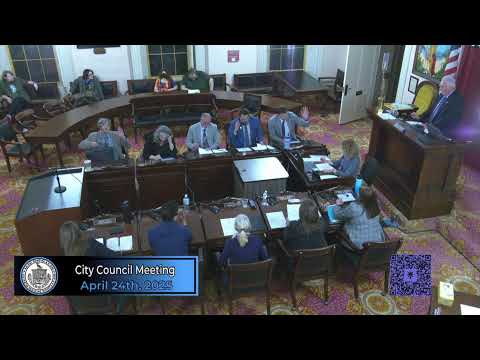
The Salem City Council voted for first passage on April 24 on a package of zoning amendments to the city's accessory dwelling unit (ADU) rules designed to comply with state regulations and make ADU creation easier for homeowners.
The amendments implement language from the Executive Office of Housing and Livable Communities (EOHLC) and 760 CMR (state ADU regulations). Key changes remove prior local owner‑occupancy and rent‑restriction requirements that the state has barred, add ADUs by right in more residential and commercial-adjacent zones (including the B1 zone), and clarify dimensional and size limits (generally capped at 900 square feet or 50 percent of the principal dwelling, whichever is smaller). For nonconforming lots, the zoning board (ZBA) will determine by majority vote whether an ADU is substantially more detrimental; no special-permit requirement will be imposed by the ADU default rules described in the EOHLC guidance.
Planning staff and the planning board recommended the amendments, noting that they mirror state rules and will make it easier for Salem residents to create ADUs. Attorney Robin Stein (KP Law), who advised during the joint public hearing, explained that the EOHLC has statutory authority to promulgate regulations implementing ADU law; the council's motion to place a "Y" in the B1 column of the use table corrected an earlier omission and was approved.
Several councilors said they favored moving quickly because the amendments facilitate small-scale housing production without changing building-code requirements; others asked that questions about code and safety be addressed by staff and committees between first and second passage. Councilor Harpworth and others proposed that the joint public hearing process continue and that committee meetings be used to resolve technical questions before second passage. The council voted to take first passage as amended and co‑post committee review ahead of second passage.
The amendments now move to the next stage of the zoning process, with a committee and second-passage vote expected; building-code and fire-code compliance remains a separate permitting requirement enforced at the department level.