Citizen Portal
Sign In

Tempe staff present $1.7 billion operating and capital proposal; council urged caution over lost rental tax

3134187 · April 25, 2025

Loading...

AI-Generated Content: All content on this page was generated by AI to highlight key points from the meeting. For complete details and context, we recommend watching the full video. so we can fix them.

Summary

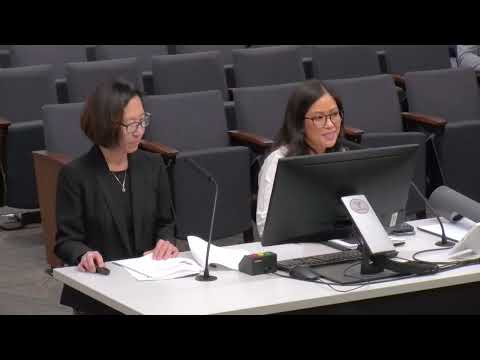
Lisette Camacho, presenting to the Tempe City Council on April 24, said, "This presentation is our last budget review session before we go into the tentative budget process."

Lisette Camacho, presenting to the Tempe City Council on April 24, said, "This presentation is our last budget review session before we go into the tentative budget process." She and Julie Hyder walked council through the recommended operating and capital budgets for fiscal year 2026 and the five-year capital improvement program.

Camacho said the operating and capital budgets together total $1,700,000,000 and that the recommended operating budget for FY2026 is about $875,000,000, a 7.4% increase over the prior year. She said the recommended general fund total is $344,000,000 and highlighted planned additions including three firefighters and two parks maintenance technicians; staff counted five regular full-time equivalents added overall.

The presentation listed several key budget pressures and responses. Camacho and Hyder told council that the city is planning drawdowns of fund balance beginning in FY2026 as a result of the elimination of the residential rental sales tax. Hyder summarized that "the residential rental tax elimination became effective last January and this is the cost on the revenue loss for fiscal year 25: $10,000,000 across all funds, $6,600,000 in the general fund," and noted the forecasted average revenue impact in later years was about $22,000,000 annually.

Hyder and Camacho also reviewed the capital program. Julie Hyder said the five-year CIP totals $1,900,000,000, with the recommended first-year appropriation shown at $832,600,000. She called out a 23% increase in the water/wastewater program largely driven by reappropriations and a project to reactivate the reclamation facility, and said the transit program increase reflected federally funded projects and pathway maintenance work.

Council members praised staff work but raised timing and risk questions. Councilmember Brad Adams told staff, "You guys did a great job with this budget under difficult circumstances," and welcomed the planned firefighters and fund-balance approach. Councilmember Amberg said she was concerned about restoring department budgets to pre-cut levels at a time of national uncertainty and about relying on an internal monitoring cadence that could postpone detailed council-level adjustments. She urged earlier council updates so that midyear spending does not foreclose options.

Camacho responded that staff meet regularly with department directors and recommended adopting the requested budget as the tentative budget (which sets the city's maximum spending level) while instructing departments to be conservative on noncritical hires. She told council she expected internal discussions in May or June to review revenues and would return to council sooner than November if conditions required it.

Councilmembers also asked about grant and financing risks. Camacho said the city is monitoring roughly 79 grant awards totaling about $38,000,000 and that Community Development Block Grant and housing programs present the greatest program risk if federal funding changed. On tax-exempt bonds she said, "no decision has been made on that; we're still watching that" and that consultants and the Government Finance Officers Association were tracking developments.

Staff reiterated a set of budget balancing strategies: limiting cash funding for capital projects not already in the adopted CIP, drawing down particular reserve accounts (including $1 million annually from a public safety pension reserve and $500,000 annually from OPEB reserves starting in FY2026), and relying on the classification and compensation study recommendations (the first full study since 1988) to address market competitiveness.

Camacho and Hyder closed by outlining the approval timeline: staff expect a tentative budget adoption and later public hearings and final adoption in the May–July cycle. No formal funding decisions were made during the work study session.

Looking ahead, council asked staff to keep the entire body informed with an earlier update if revenues deteriorate; staff agreed to provide additional updates as monitoring warrants.