
Southwest CPW reports winter helicopter surveys, expanded collaring programs and mountain lion density monitoring
Get AI-powered insights, summaries, and transcripts
Subscribe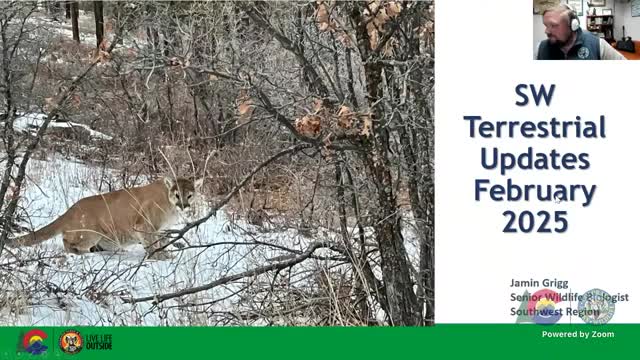
Summary
CPW Southwest outlined winter helicopter surveys, radio‑collaring for deer, elk and bighorn sheep, an ongoing mountain lion density study in the Durango–Pagosa area and brief notes on wolf and potential wolverine reintroduction planning.
Jamin, the senior wildlife biologist for CPW’s Southwest Region, reported on winter fieldwork including roughly 200 hours of helicopter surveys, multiple radio‑collaring projects and progress on West Slope mountain lion density monitoring.
Jamin told caucus participants that December and the winter months included about 200 helicopter hours to classify deer, elk, pronghorn and bighorn sheep, and that staff are using those data to update population models and hunting license recommendations. He described “siteability” model development in the Gunnison Basin to estimate the percentage of animals observed on surveys and help validate population estimates.
Radio‑collaring work is extensive: CPW maintains large GPS‑collar samples in intensive monitoring areas (for example, roughly 80 collared does and 60 collared fawns in deer monitoring areas and a sample of radio‑collared elk in the Gunnison Basin). The region has also collared bighorn sheep to examine movements relative to domestic livestock allotments.
On mountain lions, CPW described moving from a Gunnison Basin study to a Southwest study area roughly between Bayfield and Pagosa Springs (Highway 160 corridor). The agency said it is collaborating with the Southern Ute Tribe on collaring and has collared nine mountain lions so far this winter toward a target sample of about 20–25 animals. CPW plans a camera grid of roughly 85 motion‑sensor stations and will calculate density using marked vs. unmarked proportion in photo captures.
On elk calf recruitment, Jamin said the region has documented a multi‑decadal decline in December calf ratios (from 40–50 calves per 100 cows down into the 20s–30s and occasional teens), a trend correlated with prolonged drought, reduced hiding cover and increased summer recreation pressure. Staff described ongoing research into the causes of calf survival declines and said CPW has adjusted licenses (including moving some areas from OTC to limited and reducing antlerless harvests) and is using habitat work and funding to help restore recruitment.
Jamin also gave a brief update on wolves — confirming additional translocated wolves are on the landscape (brought from British Columbia last month) but none currently documented in the Southwest Region — and noted CPW is drafting a wolverine reintroduction plan, observing that Colorado has substantial potential wolverine habitat.