
Mayor and staff outline ‘state of the city’ budget challenges; warn current service levels are unsustainable without new revenue
Get AI-powered insights, summaries, and transcripts
Subscribe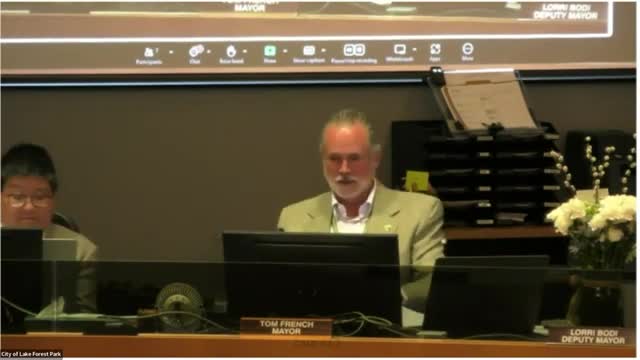
Summary
City leadership told the council and the public that operating costs are rising faster than revenue, highlighted the city’s small share of property-tax dollars and growing costs for insurance, jail and dispatch, and urged community engagement as the council explores sustainable revenue and service models.
City leaders delivered a broad fiscal overview Thursday, warning that rising costs are eroding the city’s ability to maintain current service levels without additional revenue or program cuts.
Presentation highlights: The mayor and city administrator reviewed city services (police, courts, public works, environmental programs, parks and community services) and emphasized Lake Forest Park’s small size and limited revenue base. Presenters observed that the city receives only a modest share of area property taxes (under 8 cents of every property-tax dollar), which limits local discretionary revenue. The presentation also included a November 2024 community survey summary: 79 percent of respondents said the city is moving in the right direction and key resident priorities included a strong police department, well-maintained parks and safer sidewalks near schools.
Fiscal pressures and specific increases: Staff provided examples of cost increases facing the city — insurance up by roughly $93,000; jail costs up roughly $197,000; and 911 dispatch costs up roughly $284,000 — and noted overall inflation in public-sector services. The administration said a 1 percent property-tax levy increase would generate approximately $34,000 for the city; under the policy scenario discussed, a potential 3 percent cap being considered at the state level would produce only roughly an additional $60,000 for the city, not enough to match rising operating costs.
Restricted vs. unrestricted revenues: The presentation reiterated that one-time grants and restricted funds cannot be used to cover ongoing general operations. The city discussed the success of its traffic-safety camera program in reducing speeding on NE 178th (average speeds fell from more than 31 mph to about 23.2 mph) and clarified that state law restricts camera revenue to pedestrian/bicycle safety projects and related uses; it cannot be used for general operations.
Community priorities and next steps: Administration urged broad community engagement as council explores options — including service reductions, new revenue measures, grant-seeking and targeted efficiencies. Staff highlighted the need for a dedicated grants position to pursue competitive funding streams and noted several capital projects and environmental acquisitions funded in part through restricted grant programs.
Ending: Councilmembers expressed appreciation for the outreach and said they expect ongoing public conversations about trade-offs. Staff and council leadership signaled more budget-focused discussions and community outreach in May and beyond.