Get Full Government Meeting Transcripts, Videos, & Alerts Forever!
Get email alerts on the K 12 Education topic
No spam. Unsubscribe anytime.
Michigan House approves package of school-code bills after debate on course naming and tests
Summary
The Michigan House on April 17 passed several bills amending the State School Aid Act and the Revised School Code after floor debate centered on whether the bills would restrict curriculum flexibility, increase costs for schools and change assessment systems; the measures passed by recorded votes and were given immediate effect.
LANSING — The Michigan House of Representatives on April 17 passed a package of bills amending the State School Aid Act and the Revised School Code after members debated whether the proposals would require specific course names in the Michigan Merit Curriculum and change testing and accountability systems.
Supporters said the package would give educators new tools to track student progress and bring state law into alignment with federal requirements; opponents said the measures risked narrowing classroom flexibility and would create new costs for districts and the Michigan Department of Education (MDE).
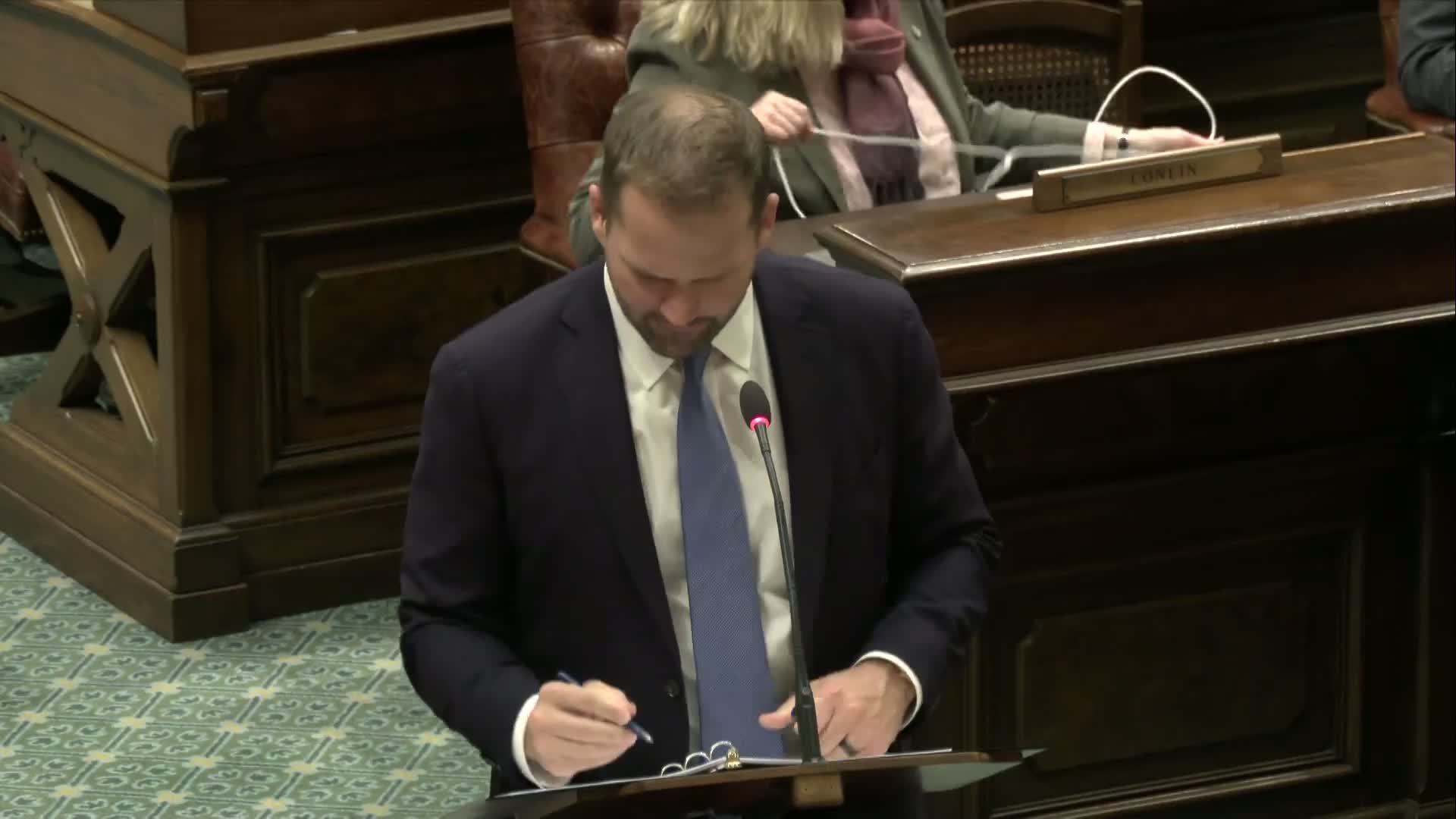
Representative Jamie Greene introduced the bills on third reading; Representative Glanville spoke in opposition to House Bill 4156, saying the proposal would replace standards-based flexibility with a prescriptive list of course names. "Rather than prescribing more specific course names in the Michigan Merit curriculum, we should be removing course names," Representative Glanville said on the floor. She warned that the bill would force schools to redesign courses and that MDE would need additional staff to develop model programs required under the measure.
Representative Thompson, a supporter of the package, framed the bills as a response to low student outcomes in Michigan and said new assessments and pilot programs would allow educators to monitor growth faster and intervene sooner. "Our kids do not deserve to be 40 first. Our kids deserve to be number 1," Thompson said, urging passage. Representative Green also spoke in favor, saying the package expands options for students and local schools rather than imposing a single testing model.
On third reading, the House adopted amendments offered on the floor. Representative Beeson offered a set of amendments (identified in the record as amendment number 1) that were adopted after support was registered; Representative Paquette offered a further set of amendments (identified as amendment number 2) that were also adopted. The transcript record shows the clerk opened and closed the board for the amendment votes and the amendments were approved before the final passage votes.
The record roll-call votes announced by the clerk show the following outcomes and tallies:
Votes at a glance:
- House Bill 4156 (revised school code): Passed 57–43; immediate effect ordered. Amendments adopted on third reading included Beeson amendment #1 and Paquette amendment #2.
- House Bill 4157 (State School Aid Act of 1979 amendment): Passed 57–48; immediate effect ordered.
- House Bill 4158 (revised school code): Passed 57–48; immediate effect ordered.
- House Bill 4159 (revised school code): Passed 65–40; immediate effect ordered.
Each bill was considered on third reading with recorded roll-call votes and, where noted, given immediate effect by the House.
Discussion vs. decision: the transcript records extended debate on the policy trade-offs. Opposition focused on curriculum naming, flexibility for Career and Technical Education (CTE) and nontraditional course structures, and potential state and local costs if the bills required MDE to develop new model programs. Supporters emphasized faster assessment feedback, pilot programs for state-administered assessments, and accountability reforms they said would improve student outcomes.
Procedural notes and next steps: the majority floor leader moved for and the House ordered immediate effect for multiple bills, meaning the bills take effect as provided in the legislation upon enrolment. The House adjourned with the clerk announcing no further voting that day and set its next session for April 22, 2025, at 1:30 p.m.
The transcript record does not include a full member-level roll-call list for each bill in the accessible portions beyond the tallies given by the clerk; where individual votes were read aloud the clerk recorded a handful of named votes (for example, the clerk recorded Representative B. Carter voting "nay" during one board call).