Get Full Government Meeting Transcripts, Videos, & Alerts Forever!
Get email alerts on the Immigration Policy Local Cooperation topic
No spam. Unsubscribe anytime.
Committee advances five immigration‑related bills after hours of testimony and public opposition
Summary
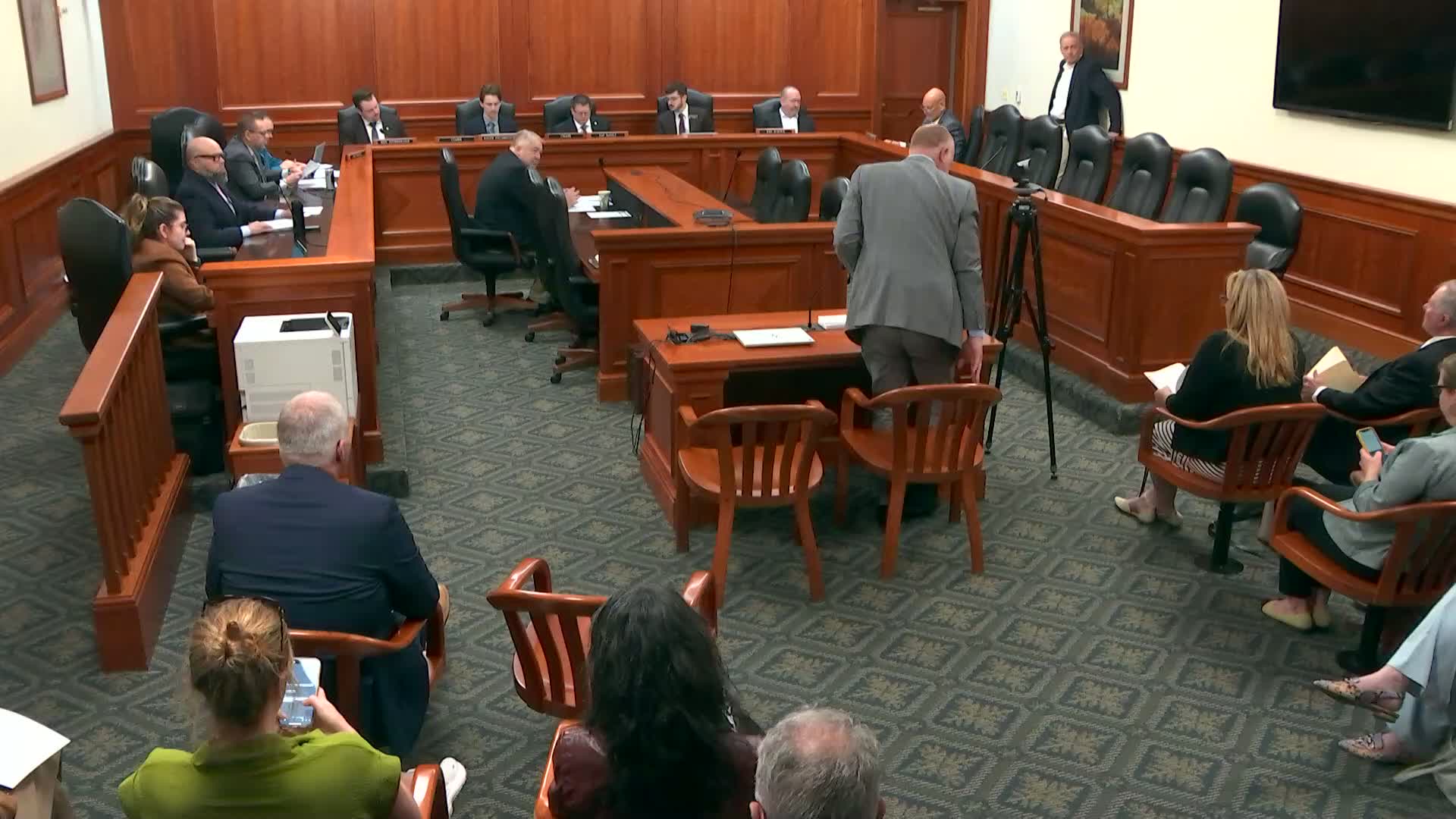
The House Committee on Government Operations on Oct. 12 voted to report five immigration‑related bills (HB 4338, 4339, 4340, 4341 and 4342) with a 3‑2 recommendation after several failed amendment attempts and extensive public testimony.
The House Committee on Government Operations on Oct. 12 voted to report five immigration‑related bills with a recommendation, advancing each measure by a 3‑2 roll call vote after hours of testimony from sponsors, law‑enforcement stakeholders and dozens of public commenters.
Bills acted on: HB 4338, HB 4339, HB 4340, HB 4341 and HB 4342. Committee members recorded final roll calls of 3 ayes and 2 nays for each bill; a series of proposed amendments brought by committee members failed by 2‑3 votes before the measures were reported.
What the bills would do (as described at the hearing): - Prohibit local governments and public bodies from enacting or enforcing laws, ordinances, policies or rules that limit communication or cooperation with federal immigration authorities, according to sponsor testimony presented at the hearing (HB 4338, HB 4339). - Restrict eligibility for certain state housing and public‑benefit programs to U.S. citizens and qualified residents, except where federal law requires otherwise (HB 4340, HB 4341), and tie eligibility for some state discretionary enhancement grants to compliance with the act (HB 4342), as sponsors described it at the hearing.
Why it matters: Committee action moves the bills forward in the legislative process. Sponsors argued the measures would promote consistent enforcement of federal immigration law, protect state social safety‑net resources for citizens and legal residents, and improve public safety by incentivizing cooperation between local and federal law enforcement. Opponents — including legal aid organizations, civil‑liberties groups, faith leaders and municipal advocates — warned the bills would undermine local control, chill cooperation between immigrant communities and law enforcement, duplicate existing federal eligibility rules, and create legal liabilities and budget risks for local governments.
Key points from testimony and committee discussion: - Sponsors’ arguments: Witnesses identified in the hearing record as representatives who sponsored the measures argued the bills would prevent local policies that they described as “sanctuary” practices and would protect taxpayer funds and public safety. Sponsors told the committee that some counties and local law enforcement officials have policies limiting cooperation with federal immigration authorities; sponsors cited those policies as motivating the legislation and said the bills create remedies, including resident lawsuits and complaints to the attorney general, for noncompliance (witnesses referenced “section 7” and “section 9” language in committee testimony explaining amendment and enforcement timeframes).
- Public commenters and civil‑liberties groups: Dozens of public commenters and multiple organizations testified in opposition. Testimony in opposition came from the Michigan Immigrant Rights Center, the ACLU of Michigan, the Michigan League for Public Policy, We The People Action Fund, the Michigan Catholic Conference (neutral but expressing concerns), and other speakers. Opposition testimony warned the bills could: - Discourage immigrants — including U.S. citizens in immigrant families — from seeking essential services or reporting crimes, harming public safety; - Duplicate existing federal rules that already govern eligibility for many benefits and public‑housing programs; - Lead to racial profiling, civil‑rights violations and legal challenges; and - Shift enforcement and fiscal burdens to local governments that lack funding and training for federal immigration duties.
- Enforcement details discussed at hearing: Supporters described enforcement tools in the bills that would require local policies allegedly in conflict with the act to be amended within specified deadlines (testimony referenced a 60‑day window for amendment in one bill). Testimony also discussed citizen enforcement options and complaints to the attorney general beginning after the specified compliance periods.
Amendments and committee votes: Committee members offered and debated amendments designed to narrow or clarify enforcement, to limit applicability to conflicts with federal law, to condition enforcement on federal detainer practices, and to protect persons who have paid into benefit systems. Most attempted amendments were defeated on 2‑3 votes. Examples recorded in the hearing record include: - An amendment to limit enforcement to cases where local policy conflicts with federal law (defeated 2‑3). - An amendment to make enforcement contingent on mandatory federal detainer or 287(g) practices (defeated 2‑3). - Amendments to ensure eligibility where individuals have paid into benefit systems or to preserve certain federal exemptions (defeated 2‑3).
Votes at a glance (committee level): - HB 4338 — Reported with recommendation, committee vote: 3 ayes, 2 nays. - HB 4339 — Reported with recommendation, committee vote: 3 ayes, 2 nays. - HB 4340 — Reported with recommendation, committee vote: 3 ayes, 2 nays. - HB 4341 — Reported with recommendation, committee vote: 3 ayes, 2 nays. - HB 4342 — Reported with recommendation, committee vote: 3 ayes, 2 nays.
Distinctions in the record: Multiple witnesses said federal law already limits eligibility for many programs; legal advocates and service providers warned the bills would create confusion by duplicating federal requirements and could remove access to narrowly defined protections for survivors of trafficking, youth services and elder interventions. The Michigan Catholic Conference said it had no formal position but raised concerns that the bills could reduce trust between immigrant communities and law enforcement and that enforcement of immigration policy is primarily a federal responsibility.
Next steps and implications: Each bill now proceeds with the committee’s recommendation in the House process. If these bills advance beyond committee and are enacted, local governments could face new state requirements, potential loss of state enhancement grants and increased legal exposure, depending on final statutory language and judicial review. Opponents signaled plans to challenge the measures in court if enacted, citing civil‑liberties and due‑process concerns.