Get Full Government Meeting Transcripts, Videos, & Alerts Forever!
Get email alerts on the Public Safety Trust Fund topic
No spam. Unsubscribe anytime.
House committee backs bills to create public safety and violence-prevention trust fund
Summary
The House Committee on Government Operations voted to report House Bills 4260 and 4261, which would create a dedicated Public Safety and Violence Prevention Trust Fund funded by sales tax revenue and distribute money to cities, community violence intervention programs, crime-victim services and county sheriffs.
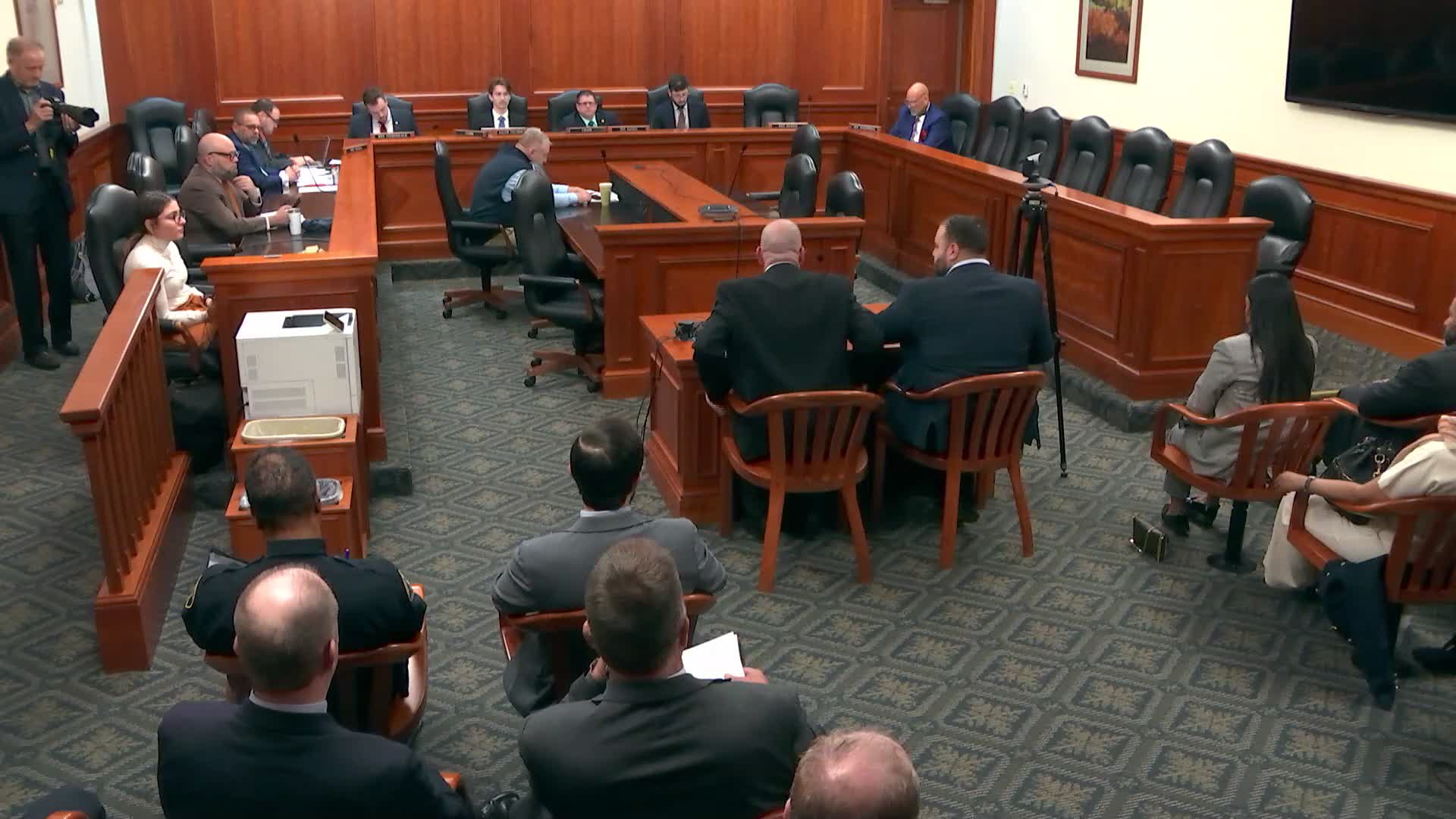
The House Committee on Government Operations on Wednesday voted to report House Bills 4260 and 4261 out of committee, advancing a proposal to create a permanent Public Safety and Violence Prevention Trust Fund funded by sales-tax revenue.
Sponsors Representative Harris and Representative Farhat described the package as a bipartisan effort to steer dedicated, predictable funding to local crime-prevention programs, community violence intervention (CVI) groups and victim services. “By depositing a hundred and $15,000,000 a year from the sales tax revenue, we can give our communities the tools they need to fight back against violent crime and save lives,” Representative Harris said.
The bills, as presented to the committee, would direct a large share of the annual deposit to local units of government. Representative Farhat told the committee that $75,000,000 would be distributed to cities, townships and villages, that 2 percent would be set aside for a statewide CVI grant program, and that 2 percent would be reserved for crime-victim services. Farhat also said the package includes a separate allocation to county sheriff’s offices: “40,000,000 goes to our county sheriff’s partners based on their departmental size of officers,” he said. The bills set a 25 percent cap on the portion any single municipality may receive from the local distribution pool.
Local law enforcement and community groups testified in support. Detroit Police Chief Todd Bettison said the funding would sustain the city’s CVI program and help the department hire roughly 45 officers: “This program is successful. The money is running out,” Bettison said, referring to earlier federal stimulus funding that he said will be exhausted in 2025. Issa Shaheen, chief of the Dearborn Police Department, described the bills as “a commitment to public safety that’s smart, targeted, and responsive to needs on the ground.”
Representatives of community-based CVI organizations described their work and offered data. Duane Kennedy of Force Detroit said his program reduced shootings in its focus area and framed CVI as a relationship-driven, public-health approach: “Once you build relationships, you develop influence. And once you develop influence … you use your influence to mediate and mitigate conflict,” Kennedy said. Ray Winans of Detroit Friends and Family described safe-surrender and victim-support work that his group conducts in partnership with police.
Support also came from the Michigan Sheriffs Association, the Police Officers Association of Michigan (POAM), the Michigan Sheriffs Association, and Crime Survivors for Safety and Justice. Priscilla Bordeo of Crime Survivors for Safety and Justice said the fund would expand victim services and trauma-informed training. Chief presenters and organizational representatives stressed flexibility in local use of funds and performance-based accountability tied to violent-crime trends.
Not all testimony was uniformly positive on the bill language. Dina Bosworth of the Michigan Association of Counties said the substitute language in committee removed counties themselves from direct eligibility and instead directs money to county sheriff’s departments. “It is no longer, counties itself are no longer eligible for the funds for counties. It would go straight to the county sheriff’s department,” Bosworth said, and she urged consideration of county courts, prosecutors and mental-health services that counties operate. Representative McFall and others pressed sponsors on revenue-sharing concerns and on the effect a new dedicated fund could have on other local revenues.
Committee action: the committee adopted h-1 substitutes for both bills and voted to report House Bill 4260 and House Bill 4261 with recommendation as substituted. Both final committee tallies recorded on the roll call were 5 yeas, 0 nays, 0 passes.
Votes at a glance: House Bill 4260 (h-1 substitute) — substitute adopted (roll call 5–0); reported with recommendation as substituted (5–0). House Bill 4261 (h-1 substitute) — substitute adopted (roll call 5–0); reported with recommendation as substituted (5–0). Earlier on the agenda the committee also adopted and reported substitute versions of House Bills 4233 and 4234 before taking up 4260/4261.
The bills now move to the next legislative step, with sponsors and supporters urging floor action. Committee members who raised follow-up questions asked for continued work on distribution formulas, the 25 percent municipal cap, and how the measure would interact with existing revenue-sharing and county budgets. No additional committee directions or amendments were recorded at the hearing; the committee’s formal action was to adopt the substitutes and report the bills with recommendation.
Ending note: Supporters framed the package as a combination of expanded policing capacity, sustained community-violence-intervention work and enhanced victim services; county officials urged further changes to ensure counties’ broader public-safety roles are considered in the bill text.