Get Full Government Meeting Transcripts, Videos, & Alerts Forever!
Get email alerts on the Alzheimers Diagnostics And Policy topic
No spam. Unsubscribe anytime.
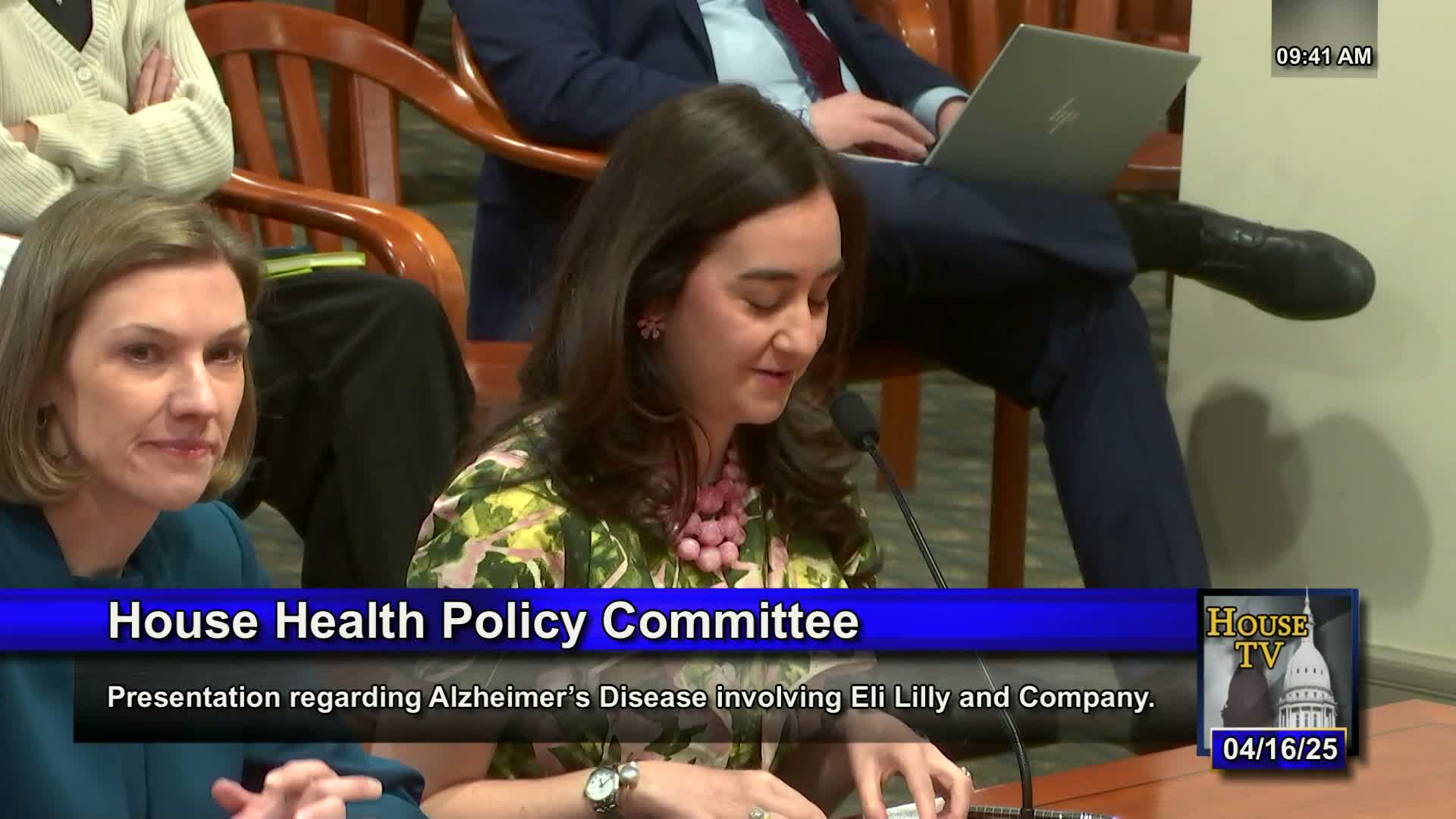
Eli Lilly, clinicians outline Alzheimer’s diagnostics, treatments and policy options to Michigan committee
Summary
Eli Lilly and a Michigan neurologist briefed the Health Policy Committee on recent advances in Alzheimer’s diagnostics (including blood biomarkers), disease‑modifying therapies and proposed state policy responses such as public education and insurance coverage for diagnostic testing.
Laura Cohen, a vice president at Eli Lilly and Company, and Dr. Kara Leahy, a neurologist and director for cognitive disorders at Memorial Healthcare in Owasso, presented to the Health Policy Committee on Alzheimer’s disease, diagnostic advances and possible state policy steps.
Cohen said research investment has produced “disease‑modifying therapies” for some patients in the early stages of Alzheimer’s and pointed to advances in blood biomarker testing that can detect disease biology. She said Alzheimer’s imposes substantial costs: testimony cited roughly 200,000 Michiganders living with Alzheimer’s disease and described state-level direct care costs and unpaid caregiving burdens.
Dr. Leahy told the committee she sees long clinic wait times and frequent late diagnoses that prevent patients from accessing newly available therapies. She described the diagnostic pathway used in her practice: a blood‑based biomarker as a screening test followed, when indicated, by confirmatory amyloid PET imaging or cerebrospinal‑fluid testing. “The blood test for Alzheimer’s disease is here. We’ve waited for it for decades,” she said, and described using the test to triage patients for further evaluation. Leahy said earlier diagnosis increases the chance patients can access treatments that have been shown to slow disease progression in early stages.
Witnesses urged several potential state policy responses: public health education to reduce stigma and encourage early evaluation; an updated, periodically reviewed state Alzheimer’s plan that tracks rapid scientific advances; targeted support for regional treatment centers of excellence; and more consistent commercial insurance coverage for diagnostic tests (including blood biomarkers) and, when clinically appropriate, for therapeutics. Cohen referenced a recently introduced state bill addressing commercial coverage for blood biomarker testing for diagnostic purposes (testimony referred to “House Bill 5970” as the bill number in the discussion) and recommended the committee consider policies to standardize diagnostic and treatment access across public and private payers.
Committee members asked about prevention and modifiable risk factors. Dr. Leahy and Cohen emphasized known risk factors such as diabetes, high blood pressure, smoking and low educational attainment and recommended public health campaigns linking general preventive health (heart health, diabetes control) to brain health. Committee members also asked about cost, testing availability and whether blood biomarkers are broadly accessible; Dr. Leahy said some labs offer financial assistance and clinicians currently use the tests as screening tools while insurance coverage remains inconsistent.
No formal committee vote on Alzheimer’s policy items is recorded in the transcript; the presentation concluded with committee questions and staff follow-up.