Get Full Government Meeting Transcripts, Videos, & Alerts Forever!
Get email alerts on the Physician Assistant Compact topic
No spam. Unsubscribe anytime.
Committee hears testimony on House Bill 4309 to join physician assistant licensure compact
Summary
The Health Policy Committee heard in-person and remote testimony supporting House Bill 4309, which would add Michigan to the Physician Assistant Licensure Compact to let licensed PAs practice across member states via compact privileges; no committee vote on the bill was recorded in the transcript.
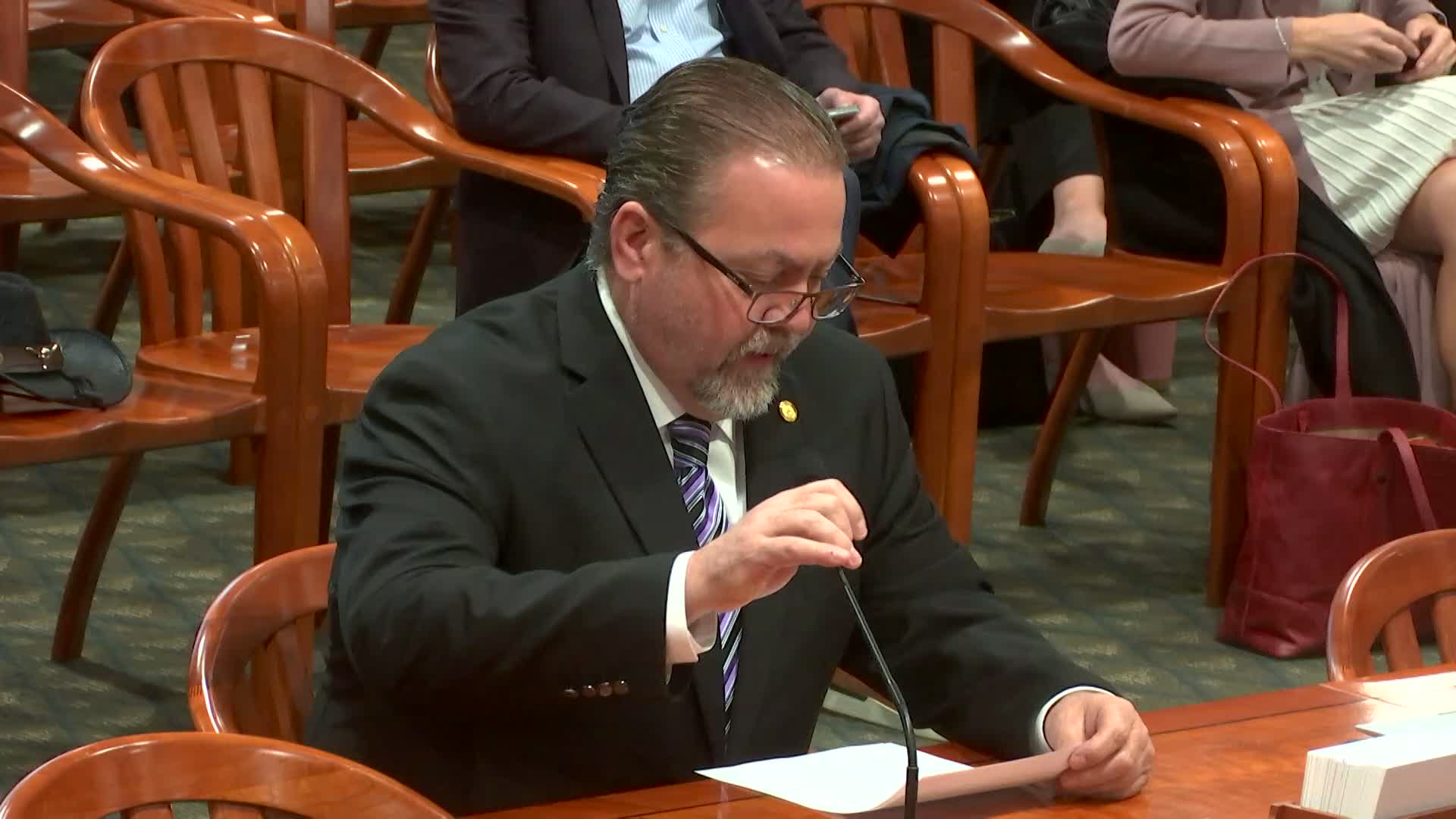
Representative Shane Preston, sponsor of House Bill 4309, told the Health Policy Committee the bill would amend Michigan’s public health code to allow Michigan to join the Physician Assistant Licensure Compact and give out-of-state licensed physician assistants (PAs) a compact privilege to practice in Michigan.
The compact, Preston said, "is designed to remove bureaucratic barriers, streamline the process for licensed PAs looking to work across state lines or to move to Michigan." He said compact users remain subject to the laws and rules of the states where they practice, and that the compact framework permits both the PA’s home state and other compact states to take disciplinary action in limited, specified ways. Preston said Michigan would appoint a delegate — required to be a physician assistant or a member of the licensing board — to the compact’s national commission.
The committee heard supporting testimony from clinicians, hospital leaders and compact officials. Jody McCollum, a physician assistant and director of trauma services at UP Health System–Marquette, said the compact would help rural and border communities in Michigan’s Upper Peninsula by removing duplicate licensing burdens and improving continuity of care for patients who travel across state lines. Thad Gormas, executive director of the Michigan Academy of PAs, noted that Michigan’s public health code already recognizes physicians and PAs as professions that practice medicine and said the compact will be managed by the same national body that manages the physician compact.
Michael White, a PA at UP Health System, described how the compact could allow local PAs to partner with specialists in Wisconsin — citing a Marshfield Clinic arrangement he described — and then provide follow-up care in Michigan via a combination of in-person PA visits and telemedicine.
Shane Preston (Great Lakes Regional Liaison, Defense State Liaison Office) said the Defense Department supports the compact because licensing portability aids military spouses and service members who relocate frequently and face relicensing burdens. Carl Sims, deputy program director at the National Center for Interstate Compacts (Council of State Governments), said 16 states were members of the compact at the time of his testimony and that the compact is voluntary for PAs, provides a uniform multistate practice pathway, and was expected to become operational nationally around next year.
Mandy Shellast, regional president for Marshfield Clinic Health System’s Michigan region (joining by Zoom), described operational examples where border-state PAs could have eased staffing shortages or provided telehealth follow-up care if the compact were available.
Committee members asked about timelines and scope-of-practice questions. Witnesses said the compact requires participating states to enact implementing legislation; the compact becomes operational only after a threshold number of states adopt it (witnesses described a multi-state activation process and estimated roughly a year to 18 months before full operation once enough states join). Witnesses also said PAs using a compact privilege must follow the laws and scope-of-practice rules of the state where the patient is located; some compact member states may require jurisprudence exams or other checkpoints.
No final committee action on House Bill 4309 is recorded in the transcript. The meeting did include several unrelated roll-call votes on other bills (see the Votes at a glance article for those outcomes).