Get Full Government Meeting Transcripts, Videos, & Alerts Forever!
Get email alerts on the National Guard Apprenticeship topic
No spam. Unsubscribe anytime.
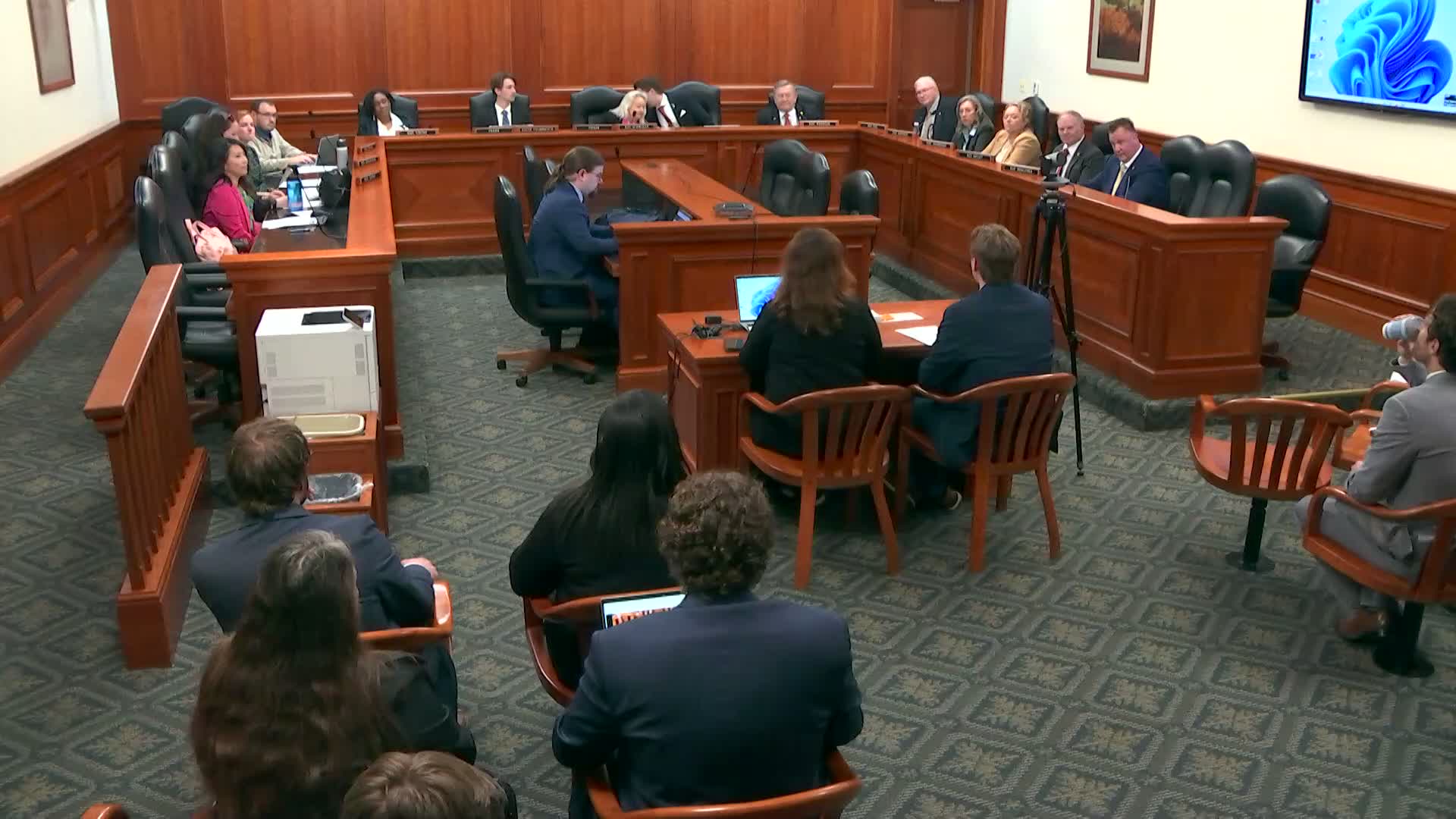
Committee hears bill to convert National Guard training into Department of Labor apprenticeships
Summary
Lawmakers and veterans’ advocates told the House Families and Veterans Committee that House Bill 4279 would let Michigan Army and Air National Guard members register military specialties as civilian Department of Labor apprenticeships; no vote was taken.
The House Families and Veterans Committee heard testimony on House Bill 4279, sponsored by Representative Jamie Greene, which would create a Michigan Army National Guard and Air National Guard apprenticeship program to convert compatible military specialties into Department of Labor–registered civilian apprenticeships.
The bill’s sponsor said the program would give guard members “portable credentials, financial opportunity, and stronger connection to Michigan’s workforce,” and described the change as “a no-cost structured pathway” to match military training with civilian credentials. Supporters and witnesses told the committee that state agencies already have many of the staff and federal standards needed to register occupations under Department of Labor guidelines.
Representative Jamie Greene, the bill sponsor, told the committee the legislation would have the Department of Military and Veteran Affairs (DMVA) collaborate with the Department of Labor and Economic Opportunity (LEO), the Michigan Veterans Affairs Agency (MVAA) and the state approving agency for G.I. Bill benefits to register military specialties that align with high-skilled civilian careers. Greene said federal National Guard guidelines and Department of Labor apprenticeship standards already exist and that those standards can be transferred to state practice. She also challenged the committee’s fiscal analysis, saying, “I read LSB's analysis, which is actually incorrect.”
Committee members asked about scale and cost. Representative Thompson asked how many service members could be affected; Greene answered, “10,000 every year,” referring to members of the Michigan National Guard and Air National Guard who could be eligible. Other members asked why statutory language was needed if state and federal offices already conduct apprenticeship work; Greene and supporters said specific legislative direction speeds implementation.
Rick Donovan, testifying for the Polish Legion of American Veterans, detailed administrative steps and funding context. Donovan pointed to an executive directive and a state workforce plan tied to federal infrastructure funds, saying the state received about $9 billion and that the workforce plan is to identify how those funds would be used to create apprenticeships (his packet states a target of 5,000 apprenticeships). Donovan urged the committee to consider existing LEO and MVAA staff and Michigan Works partners as capacity already in place to register National Guard occupations, and he pointed to Missouri’s “Project Eagle” as a model.
Witnesses and committee members discussed which occupations to prioritize, and whether the federal infrastructure funding cited in testimony limits the program to construction and related trades or could also support health care and other occupations. Donovan recommended starting with high-demand occupations listed in the state “hot 50” jobs list and matching those to National Guard specialties.
No formal motion or vote on HB 4279 was recorded during the hearing. Committee members asked for additional cost and implementation details and for follow-up data on eligible occupations and enrollment estimates. Sponsor Greene said she would work with staff on timing and with agency partners to refine dates and operational steps.
The committee recessed for a presentation after the testimony and took no final action on the bill at that session.