Get Full Government Meeting Transcripts, Videos, & Alerts Forever!
Get email alerts on the Approp School Aid Education topic
No spam. Unsubscribe anytime.
Michigan school leaders urge easing pupil-accounting and seat-time rules to spur innovation
Summary
A representative of Michigan principals told a House Appropriations subcommittee that the state’s detailed pupil-accounting rules and a dual requirement for 180 days and 1,098 hours of instruction hinder innovative learning models and complicate virtual, internship and competency-based programs.
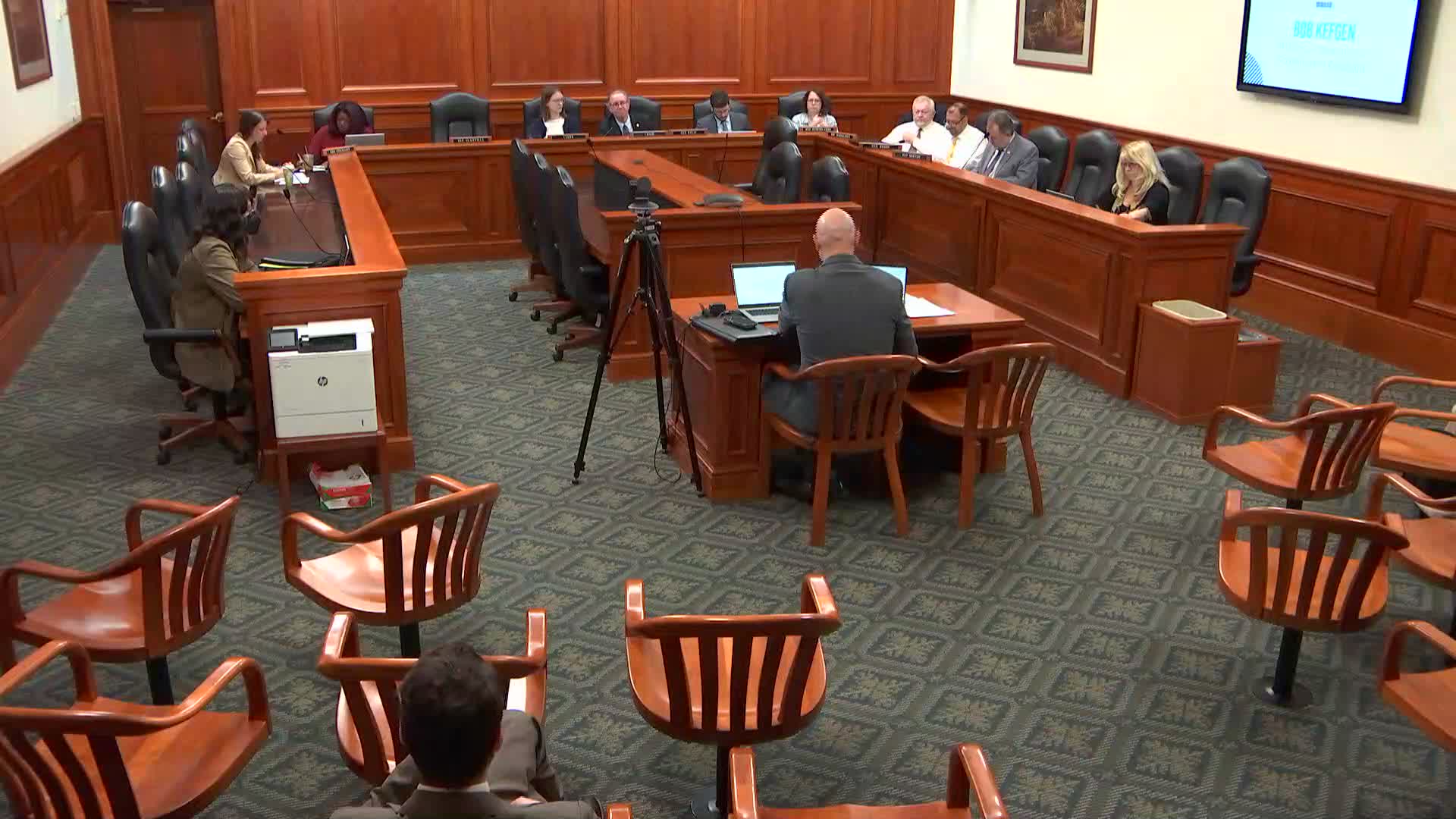
Bob Kefchyan, associate director of government relations for the Michigan Association of Secondary School Principals, told the House Appropriations Subcommittee on School Aid and the Department of Education on Oct. 12 that Michigan’s regulatory framework — especially the state pupil-accounting rules and combined days-and-hours requirement — creates practical barriers to nontraditional instruction.
Kefchyan said Michigan requires 180 days and 1,098 hours of student contact time — “the highest combination of required days and hours of any state in the nation” — and that the state’s Pupil Accounting Manual (which he described as a 179-page document with 27 subsections) forces districts to account for multiple nontraditional pathways with overlapping rules. “Our pupil accounting system, which relies on attendance, not learning, is a barrier to improved outcomes that require innovation,” Kefchyan told the subcommittee.
Why it matters: Kefchyan said the rules make it difficult for districts to adopt competency-based learning, flexible scheduling, virtual instruction, dual enrollment and work-based learning without risking loss of funding or incurring financial penalties. He recommended short- and long-term changes the Legislature could consider to give districts room to pilot alternative models.
Details and examples
- Waivers and consistency: Kefchyan said that in 2022 there were 33 applications to the Michigan Department of Education’s Innovation Council; three were approved, six denied, four found out of scope and 19 deemed unnecessary because existing rules already allowed the requested flexibility. He said that low approval alone does not show lack of interest but rather a lack of confidence the system supports innovation.
- Internships/work-based learning: Under current rules, each internship placement requires a training agreement and a detailed training plan for each student, regular site visits by a certified teacher regardless of distance, and a cap of a half full-time equivalent on work-based learning participation. Kefchyan said those elements create staffing and distance challenges, especially in small rural districts, and can limit students’ access to sustained, career-focused experiences.
- Virtual learning and teacher placement: For pupils taking virtual classes, districts must document weekly “two-way interactions” during a four-week window around the state count day; turning in an assignment alone does not qualify. Kefchyan also described teacher-placement requirements that commonly force districts to assign both a mentor and a separately endorsed teacher of record — a technical burden that can generate audit findings or financial penalties if handled incorrectly.
- Professional learning and staffing: Kefchyan praised recent state investments such as student-teacher stipends, the Michigan Future Educator Fellowship and mentor-coaching for new administrators, and he cited John Hattie’s research to argue that professional learning is essential to implementing high-impact interventions. Still, he warned that stacked compliance and training mandates consume educator time and recommended reevaluating the number and sequencing of required training hours.
Recommendations offered to the subcommittee
Kefchyan asked lawmakers to consider: lowering the days/hours compliance threshold or offering hour-based flexibility; creating preapproved innovative seat-time models districts could adopt; simplifying and streamlining the Pupil Accounting Manual; maintaining funding for educator-shortage initiatives; allowing more professional-learning flexibility tied to state goals (for example, dyslexia and educator-evaluation requirements); and reconsidering the financial penalties and inclusion of teacher-placement audits in pupil-count reviews.
Committee process and outcomes
During the meeting Representatives approved the minutes from April 15 by unanimous consent after Representative Borton moved to approve the minutes and no objections were made. Representative Steckloff later moved to excuse absent members; that motion also prevailed by unanimous consent. No formal policy votes were taken on Kefchyan’s recommendations.
Quotes
Kefchyan: “Michigan requires 180 days and 1,098 hours of student contact time. That is the highest combination of required days and hours of any state in the nation.”
Kefchyan: “Our pupil accounting system, which relies on attendance, not learning, is a barrier to improved outcomes that require innovation.”
Kefchyan (summarizing waiver outcomes from 2022): “There were 33 applications submitted in total. Only three waiver applications were approved, six were denied, four were determined to be out of scope, and 19 were deemed unnecessary because the current rules already allowed the needed flexibility.”
Ending
Kefchyan told the subcommittee he is willing to work with lawmakers and staff to identify specific rules that could be suspended or revised as part of the next budget or statutory package. The meeting record shows the conversation remained at the discussion and recommendation level; the subcommittee did not take formal action on any of the proposed policy changes during this session.