Get Full Government Meeting Transcripts, Videos, & Alerts Forever!
Get email alerts on the Juvenile Lifers topic
No spam. Unsubscribe anytime.
State Appellate Defender Office seeks $2.3 million to expand juvenile‑lifer unit after new court rulings
Summary
At an Appropriations Committee hearing, the Michigan State Appellate Defender Office requested $2.3 million for 14.5 positions to expand its juvenile‑lifer unit after recent court decisions that expand who is eligible for resentencing; the office also listed additional staffing and intern‑pay requests for direct appeals and reentry work.
The Michigan State Appellate Defender Office asked the state Appropriations Committee for $2.3 million to add 14.5 positions to its juvenile‑lifer unit, saying the funding would allow the office to represent about 300 people affected by recent court decisions that expand eligibility for resentencing.
The request, made by Marlena David, deputy director and acting director of the Michigan State Appellate Defender Office, came at a committee meeting during which David and other SADO staff outlined the legal background, current caseload and additional budget needs for the defender office.
David said U.S. Supreme Court precedents and more recent state high‑court rulings established the process for resentencing people who were under 18 at the time of their offenses (Miller and Montgomery) and were later expanded to older age groups by Parks and Poole and by the decisions referred to in the hearing as Sarnacki and Taylor. "The statute 769.25a does indicate that prosecutors have a hundred and 80 days from the date a decision is final to file for life without parole again," David told the committee, summarizing the timeline under the statute. She added prosecutors' filings can trigger a 14‑day response period for defense counsel and that the actual resentencing hearings can be scheduled later to allow preparation.
Why it matters: The office said those rulings broaden the population now entitled to resentencing; SADO estimated about 582 people in Michigan are in the group affected by the Sarnacki/Taylor decisions, and that SADO could represent roughly 300 of them if funded. David said properly staffed representation reduces the number of appellate reversals and repeated hearings, which she said reduces burden on victims' families and on the courts.
Key details and numbers cited at the hearing: since 2016, SADO reported it has represented people subject to resentencing and that the work has produced contested Miller hearings (43 contested Miller hearings from an earlier group) that resulted in few life‑without‑parole outcomes after evidentiary hearings. David told the committee SADO estimates the resentencing work has produced an estimated $94,000,000 in corrections cost savings since 2016 by shortening anticipated incarceration terms for some people, and she framed the request as a phased approach rather than an immediate full staffing expansion.
Budget asks and additional priorities: David described the $2.3 million request as specifically tied to Sarnacki/Taylor work and said the funding would add attorneys, mitigation specialists, reentry staff, paralegals and support positions. She also listed other SADO priorities filed with the committee: another $2.3 million to add 12 full‑time employees for the direct appeals unit as part of a multi‑year plan to reduce attorney caseloads to standards recommended by the National Center for State Courts; modest pay for interns to bolster recruitment into public defense; and a baseline request to address staff salaries. David said past state funding had added 7.5 staff to the juvenile‑lifer unit when Poole became retroactive in April 2025.
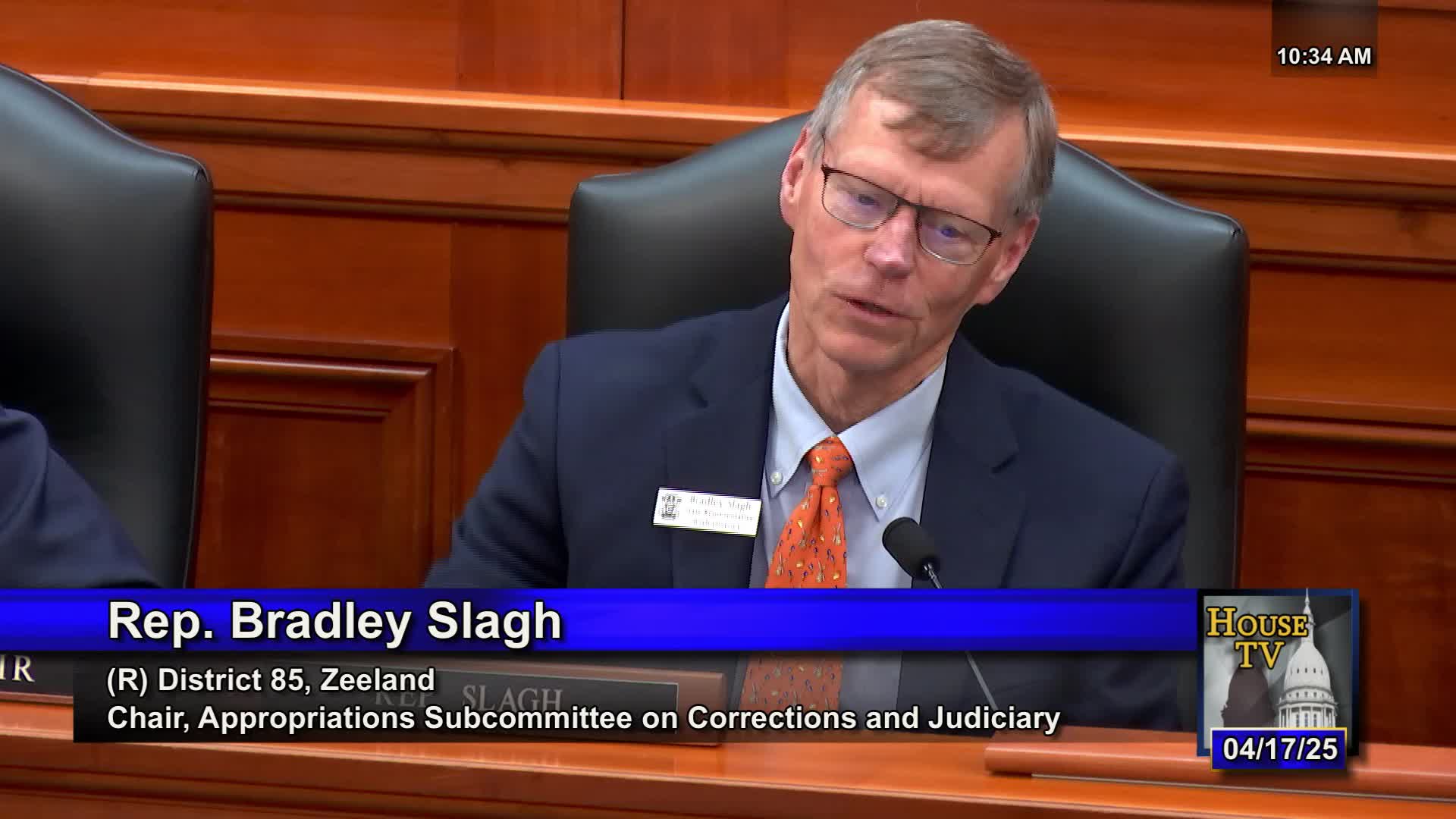
Committee reaction and questions: Committee members praised the office for presenting detailed timelines and for its focus on victims' needs and reentry supports. One representative said David’s presentation “eliminated a lot of misinformation” and credited the office for addressing public safety and victims' concerns. Representative O'Neil asked whether the resentencing decisions were a "get‑out‑of‑jail free card;" David replied, "No. It is not. The convictions are staying in place," and explained that resentencing can result in a term‑of‑years sentence subject to parole review rather than automatic release.
Implementation and coordination: David said SADO will continue coordinating with prosecutors, the Indigent Defense Commission and county trial counsel; she said prosecutors retain wide discretion whether to seek life without parole and that in 2016 prosecutors filed many motions and later withdrew many of them. The office said it is meeting with prosecutors to coordinate timelines and that the statutory 180‑day filing window can effectively extend because of appellate timelines. David described SADO's Project Reentry, launched in 2016, which provides reentry planning and free workshops and materials for people returning from incarceration; she emphasized the team does not itself pay for reentry services but prepares plans and connects people to community resources.
Procedural note: The committee approved minutes from its March 27 subcommittee meeting by unanimous consent earlier in the session. No formal vote was taken on SADO's funding requests during the hearing; committee members asked for follow‑up materials and data.
SADO staff at the hearing included Tina Olson, managing attorney of the juvenile lifer unit; Jessica Zimbelman, managing attorney of the direct appeals unit; Kathy Swedlow, manager of the criminal defense resource center; and Brian Vance, finance manager. David offered to provide additional population breakdowns and data to committee members on request.
Looking ahead: David said SADO is pursuing a phased funding approach and will meet with prosecutors and other stakeholders to refine timelines and staffing plans; she emphasized that final workloads will depend in part on whether and when prosecutors file to seek life without parole for the newly eligible populations.