Get Full Government Meeting Transcripts, Videos, & Alerts Forever!
Get email alerts on the Vegetable Industry topic
No spam. Unsubscribe anytime.
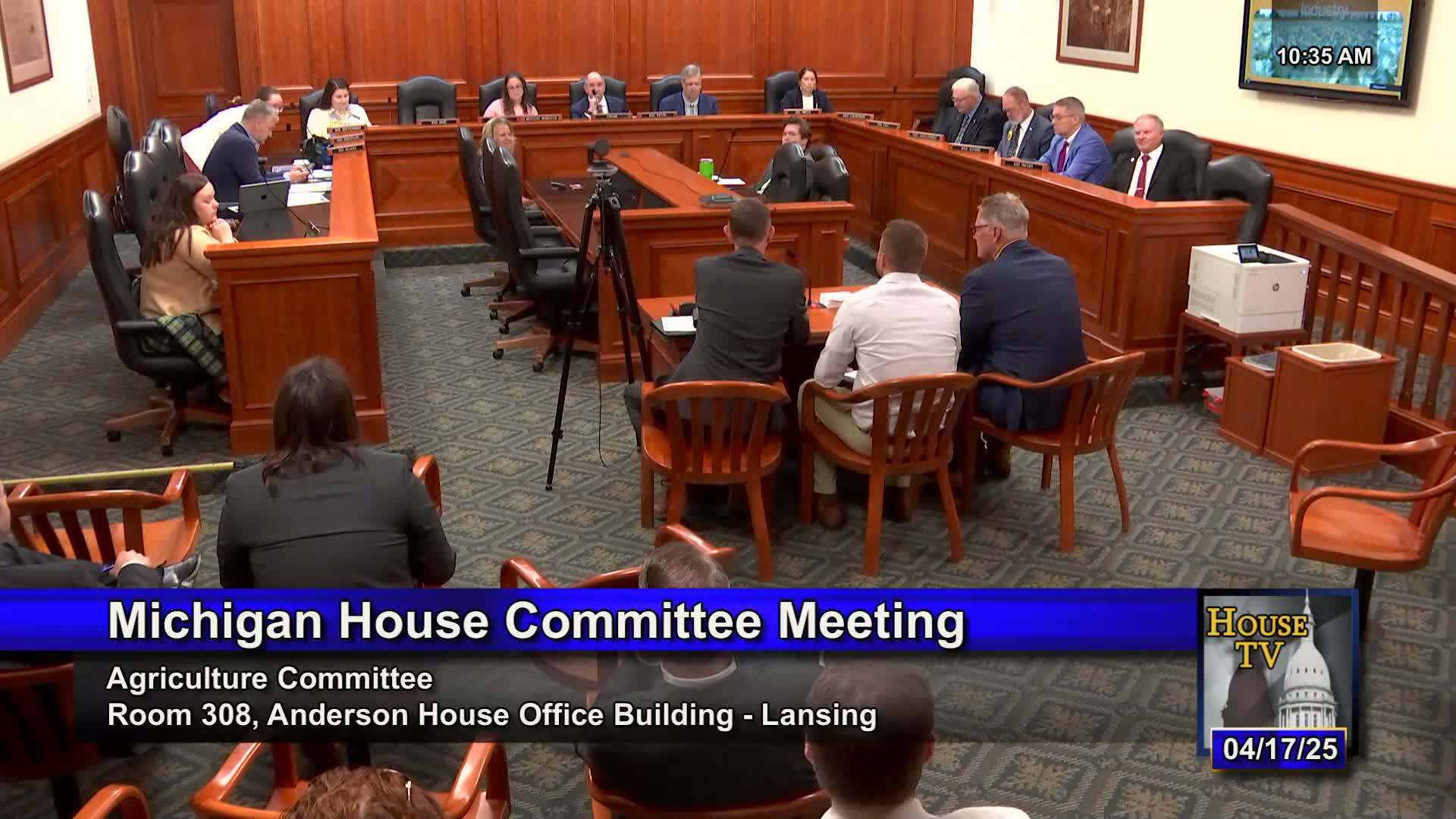
Vegetable growers tell Michigan House panel rising H‑2A costs, water rules and land loss threaten farms
Summary
Growers told the Michigan House Agriculture Committee that rising H‑2A wages, competition from lower‑cost imports, pressure on muck soils and regulatory complexity are shrinking acreage and squeezing margins; the Michigan Vegetable Council asked lawmakers to back research and a climate‑resiliency grant program.
Greg Bird, a presenter for the Michigan Vegetable Council, told the Michigan House Agriculture Committee that the state’s vegetable industry faces mounting costs and operational pressures and asked lawmakers to support research and climate resiliency funding.
The Michigan Vegetable Council represents vegetable growers and processors statewide and is seeking state support for research and resilience programs, Bird said. “Climate resiliency is currently two years old, asking for $2,000,000 recurring funds and $8,000,000 for [a] grant program in the 2026 state budget,” Bird said. He also described the council’s work with Michigan State University and federal crop‑block grants administered through MDARD.
The Council’s request comes amid testimony from two family farmers who described day‑to‑day threats to production. Kent Carnamot, managing partner at Carnamot Farms in Fremont, summarized the industry’s challenges with an acronym he said growers use: “Foreign competition, aquifer, regulation, and manpower.” Carnamot said his family operation currently manages about 2,000 acres and about 60 year‑round workers, and that foreign suppliers with lower labor and regulatory costs make it harder for Michigan farms to compete.
Adam Van Dyke of Van Dyke Farms in Amalie City said labor and food‑safety costs are central concerns. “The H‑2A program, our farm would not be who we are without it,” Van Dyke said, adding that using H‑2A workers has made his operation viable but also “has now tied our hands to a program that continues to go up,” increasing costs.
Van Dyke said his operation employs roughly 190 people during peak season, about 20 of them local hires; eight are family members. He described intensive food‑safety testing for leafy greens — monthly well tests, leaf‑sample lab tests for E. coli and Listeria, and ATP testing of harvest and packing equipment — and said a single contamination event or extreme weather year could threaten a farm’s viability.
Committee members questioned farmers about insurance and risk. Van Dyke said historically there was little crop insurance for lettuce and similar vegetables in Michigan, and that the farm had only recently secured whole‑farm insurance that provides some protection. Representative Alexander asked whether flooding or drain overflows could affect tests; Van Dyke said flooding that introduces outside water or animal contamination can make a field unsafe to harvest.
Speakers emphasized the state’s strengths and risks. Bird offered USDA‑sourced industry figures: more than 3,000 farms, about 152,000 acres in vegetable production, roughly $706 million in farm‑gate sales, 25 processors, and a $1.285 billion economic impact tied directly to vegetable production; a broader specialty‑crop supply chain figure of about $6.3 billion and roughly 41,700 jobs was cited. Bird also said Michigan lost roughly 13,000 vegetable acres from 2017 to 2022 and that some acreage has been converted to solar in 2025.
The Michigan Vegetable Council asked lawmakers to consider policy changes and funding that would help growers adapt, including research and grant funding administered through MSU and MDARD and a pause on recent H‑2A wage increases. The council also promoted the Great Lakes Expo in Grand Rapids and an industry farm tour scheduled for June 13.
Growing operations, research funding requests and workforce issues drew sustained committee interest; lawmakers asked follow‑up questions about soil types, insurance availability and connections to local food hubs.
The committee did not take formal action on the presentation itself during the meeting.