
Elgin council reopens debate on single-use plastic bag rules; sustainability commission backs ban with paper-bag fee
Get AI-powered insights, summaries, and transcripts
Subscribe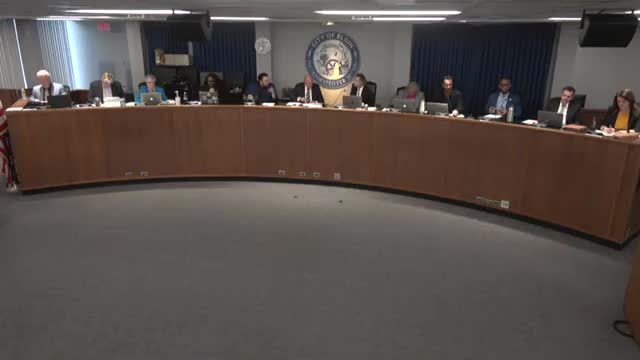
Summary
At a committee meeting, the Elgin Sustainability Commission and council members discussed adopting a single‑use plastic bag ban (with a paper bag fee), citing local river pollution and microplastics; council asked staff to draft an ordinance modeled on Illinois Senate Bill 1872.
The Elgin City Council and the city’s sustainability advocates spent the evening revisiting single‑use bag regulation, with a majority of council members signaling support for a ban on single‑use plastic grocery bags and a fee on paper bags while asking staff to draft an ordinance modeled on the Illinois Single Use Bag Reduction Act.
Supporters said the city needs action to reduce plastic pollution in the Fox River and microplastics in the environment. Cheryl Brumbaugh Kiefer, an Elgin resident who spoke during public comment, said, “The time is now for our city to take action on plastic pollution and microplastics in our environment and our human bodies.”
Why it matters: advocates and the sustainability commission argued that plastic bags are a visible source of litter in waterways and neighborhoods and contribute to longer‑term microplastic contamination. Council members said they want a local ordinance that aligns with the pending state bill so businesses are not caught between different standards, and they stressed outreach and business engagement before implementation.
The council heard a multi‑part recommendation from the Elgin Sustainability Commission. Tom Armstrong, chair of the commission, summarized the commission’s preferred approach: a ban on single‑use plastic bags, a 10¢ paper bag fee split between retailers and the city, no retail exemptions by square footage, and a rollout that includes a six‑month education period before enforcement and a six‑month grace period after the ordinance takes effect. “So that’s our recommendation,” Armstrong said during the presentation.
Council reaction and next steps: Council members asked staff about next steps and implementation. Several members — including Councilwoman Powell and Councilman Dixon — said they supported a ban with the city using Senate Bill 1872 (the Single Use Bag Reduction Act) as a template. Powell said she supported a ban and emphasized the need for outreach: “Is there education that needs to take place with the retailers specific to what we implement here in Elgin? Absolutely.” City staff told the council they would draft an ordinance and return with a proposed implementation plan.
Policy details under discussion: the commission and council discussed which retailers and bags would be exempt (common exclusions nationally include food assistance recipients and certain medical or wet‑food bags), whether the fee should be 5¢–10¢ and who would receive the revenue, and the operational details of reusable‑bag donation and distribution programs. Armstrong noted lessons from peer cities, including that definitions of “reusable” are important and that earlier programs in some jurisdictions required follow‑up to prevent loopholes (for example, very thin “reusable” bags that were still effectively single‑use).
Community context: public commenters who had participated in river cleanups described plastic bag litter as common on the Fox River. Several council members noted neighboring towns and larger cities already have fees or bans and said retailers that operate statewide already accommodate such rules.
What happens next: the council directed staff to prepare an ordinance for future consideration, using the state bill as a model and including an education and outreach plan for retailers and residents. No ordinance vote was taken on April 23; the item will return to the council for formal consideration once staff and the sustainability commission recommendations are compiled into draft ordinance language.
Ending: Council members said they want clear public guidance, an outreach timeline and a clear explanation of any fee revenue’s intended use before the council votes. For now, staff will prepare draft ordinance language and an accompanying public‑education plan for a future meeting.