Get Full Government Meeting Transcripts, Videos, & Alerts Forever!
Get email alerts on the Cybersecurity topic
No spam. Unsubscribe anytime.
School board approves five-year Fortinet cybersecurity and voice package to update district firewalls, phones and phishing protection
Summary
The Levy County School Board approved a negotiated five-year, six-payment Fortinet renewal to update firewall hardware, endpoint protection, a phishing simulation program and IP phone hardware; board approved by voice vote.
The Levy County School Board approved a five-year cybersecurity and voice infrastructure package with Fortinet to update the district firewall, endpoint protection, a phishing-simulation and training component and new voice-over-IP hardware for phones.
A technology director (name not specified) told the board the package combines hardware and software to meet federal E-Rate filtering requirements, replace end-of-life phone hardware and add phishing-simulation training. The director said vendors and district staff "worked to downsize hardware" where possible and eliminated software components judged noncritical to reduce cost. The director also described bundled training and configuration work to help district staff implement the system.
Why it matters: the presenter said modern phone systems are voice-over-IP devices that require ongoing security updates and must meet updated emergency-call requirements. The package replaces the district's Avaya phone maintenance contract and includes training, configuration and backup systems intended to reduce implementation downtime.
Board discussion covered cost, contract term and implementation timing. The presenter said the five-year, six-payment term produces an estimated conservatively calculated annual saving (relative to shorter renewals) and that the vendor offered a short-term extension of the current contract to reduce transition risk. The presenter described Fortinet's threat feeds and how a phishing incident can be converted into a district-wide training campaign to warn other users.
The presenter explained the procurement route: the district negotiated directly with the vendor rather than opening a competitive bid because cybersecurity systems are highly vendor-specific and conversion work raises implementation costs; the packet materials include procurement details and the district cited allowed direct negotiation for IT purchases.
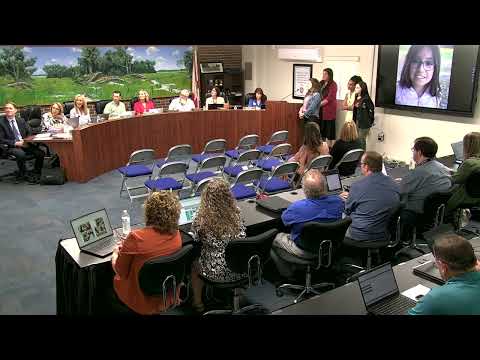
Vote: Board members moved and seconded the motion; the chair called a voice vote. "All those in favor, please say aye. Aye. Any opposed? Motion carries," the chair said. The board recorded no opposition in the meeting.
Implementation timeline: the presenter said staff negotiated a short-term renewal to extend the current system past June while the new package is built; deployment will be phased and will include physical installs and remote configuration. The presenter said staff will use district technicians for physical installs with vendor training and configuration support.
District staff and two named district colleagues in the room, Lawrence Reals and Joseph Waugh, were credited for vendor negotiations and implementation support. The board did not record a roll-call vote; the motion passed by voice vote and was recorded as approved.