Get Full Government Meeting Transcripts, Videos, & Alerts Forever!
Get email alerts on the Sustainability topic
No spam. Unsubscribe anytime.
Grayslake board hears sustainability task force progress, focuses next on funding and classroom connections
Summary
A CCSD 46 sustainability task force summarized its work so far and spent the meeting identifying funding options and classroom links to circular-economy practices; the group will deliver a report to the board by August 2025.
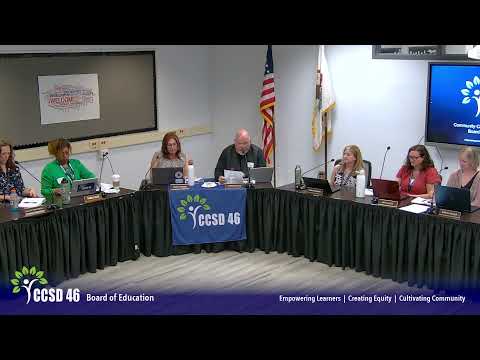
The Community Consolidated School District 46 Board of Education received an update Wednesday from its Sustainability Task Force and spent a portion of the meeting working in small groups to map where circular‑economy practices already exist in the district and where funding might be directed.
The task force, convened after a sustainability resolution passed in November, has four charges: form a task force, hold participatory updates through June, include sustainability in the district’s next strategic plan with targets for 2026, and consider an annual resource‑conservation report. The group is meeting five times this year and presented its third session to the board; members said they will submit a formal report to the board by August 2025.
At the meeting, task force members described a simple model of a circular economy—create, use, recover—and listed five recovery strategies discussed in the group: refuse/reduce, repair, reuse, repurpose and recycle. Presenters asked board members to consider how closed loops might improve student health, instructional opportunities, community engagement and cost savings. Staff noted existing activities the task force can build on, including ongoing composting programs and a CarbonX technology pilot cited by task force participants.
Board members and student participants tied the topic to classroom learning. Speakers suggested the district could align sustainability work with social‑studies inquiry standards, science and health lessons, and career pathways that connect middle and high school students with local internships and projects. Several members said early exposure would help habits form and reduce future costs, and others emphasized potential benefits for student social‑emotional health and community cohesion.
The task force’s immediate work is focused on funding: identifying grant opportunities and mechanisms the district can use, and on drafting definitions and policy recommendations to include in the strategic plan. The board suspended formal rules to allow members to work in the media center with the task force materials before returning to the regular meeting.
The task force emphasized that the next steps include: narrowing definitions of sustainability, enumerating potential funding sources, reviewing district policies for alignment, and preparing the August report that will recommend targets and accountability measures.