Get Full Government Meeting Transcripts, Videos, & Alerts Forever!
Get email alerts on the One Call Centers topic
No spam. Unsubscribe anytime.
One-call centers report sharp rise in automated "no response" messages after Jan. 1 EPR change; outreach continues
Summary
USA North 811 and Dig Alert told the California Underground Safety Board that an automated electronic-positive-response (EPR) no-response feature launched Jan. 1 has produced a large spike in system-generated "no response" messages, while outreach and training efforts continue statewide.
At the April 15 meeting of the California Underground Safety Board, representatives from the state’s two regional notification centers — USA North 811 and Dig Alert — reported a marked increase in automated electronic positive-response (EPR) “no response” messages after a system change that took effect Jan. 1, 2025.
James Wingate, marketing and outreach lead for USA North 811, told the board the auto no-response functionality is producing large volumes of system-generated messages to members who fail to provide a required EPR. “If the ticket life is 28 calendar days,” Wingate said, “the first no response would come at the legal start date if they haven't provided EPR and then every two days afterwards. So they could, in theory, get 13 no responses.”
Why it matters: Board members and contractors said the surge has practical consequences for field work and for the notification centers’ statistics. Dig Alert’s presenter said the quantity of system-generated responses creates a processing load and can skew ticket-volume statistics used to assess operator performance.
Dig Alert’s presenter, Jim Schwab, said the auto no-response messages caused delivery issues when many messages were generated simultaneously. “At 05:01 p.m. we’re dumping about 7,000–8,000 tickets all at once into the system,” Schwab said, and noted his center added monitoring and server capacity to reduce delays.
Board members, contractors and operators said the auto no-response rollout has prompted outreach opportunities. Operators receiving repeated no-response notices often contact their notification center to correct contact information and to learn compliance obligations. Wingate said the change is also opening conversations with smaller utilities that historically have not used electronic responses.
Contractors who spoke during public comment said response delays create costs in the field when crews wait for clarifications or locates. One contractor described a multi-hundred-thousand-dollar impact after a marking issue required extended excavation and mitigation.
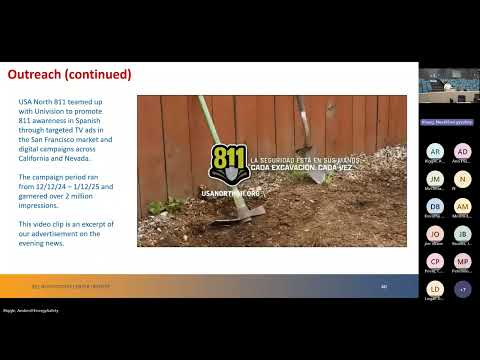
What’s next: USA North and Dig Alert told the board they are monitoring system performance and working with their vendors to reduce delivery latency. Both centers said they continue outreach and education — from in-person “safe seminars” to large trade events such as the World Ag Expo — to increase awareness among excavators and small operators about EPR rules and locate practices.
Ending: Board members urged continued outreach targeted at smaller contractors, unions and engineering associations and asked staff and the centers to return with follow-up data on whether the no-response counts decline over 2025 as membership compliance improves.