Lifetime Citizen Portal Access — AI Briefings, Alerts & Unlimited Follows
Senate hears hour-long debate on second-look commutation bill; committee amendment removes ‘clean‑slate’ language
Loading...
Summary
The Judiciary Committee’s second‑look bill, LB 215, would let certain long‑term inmates be recommended for commutation after serving decades, but the committee removed an automatic record‑clearing provision and the bill remains on general file.
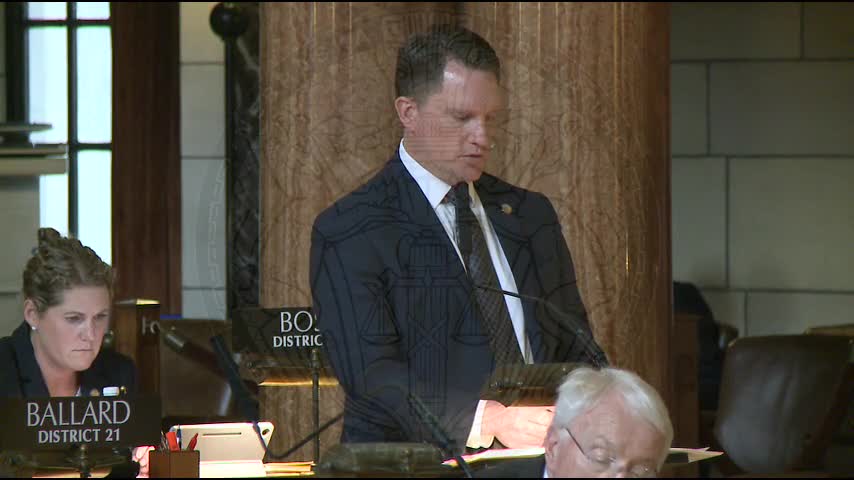
Senator John Holcroft described LB 215 as a measure to allow carefully screened, long‑term incarcerated individuals — often called “lifers” — to be evaluated for possible commutation after serving a substantial portion of their sentences.
What the bill would do: Under the version debated on the floor, the bill sets eligibility thresholds (in general terms discussed on the floor: 25 years served for persons whose offenses were committed before age 26; 30 years for older offenders). Eligible inmates would be identified to the Board of Pardons through a review and recommendation process involving the Board of Parole. The Board of Pardons retains final authority to grant or deny commutation.
Committee amendment and what changed: The Judiciary Committee adopted AM556 on the bill and removed an earlier “clean-slate” element that would have automatically cleared some misdemeanor/class‑4 felony records. The committee amendment also replaced some mandatory “shall” instructions in earlier drafts with permissive “may” language to avoid directing the Board of Pardons to specific procedural steps.
Debate highlights and concerns: Supporters — including family members, criminal-justice advocates, and civic groups that testified in committee — argued the amendment preserves a second‑look process that balances community safety and rehabilitation. Opponents (initially including the Board of Pardons and some county prosecutors on the record) raised concerns about cost, potential impact on victims, and the need for robust community involvement in any commutation decision. Holcroft argued the bill actually increases community and victim involvement in the process by routing qualified candidates first to parole hearings, which are held publicly and allow victim participation, and then to the Board of Pardons for the final decision.
Numbers and workload: The sponsor and Judiciary Committee measured eligible population and reported the total number of possible candidates under the thresholds would be small (the sponsor cited roughly 141 incarcerated people who currently meet the years-served thresholds); the committee said current Board of Parole resources handle hundreds of hearings a month and that the incremental workload is manageable (one additional staff person may be required).
Status and next steps: Debate on the floor was ongoing; AM556 represents an effort to cleave off the most controversial automatic record‑clearing provisions and to route commutation review through the parole board for recommendations. The bill remains on general file for further floor consideration and committee- or fiscal‑office follow-up on implementation costs.