Get Full Government Meeting Transcripts, Videos, & Alerts Forever!
Get email alerts on the Pharmacy Benefit Managers topic
No spam. Unsubscribe anytime.
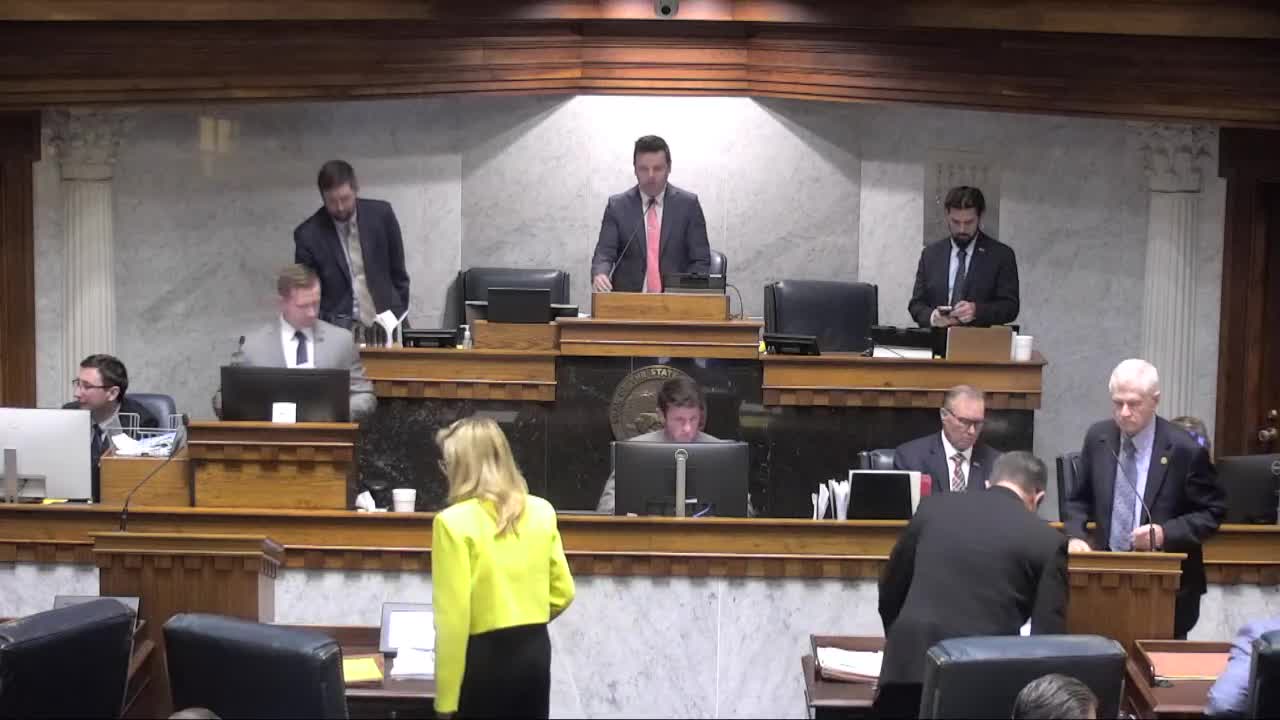
Senate adopts PBM conference report to curb pharmacy practices, exempts state plans
Summary
The Indiana Senate adopted the conference committee report on Senate Bill 140, a pharmacy benefit manager (PBM) bill that adds network and transparency requirements, defines acquisition and distribution costs, prohibits steering, and exempts Medicaid managed care and the state employee health plan. The report passed on a 39-10 roll call.
Senate Bill 140, a measure aimed at regulating pharmacy benefit managers, cleared the Senate after debate and a roll-call vote on the conference committee report.
Senator Mark Charbonneau presented the conference committee report, saying, “Senate bill 140 is a PBM bill, and what the, conference committee report does is clarifies that Medicaid managed care and the state employee health plan are exempt from the provisions in the bill. It, affirms that, the PBMs will have to provide adequate networks for dispensing of drugs, adds language that prohibits steering, it defines, it defines actual acquisition costs, and covers distribution costs.”
The report would require PBMs to ensure adequate pharmacy networks, bar steering patients to vertically integrated pharmacies, and define actual acquisition costs while covering distribution costs. The conference language also includes a contractual approach to a “fair and reasonable dispensing fee” tied to acquisition cost. Senator Mike Johnson noted the dispensing fee language and said the interaction will be contractual: acquisition cost plus a dispensing fee, adding that the fee is set at $10 in examples discussed on the floor.
Supporters argued the measure targets what they described as opaque PBM practices that harm independent pharmacies. Senator Zay said the bill is “a significant step” and defended provisions to share distribution and dispensing payments with independent pharmacies. Senator Bahadzic described PBMs as a “black box” and said reporting requirements in the bill will help policymakers understand markups.
Opponents and questioners pressed the author on whether exempting the state employee plan and Medicaid will deny those plans potential savings. Senator Young asked, “If PBMs save money, why do we want to be exempt?” Charbonneau and proponents replied they excluded the state plans from the bill to avoid a fiscal impact that could derail the measure while focusing on protecting independent pharmacies from closures. Senator Charbonneau said the carve-out was intended to keep the bill viable and to protect rural independent pharmacists.
Members also discussed distribution of costs across retail chains and mail order and the potential effects on uninsured patients and small-town pharmacies. Senator Buck noted that insured patients with fixed copayments would usually not see higher out-of-pocket costs because insurance copays do not change with the underlying price; others raised concerns that uninsured patients at independent pharmacies could face higher absolute prices if dispensing fees increase.
Senator Charbonneau said the measure also refers oversight of state plan PBM arrangements to a summer study or committee, and he repeated support for a potential state-controlled PBM for the state employee health plan or Medicaid oversight as a longer-term option.
The Senate approved the conference committee report by voice and then by machine: 39 ayes, 10 noes. The Secretary will notify the House of the passage of the report.