Get Full Government Meeting Transcripts, Videos, & Alerts Forever!
Get email alerts on the Education Policy topic
No spam. Unsubscribe anytime.
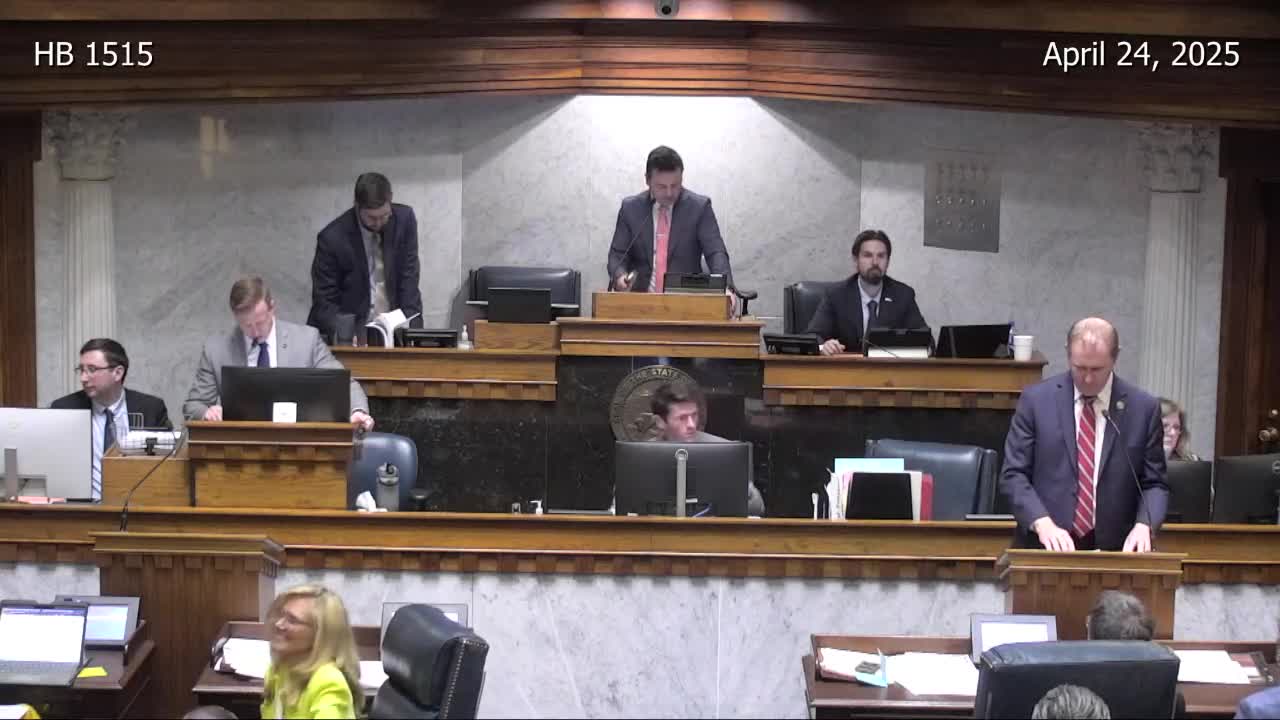
Senate passes education conference report after narrow votes and disputes over medical-school grading and private-school police
Summary
The Senate adopted the conference committee report for House Bill 1515, a multi-part education bill that includes pilot programs, scholarship-program language, new local education coordination in Indianapolis, and controversial language creating a merit-based A–F evaluation for certain health education programs including medical schools.
The Senate approved the conference committee report for House Bill 1515 after debate over several education measures that had been consolidated into the conference report, including pilot programs, scholarship fund language and a contentious provision affecting medical school grading and clinical evaluation systems.
Senator Buchanan presented the report and summarized its components: authorization for accredited nonpublic schools to develop police forces; establishment (but not funding) of a county deputy prosecuting attorney and public defender scholarship program and fund; pilot programs for school facilities and transportation; and the creation of the Indianapolis Local Education Alliance to coordinate resources among Indianapolis schools.
Several senators objected to late-added language that requires certain health-education programs and eligible state educational institutions to use a “merit-based admittance system” and an A–F evaluation system for students enrolled in the programs. Senator Hundley said the A–F grading requirement was “slipped in” at the eleventh hour and warned that only about 6% of U.S. medical schools use A–F grading; she said the provision raises concerns for clinical evaluations and uniformity in assessment methods.
Senator Poe and others raised issues with zoning and private-school police provisions, warning that permitting schools to open without local review — and allowing private or nonprofit institutions to form their own police forces — could create location and oversight problems. Poe argued in some districts those schools could open on marginal or industrial sites and still draw students.
Supporters said parts of the package would allow collaboration among Indianapolis schools and establish pilot programs intended to improve facilities and mastery-based education options. The scholarship fund language was described as a structural step that does not carry immediate fiscal obligations.
After debate, the Senate closed discussion and recorded the passage of the report by a roll call of 28 ayes and 22 noes. The Secretary was instructed to inform the House; the conference report requires subsequent administrative follow-up on pilot programs and scholarship-fund implementation.