Get Full Government Meeting Transcripts, Videos, & Alerts Forever!
Get email alerts on the State Budget topic
No spam. Unsubscribe anytime.
House adopts biennial budget after hours-long debate over funding priorities, higher education and health programs
Summary
The House approved the conference committee report on the state budget (House Bill 1001). Sponsors said the package protects K‑12 and public safety while trimming other agencies; Democrats criticized cuts to public health, early‑childhood programs and higher education governance changes embedded in the budget.
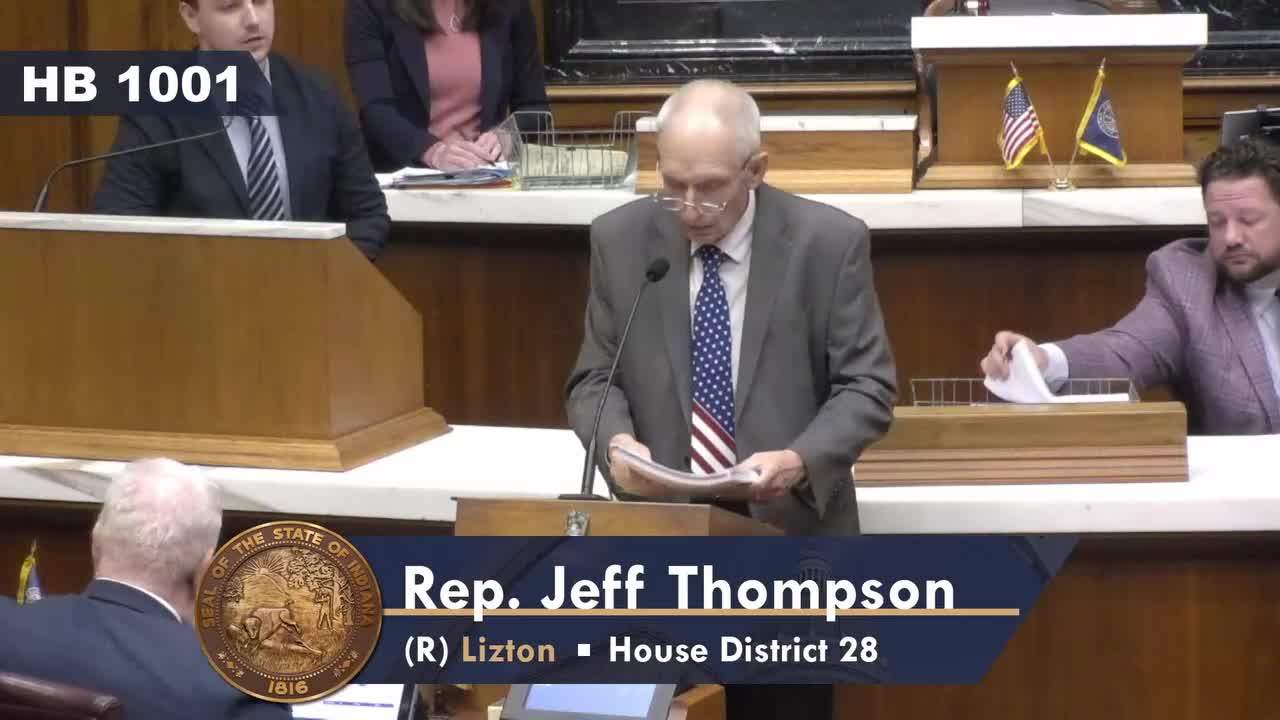
The Indiana House adopted the conference committee report on House Bill 1001 after extended floor debate that focused on priorities for education, public health, higher education governance and childcare.
Representative Jonathan Thompson, the budget’s lead presenter, described the package as "a state budget that lives within our means" and said it prioritizes education, public safety and fiscal reserves while continuing the state’s path of tax reductions. "We continue with the tax savings for Hoosiers by continuing the decline in the state income tax rate," Thompson said, urging support.
Opponents across the Democratic caucus urged rejection. Representative Porter, arguing from the minority perspective, said Democrats had offered alternatives and collaboration but were not included in the final package. "This is a budget that I will not support," Porter said on the floor, citing cuts and policy choices that she said would harm public health, higher education and working families.
Key provisions and disputes in the conference report included: - Education: The budget includes increases for K‑12 and funds universal school choice in the second year of the biennium; critics said the net effect favors vouchers and charters while leaving traditional public schools stretched. - Higher education: The conference report includes multiple structural changes and new oversight mechanisms for universities (changes to trustee selection at Indiana University and reviews of academic programs and faculty governance were debated on the floor). Critics warned those provisions were added without public committee hearings and risk academic independence and research capacity. - Public health: Funding for Health First and other public health initiatives was reduced from earlier proposals; Democrats argued cuts would damage maternal and preventive health programs and worsen disparities. - Early childhood and childcare: The package keeps some on‑going preschool funding but reduces eligibility; Democrats said the changes would shrink pre‑K access and exacerbate childcare shortages. - Taxes and reserves: The budget continues the scheduled income‑tax rate decline and sets aside a $300 million reserve for Medicaid/FSSA and corrections-related contingencies reviewable by the budget committee.
A number of floor speakers highlighted the process concerns: members from both parties objected to major substantive provisions being included in a conference report filed late in the day, limiting public notice and stakeholder input. Representative Pearson warned the late inclusion of provisions affecting universities "denies due process" to faculty and alumni and predicted negative long‑term effects on recruitment and research.
Outcome: The House adopted the budget conference committee report by roll call (final tally reported on the floor as 67 ayes, 23 noes for the budget adoption at one count; separate conference‑report motions and vote‑change motions were recorded across the evening). The budget proceeds to final steps required for enactment.
What comes next: With the conference report adopted, the measure continues through constitutionally required transmission to the Senate and then the governor. Several members signaled intent to monitor implementation and to pursue statutory clarifications in the next session.